


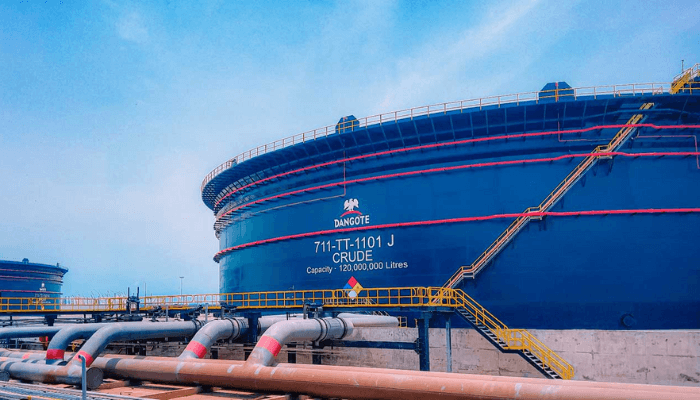
The Nigerian National Petroleum Company (NNPC) Limited has petitioned the Federal High Court in Lagos to dismiss a lawsuit filed by the Dangote Petroleum Refinery and Petrochemicals FZE. The suit seeks to void import licenses granted to fuel importers.
In a counter-affidavit filed in Suit No: FHC/L/CS/857/2026, the state oil firm argued that granting the refinery’s requests would grant it monopoly control over Nigeria’s downstream petroleum sector, exposing the nation to severe energy security risks and price exploitation.
NNPC Cites Market Risks, Pricing, and Jurisdictional Issues
The NNPC requested that the court strike out the suit, describing it as "incompetent, premature," and an "abuse of court process."
The national oil company raised several preliminary objections to the refinery’s legal strategy:
-
Allegations of Forum Shopping: The NNPC accused the Dangote refinery of forum shopping, noting that the company had previously filed—and subsequently withdrawn—a similar action (Suit No. FHC/ABJ/CS/1324/2024) against the Nigerian Midstream and Downstream Petroleum Regulatory Authority (NMDPRA) and six others in Abuja before initiating the current suit in Lagos.
-
Volatile Pricing: The NNPC stated that petroleum products from the $20 billion Lekki-based refinery are already being sold at "significantly high and fluctuating market prices" driven purely by commercial interests.
-
Unverified Supply Capacity: The affidavit maintained that Dangote has failed to provide independent, verifiable evidence proving it can seamlessly meet the nation's entire daily petroleum consumption or manage nationwide distribution logistics without interruption.
-
National Energy Security: The NNPC warned that relying on a single supplier poses grave risks. Any operational shutdown or disruption at the Dangote plant without alternative import channels could trigger nationwide fuel shortages, price instability, and an economic crisis.
Interpretation of the Petroleum Industry Act (PIA)
The legal dispute hinges on the interpretation of the Petroleum Industry Act (PIA), 2021. The Dangote refinery argued that the NMDPRA’s recent issuance of import licenses for over 700,000 metric tonnes of petrol violates existing regulations, given its capacity to satisfy domestic demand.
Conversely, the NNPC defended the regulators, arguing that Section 317(8) of the PIA grants discretionary powers regarding a "Backward Integration Policy" rather than a mandatory prohibition on imports. Furthermore, the company stated that Section 317(9) explicitly permits the issuance of import licenses to companies with valid refining licenses or proven track records in international product trading to ensure market stability.
The NNPC also categorically denied allegations of sabotage, stating that crude oil supply arrangements to the refinery are dictated by operational realities, contractual obligations, and production levels rather than deliberate denial.
Retail Marketers Back Competition
Independent marketers have aligned with the NNPC's position. Billy Gillis-Harry, National President of the Petroleum Products Retail Outlet Owners Association of Nigeria (PETROAN), emphasized that a liberalized, competitive downstream market is vital to protecting consumers.
While commending Dangote’s massive capital investment and contribution to local refining capacity, Gillis-Harry stated that multiple supply channels prevent artificial scarcity and drive down prices through healthy market competition. He warned that a monopoly would result in arbitrary pricing and reduced distribution efficiency. Reports indicate that the NMDPRA and various marketing entities are preparing to formally join the suit.
Domestic Refiners Defend Local Investment
In contrast, the Crude Oil Refineries Association of Nigeria (CORAN) defended the Dangote refinery, criticising the continuous importation of refined products.
CORAN Publicity Secretary Eche Idoko argued that long-term commitment to the Nigerian economy should be measured by fixed asset investments rather than trading activities. Idoko maintained that local refiners—including large, mid-scale, and modular operators—have demonstrated true faith in the domestic economy by anchoring their capital within the country, and their capacity should be protected against foreign imports.
Context
This litigation marks the second major legal clash between the Dangote refinery and state energy regulators since the facility began commercial operations in 2024. Following the 2023 removal of Nigeria's fuel subsidy, the downstream sector has operated under market-driven forces, intensifying competition among local refiners, international asset traders, and regulatory bodies over pricing and supply control.