


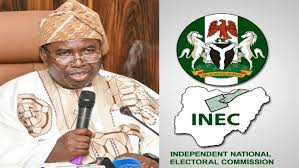
Seven months ahead of the 2027 general elections, a severe wave of insecurity across Nigeria is threatening preparations for the upcoming democratic exercise. This comes 33 years after the historic June 12, 1993 elections. Media reports indicate that at least 5,272 Nigerians were killed in violence-related incidents between January and May 2026 alone.
Data from the 15th Report on Violence in Nigeria, compiled by Nigeria Watch, reveals that 222,137 citizens lost their lives in over 46,000 violent incidents across the 36 states and the Federal Capital Territory between 2006 and 2025.
This rising death toll has led the Independent National Electoral Commission (INEC), rights activists, and senior lawyers to warn that the polls scheduled for January 16 and February 6, 2027, could be held under an unprecedented security crisis. Persistent terrorist attacks, banditry, kidnappings, and communal conflicts continue to plague the North-East, North-West, and North-Central regions, while increasingly spreading into the South-West.
Electoral and Security Leaders Call for Proactive Measures
As the election countdown intensifies, a consensus has emerged among INEC leadership, the police high command, and civil society that national stability relies entirely on addressing security alongside the electoral process.
INEC’s Strategic Shift
INEC Chairman Professor Joash Amupitan has repeatedly emphasized the urgency of the situation following the release of the 2027 timetable. During an official visit to the Inspector-General of Police (IGP), Olatunji Disu, Amupitan requested extensive police support. He identified electoral malpractices, vote-trading, and violence as primary threats to public confidence and national security.
Amupitan called for a transition from reactive policing to proactive intelligence coordination, highlighting the Inter-Agency Consultative Committee on Election Security (ICCES) as the core framework for operational safety. He urged all stakeholders to adopt a unified, multi-agency approach to safeguard voters, personnel, and materials.
Police Preparedness and Threat Assessment
In response, IGP Disu guaranteed that the Nigeria Police Force would maintain strict neutrality and provide a secure voting environment in accordance with the 1999 Constitution and the Electoral Act.
The police have already initiated nationwide strategic threat assessments and intelligence mapping. High-priority concerns include:
-
Political violence and the proliferation of illegal arms
-
Voter intimidation and cyber manipulation
-
The spread of misinformation
-
Targeted attacks on electoral infrastructure
Digital and External Threats
Speaking at the Alumni Association of the National Institute for Security Studies, Amupitan further explained that Nigeria is entering a volatile phase where the election dates act as security triggers. He pointed to a complex triad of modern threats complicating traditional logistics, specifically social media volatility, artificial intelligence-driven disinformation, and Foreign Information Manipulation (FIMI).
Civil Society and Legal Experts Warn of Democratic Risks
Prominent human rights lawyer Femi Falana, SAN, delivered a stark assessment during the annual June 12 Commemoration Lecture. Reflecting on the legacy of the late electoral umpire Professor Humphrey Nwosu, Falana questioned the feasibility of conducting credible elections while thousands of citizens remain vulnerable to daily abductions and unchecked terrorism. He stressed that the government must take decisive action to secure the country before a meaningful voting process can occur.
Similarly, the President of the Committee for the Defence of Human Rights, Debo Adeniran, noted that persistent safety concerns will heavily influence voter behavior. He stated that public perception of the government's ability to protect livelihoods, businesses, and free movement will inevitably impact electoral outcomes. Adeniran suggested that visible progress in counter-criminal operations could help restore public trust before election day.
Statistical Overview of the Crisis
Yearly Casualties (2011–2026)
The following data tracks total lives lost to violence over the last 15 years:
| Year | Lives Lost |
| 2011 | 1,096 |
| 2012 | 3,761 |
| 2013 | 7,276 |
| 2014 | 15,600 |
| 2015 | 12,795 |
| 2016 | 5,763 |
| 2017 | 4,618 |
| 2018 | 6,565 |
| 2019 | 8,340 |
| 2020 | 9,694 |
| 2021 | 10,399 |
| 2022 | 9,079 |
| 2023 | 8,097 |
| 2024 | 12,954 |
| 2025 | 12,162 |
| 2026 (Jan–May) | 5,272 |
Hardest-Hit Regions and Trends
The 2025 Nigeria Watch report attributed the majority of deaths to insurgency, rural banditry, kidnappings, and farmers-herders clashes.
-
State-by-State Impact (2025): Borno registered the highest number of fatalities with 2,221 deaths, followed by Niger (1,438), Zamfara (1,426), Benue (811), and Katsina (731).
-
Surge in Banditry: Fatalities linked directly to rural banditry and subsequent counter-operations nearly tripled, rising from 1,452 in 2024 to 3,974 in 2025. This rapid escalation creates immense pressure on security deployments for the upcoming polls.
Historical Context: Pre-Election Violence and Infrastructure Attacks
Nigeria’s current anxieties are deeply rooted in its political history. Previous election cycles have routinely faced severe disruptions from targeted assassinations and infrastructural sabotage.
Political Assassinations (2001–2006)
The run-up to the 2003 and 2007 elections saw numerous high-profile assassinations, including the unsolved murder of Minister of Justice Bola Ige in 2001, and the killings of political figures such as Ahmed Pategi, Barnabas Igwe, Ogbonnaya Uche, and Marshal Harry.
The trend continued into 2006 with the high-profile killings of Lagos governorship aspirant Funso Williams and Ekiti aspirant Ayo Daramola, alongside multiple dynamite attacks targeting political party secretariats and campaign offices in the Niger Delta.
Past Threats to Electoral Infrastructure
Physical attacks on INEC properties remain a critical concern. Prior to the 2023 general elections, the commission reported 52 separate attacks on its facilities across 29 states over a four-month window.
During these incidents, arsonists targeted offices in Ogun, Osun, Ebonyi, and Imo states, resulting in the destruction of thousands of ballot boxes, voting cubicles, power generators, and over 65,000 Permanent Voter Cards (PVCs). Replacing this specialized equipment has imposed a severe financial burden on the government due to the steady depreciation of the Naira.
Despite these significant challenges, opposition parties—including the Peoples Democratic Party (PDP), African Democratic Congress (ADC), and Nigeria Democratic Congress (NDC)—have firmly warned against any postponement of the 2027 timelines, arguing that delaying the vote would signal a surrender to terrorist groups. The next seven months will be critical in determining whether Nigeria can successfully secure its democratic process.