


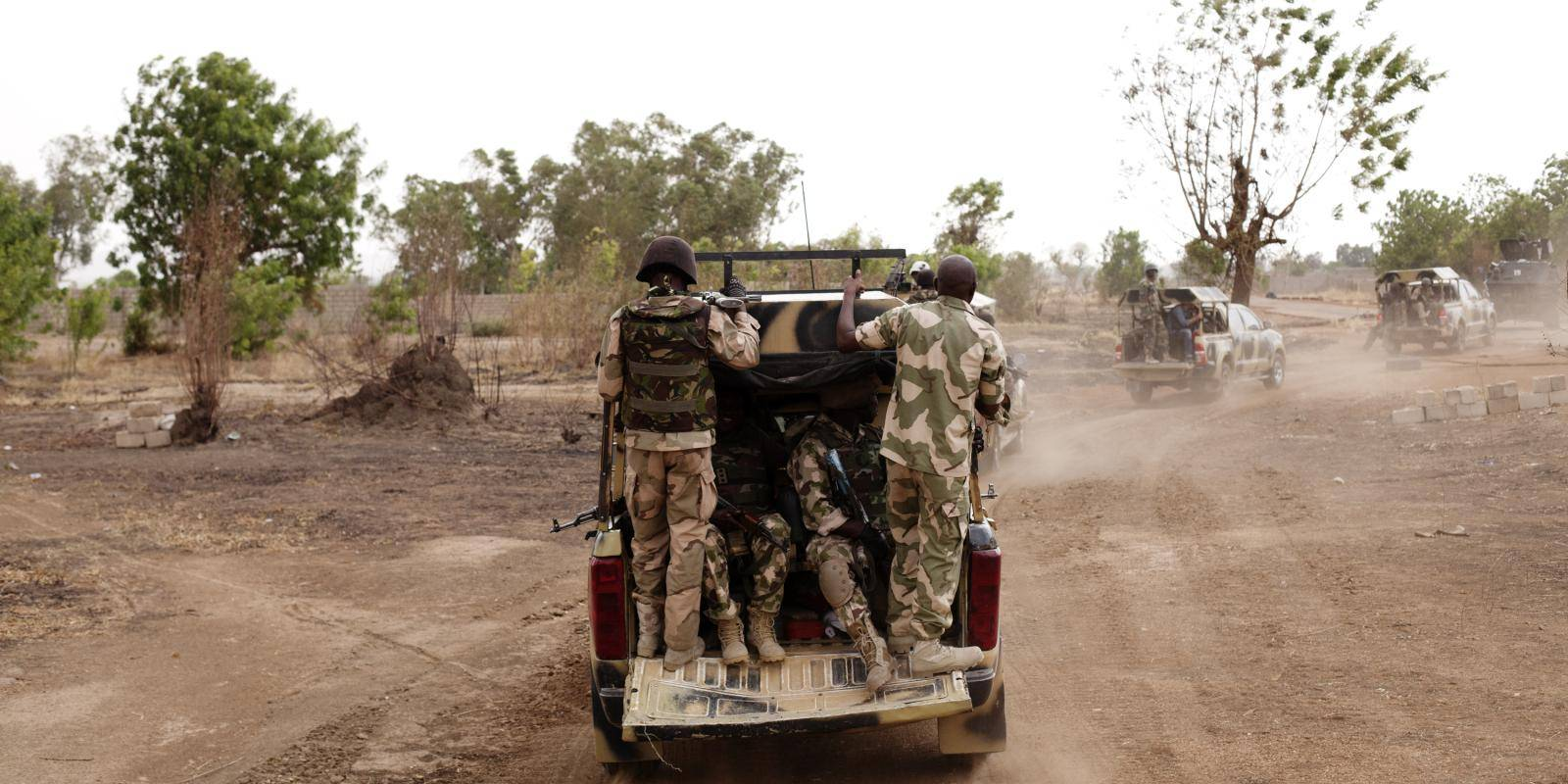
New Details Emerge in Benisheikh Assault: Survivors Recount Intense Battle That Claimed Brigadier General Braimah
BENISHEIKH, BORNO STATE — Fresh eyewitness accounts have surfaced regarding the midnight insurgent assault on the 29 Task Force Brigade in Benisheikh, providing a harrowing look into the engagement that resulted in the death of its commander, Brigadier General Oseni Braimah.
While the Nigerian Army maintains that the attack was successfully repelled with minimal casualties, surviving soldiers and local residents describe a sophisticated, multi-pronged offensive by suspected Boko Haram and ISWAP fighters that temporarily overwhelmed defensive positions.
A Coordinated Midnight Siege
The assault began at approximately 12:30 AM on Thursday. Insurgents reportedly launched simultaneous strikes against three military formations in the strategic town of Kaga Local Government Area, located along the vital Maiduguri-Damaturu highway.
"They came in large numbers from different directions at the same time," a surviving soldier told Saturday PUNCH on the condition of anonymity. "It felt like they had studied our positions for weeks."
Troops reported that the insurgents leveraged a significant numerical advantage. As rumours of fallen positions and the death of the Brigade Commander spread, coordination briefly fractured, forcing some personnel to seek cover within civilian areas of the town. The heavy exchange of fire and subsequent explosions reportedly lasted over 90 minutes.
The Fate of General Braimah
Conflicting reports initially suggested that General Braimah was killed because his Mine-Resistant Ambush Protected (MRAP) vehicle failed to start. However, military insiders and the General’s former staff have strongly disputed this claim.
-
Vehicle Condition: Sources close to the late General emphasized his "exemplary" commitment to equipment maintenance.
-
The Combat Reality: A high-level military source clarified that the MRAP did not fail due to poor maintenance but was "temporarily immobilized" and set ablaze by insurgents during the heat of the ambush.
-
Leadership at the Front: Lt.-Col. Sani Uba, Media Information Officer for Operation Hadin Kai, stated that the General was actively coordinating a counter-assault from the vehicle when it was targeted.
Civilian Impact and Destruction
The battle spilled into the civilian sector, causing widespread panic. Residents reported that insurgents looted military resources and set fire to shops and vehicles belonging to civilians and travellers stranded by the nightly road closures.
"When I got to the camp after the attack, it was an eyesore," said resident Mustapha Abu. "Vehicles were burned, buildings destroyed. Even civilian shops were not spared."
Military and Presidential Response
The Headquarters of Operation Hadin Kai has officially dismissed reports of high casualty figures, clarifying that two officers and two soldiers "paid the supreme price" during the engagement. Lt.-Col. Uba condemned the circulation of "false narratives" intended to undermine troop morale.
President Bola Tinubu expressed deep sorrow over the loss, commending the bravery of the troops. In a statement via his Special Adviser, Bayo Onanuga, the President characterized the insurgent offensive as a "sign of desperation" in the face of sustained military pressure.
"The insurgents’ counterattack is a sign of desperation. Our armed forces have been conducting sustained land and air offensives, neutralizing many of their fighters." — President Bola Tinubu
A Growing Toll on High-Ranking Officers
The death of Brigadier General Braimah underscores a troubling pattern of senior officers lost in the line of duty. He joins a list of high-ranking casualties that includes:
-
Brig. Gen. Musa Uba (2025)
-
Brig. Gen. Dzarma Zirkusu (2021)
-
Col. Dahiru Chiroma Bako (2020)
-
Lt. Col. Muhammad Abu Ali (2016)
Security analysts suggest these recurring losses highlight the ongoing challenges of intelligence gathering and force protection in a theatre defined by sophisticated ambush tactics.