


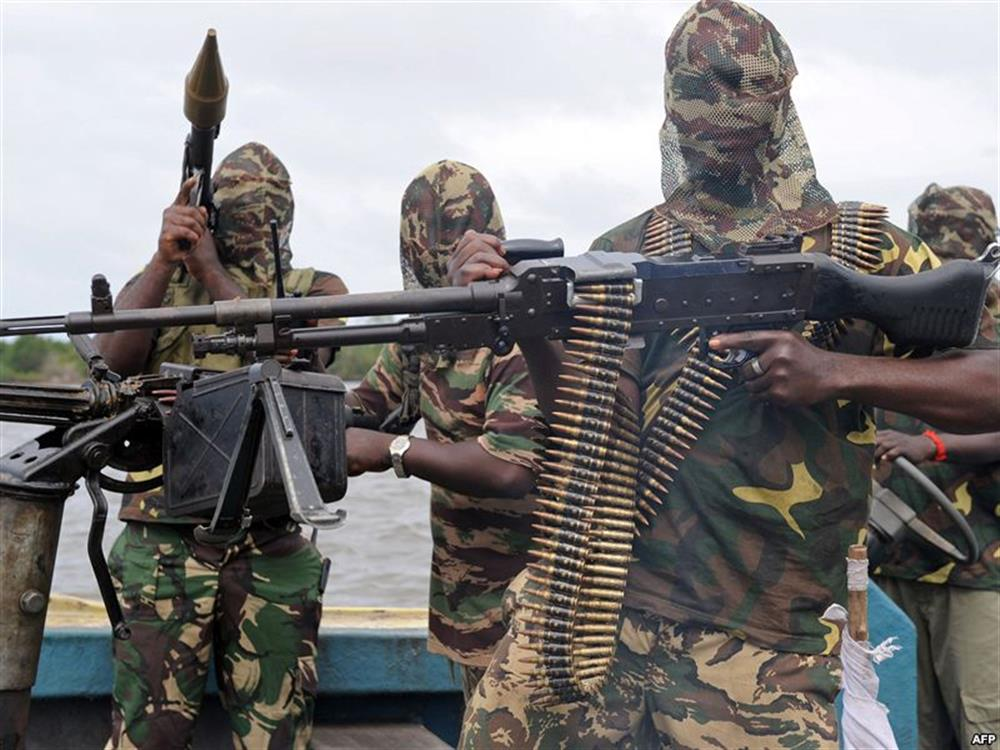
The U.S. Commission on International Religious Freedom (USCIRF) has leveled serious allegations against elements of Nigeria's security forces, accusing specific police and military officers of colluding with Fulani militias in a wave of deadly attacks and mass abductions targeting religious communities.
In a report titled “Non-state Violators of Religious Freedom in Nigeria: Fulani Militants,” the bipartisan federal commission detailed a worsening security crisis that has displaced an estimated 1.3 million people across Nigeria’s Middle Belt region.
Key Findings and Direct Military Action
The USCIRF report indicates that approximately 30,000 armed actors operate across Nigeria in loosely organized factions ranging from 10 to 1,000 members. These groups are heavily active in the North-West, Middle Belt, and parts of the South, utilizing tactical night raids with automatic weapons and machetes to drive rural populations off their land.
The report highlights a complex web of motivations driving the violence, noting that while some factions operate independently for financial enrichment, others coordinate with recognized terrorist organizations. Efforts by the public to track the fates of kidnapping victims have reportedly been obscured by sensitive ransom negotiations and alleged official complicity. USCIRF also cited government censorship and conflicting media narratives as significant hurdles to accurately analyzing the identities and motivations of these non-state actors.
In tandem with the report's release, U.S. Secretary of Defense Pete Hegseth announced that President Donald Trump has directed the Pentagon to prioritize the protection of Nigerian Christians targeted by ISIS. According to Hegseth, this directive recently culminated in a quiet, targeted operation that successfully neutralized ISIS’s second-in-command in Nigeria.
"There’s a lot of things we do that the media pays attention to, and a lot of things that the president empowers the department to do on behalf of the American people, that he deserves great credit for," Hegseth stated.
Targeted Assaults on Religious Communities
The commission documented several high-casualty attacks spanning 2025 and early 2026, noting that militant groups frequently time operations to coincide with major religious holidays to maximize psychological impact:
-
June 2025 (Benue State): An assault killed at least 200 people, including internally displaced persons (IDPs) sheltered at a Catholic mission.
-
2025 Massacre (Yelwata, Benue State): More than 200 Christians—predominantly women and children—were killed, displacing over 3,000 residents.
-
February 2026 (Niger & Kaduna States): Suspected militants killed 32 people in Niger State and targeted Holy Trinity Parish in the Kafanchan Diocese of Kaduna State, abducting 11 individuals, including the parish priest.
-
Easter Sunday 2026 (Kaduna State): Attacks on two churches left five worshippers dead and 31 abducted.
The report noted that violence is not exclusive to Christian communities; it documented a February 2026 incident in Plateau State where armed men abducted an imam and seven worshippers from a mosque, demanding a 16 million Naira ransom.
Legislative Recommendations and the K Street Impact
Following President Trump’s late 2025 redesignation of Nigeria as a "Country of Particular Concern" (CPC) for severe religious freedom violations, USCIRF has urged the U.S. Congress to implement strict legislative countermeasures.
The commission called for a statutory ban prohibiting U.S. individuals or firms from receiving compensation for lobbying on behalf of foreign governments designated as CPCs. The proposal is designed to halt influence campaigns aimed at softening Washington’s foreign policy toward blacklisted regimes.
| Client / Funder | U.S. Lobbying Firm | Contract Value / Terms | Mandate / Objective |
| Federal Government of Nigeria (via NSA Nuhu Ribadu) | DCI Group | $9 Million ($4.5M retainer paid Dec 2025; 6-month term through June 2026) | Highlight counter-terrorism efforts, showcase initiatives protecting Christian communities, and sustain U.S. military support in West Africa. |
| Atiku Abubakar (Former Vice President / Opposition Leader) | Von Batten-Montague-York, L.C. | $1.2 Million (12-month contract signed March 2026) | Provide strategic advisory, congressional engagement, and manage reputation ahead of the 2027 elections. |
Additionally, USCIRF recommended that Congress authorize U.S. residents to sponsor relatives fleeing religious persecution for resettlement, increase humanitarian funding for IDP camps globally, and mandate a full accounting of U.S. foreign assistance to CPC countries to ensure funds do not inadvertently support violators.
Domestic Reactions inside Nigeria
Efforts to secure official reactions from Nigeria's Defence Headquarters and the Force Headquarters in Abuja were unsuccessful, as spokespersons did not respond to inquiries. However, domestic socio-political groups have reacted strongly to the international findings.
Middle Belt Forum (MBF)
Dr. Bitrus Pogu, National President of the MBF, aligned with the commission’s findings, stating that local communities have long suspected internal sabotage within the security architecture.
"It is a known thing that we have people within our security network who are colluding and aiding these people," Pogu said, pointing to instances where militants possessed military-grade equipment. He urged the U.S. government to leverage its intelligence capabilities to help Nigeria identify and root out complicit elements within its forces.
Afenifere
The pan-Yoruba socio-political organization Afenifere warned the federal government against dismissing the USCIRF report. National Publicity Secretary Jare Ajayi remarked that the persistence of systemic banditry suggests high-level complicity. While acknowledging President Bola Tinubu's expressed commitment to ending terrorism, Ajayi noted that a recent spike in violence points toward internal sabotage, adding that the report should serve as a diagnostic "beacon" to thoroughly investigate political and security networks.