


Security Crisis Intensifies in Southwest Nigeria as Terrorist 'Sleeper Cells' Infiltrate Communities
IBADAN, Nigeria: A dramatic shift in Nigeria's security landscape is triggering widespread alarm as extremist networks, previously concentrated in the northern region, establish operational footholds in the Southwest. The recent coordinated assault on schools in Oyo State has shattered long-held assumptions of geographical immunity, forcing security analysts and regional leaders to confront a new reality: the proliferation of deeply embedded terrorist sleeper cells.
The Oyo School Abductions: A Defining Flashpoint
The vulnerabilities of the region were laid bare following a audacious attack on Community High School Ahoro-Esinele and Yawota Baptist Nursery and Primary School in the Oriire Local Government Area of Oyo State.
The Toll: Terrorists abducted 39 victims, including seven teachers and a two-year-old toddler.
Casualties: One teacher was killed during the initial assault, while another was subsequently beheaded in captivity.
Community Impact: One week after the incident, all victims remain captive. The attack has triggered mass displacement, leaving several rural communities deserted as terrified residents flee their homes.
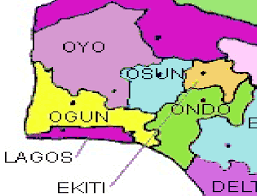
Security experts emphasize that this incident follows a predictable trajectory. Infiltration began along the Ekiti-Kwara border, eventually consolidating when armed groups effectively took control of parts of Kwara State a year ago, using it as a launchpad into the Yoruba heartland.
The Threat of the 'Sleeper Cell'
Security analysts warn that Nigeria's primary security threat has evolved beyond heavily armed insurgents occupying remote forests. The more insidious danger comes from "sleeper cells"—individuals or small networks sympathy to extremist causes who quietly integrate into civilian populations.
"Terrorists do not simply wake up and attack. An attack is the final stage. By the time it happens, a lot of groundwork has already taken place." — Dr. Tony Ofoyetan, Director-General of the International Institute of Professional Security
According to intelligence experts, these operatives move without flags or overt declarations. They blend into everyday life by:
-
Renting apartments and establishing legitimate businesses.
-
Building local relationships and gathering intelligence on community routines.
-
Facilitating logistics, moving funds, and monitoring critical infrastructure while awaiting operational orders.
Regional Leadership Demands Institutional Overhaul
The escalating crisis has prompted sharp criticism of the current regional security architecture, specifically the Western Nigeria Security Network, known as Amotekun.
Loss of Strategic Focus
Mr. Hassan Oladotun, President of the Yoruba Council Worldwide, asserted that the Amotekun outfit has lost its initial efficacy, drifting from its core mandate of regional defense to tackling petty crimes. He urged Southwest governors to bypass political divisions and integrate traditional structures—including the Oodua People’s Congress (OPC), Iru Ekun, and local hunters—into the formal security apparatus.
Ungoverned Forest Spaces
Chief Adebayo Amos Abiade, the Oluode of Ogbomoso South LGA, and public analyst Stephen Adewale both emphasized that vast, unmonitored forest reserves have become transit corridors and operational bases for migrating criminal groups. Adewale called for an immediate "forest audit" to register legitimate occupants, alongside rigorous security profiling of strangers moving into rural communities.
Shifting from Response to Prevention
Technical security partner Job Inegbenijie and RULAAC Executive Director Okechukwu Nwagunma critiqued the current "reactive scenario," noting that security forces consistently arrive too late. They advocated for modern surveillance technology, reconnaissance drones, and early-warning systems to safeguard vulnerable schools and farmlands.
State Responses: Ogun and Ekiti on High Alert
In response to the growing anxieties, state governments are scrambling to fortify their territories.
-
Ogun State: Hon. Kayode Akinmade, Special Adviser on Media and Strategy, confirmed that joint security forces have launched extensive forest-combing operations. These missions have successfully neutralized several suspected kidnappers and rescued victims along strategic border corridors linking Ogun with neighboring states.
-
Ekiti State: Brigadier General Ebenezer Ogundana (rtd), Special Adviser on Security Matters, assured the public that vulnerable schools and high-density marketplaces are under strict surveillance. Dismissing calls to close schools during examination periods, Ogundana stated that underground counter-terrorism operations are actively underway.
Lagos State: The High-Stakes Target
As terror networks move south, concerns have naturally extended to Lagos, Nigeria’s economic capital of over 20 million people. The dense population offers anonymity, making it highly attractive for sleeper cells seeking high-impact, symbolic targets.
The Quiet Arrests in Apapa
The reality of the threat to Lagos was underscored by a quiet operations breakthrough. On December 21, 2025, Department of State Services (DSS) operatives arrested two suspected ISWAP fighters, identified as Modu Gana and Ibrahim Dugge, in the Apapa port area. While no immediate attack plot was publicized, the arrest of insurgent operatives from the Northeast in Lagos confirms that extremist networks are actively exploring entry points into the metropolis. This was further compounded in January 2026 by a series of sophisticated bomb hoaxes targeted at schools in the high-end Ikeja GRA.
Mitigation and Investment
Despite these vulnerabilities, Lagos remains uniquely resilient due to sustained funding via the Lagos State Security Trust Fund (LSSTF). The state has recently deployed advanced logistical support, built modern police stations across strategic hubs, and established a specialized Violent Crime Response Unit (VCRU).
However, Mr. Oritseseundede Omagbemi, a retired Comptroller of Customs, cautioned against complacency, warning that authorities must urgently increase maritime surveillance along Lagos's extensive waterways and riverine communities to prevent discreet infiltration.
Aare Gani Adams Issues Ultimatum
Amid the perceived bureaucratic delays of state governments, Iba Gani Adams, the 15th Aare Ona Kakanfo of Yorubaland, has issued a stark warning to Southwest governors and traditional rulers.
Recalling the unpunished 2020 assassination of the Olufon of Ifon, Oba Israel Adeusi, and the recent killings of three traditional rulers within a four-day span across Ekiti and Kwara states, Adams declared that the region faces a "scorched-earth" campaign designed to paralyze the Southwest economy.
"The insecurity in the land is reaching an alarming peak... The matter is so serious now that some Yoruba are being abducted on the highway. If our people are afraid of going to their farms and traveling on the highway, danger looms." — Iba Gani Adams, Aare Ona Kakanfo of Yorubaland
Adams formally challenged regional leaders to grant him the official mandate and coordination authority, promising to utilize his extensive traditional network to entirely flush out terrorists and kidnappers from the Southwest within six months.
The Path Forward
Security experts broadly agree that the Southwest has reached a critical crossroads. The latest wave of school abductions will either serve as the final catalyst for a unified, technology-driven regional defense strategy, or mark the beginning of a deeper, systemic security crisis across southern Nigeria.