


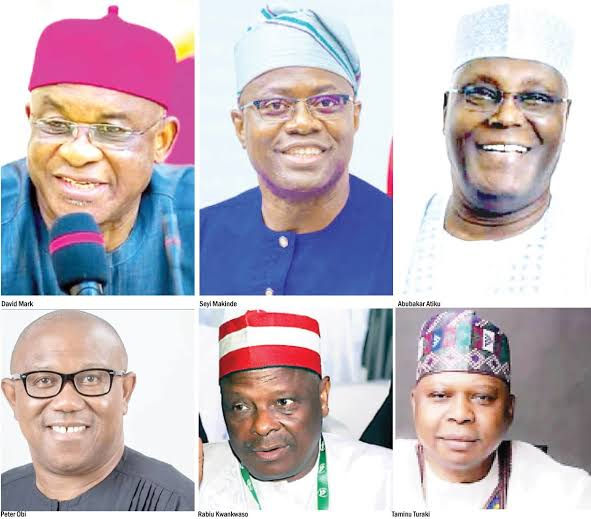
Uncertainty looms over the high-stakes opposition summit in Abuja, as political leaders gather to lay the groundwork for a consensus presidential candidate to challenge President Bola Tinubu in the upcoming 2027 election.
The summit, convened by the G-100 under the theme ‘A Framework for Opposition Cooperation and Coordination,’ brings together leadership from Nigeria’s principal opposition parties—including the ADC, APM, NDC, PDP, PRP, and SDP. While the G-100’s convener, Salihu Mohammed Lukman, emphasized that the meeting will not immediately select a presidential flag bearer, the question of who ultimately steps aside for whom remains the central challenge facing the coalition.
This new effort follows the fading momentum of an earlier coalition formed in Ibadan last April. That initiative brought together major political figures such as former Vice President Atiku Abubakar, former Anambra State Governor Peter Obi, former Kano State Governor Rabiu Kwankwaso, and Oyo State Governor Seyi Makinde. However, those leaders subsequently splintered, pursuing individual presidential ambitions across separate political platforms. Obi and Kwankwaso aligned with the NDC, Atiku secured the ADC ticket, and Makinde claimed the APM ticket.
To avoid repeating past failures, the G-100 aims to establish a formal negotiation framework rather than forcing a rushed consensus. Participating parties are expected to form specialized working groups to develop binding cooperation agreements within four weeks.
Meanwhile, the ruling All Progressives Congress (APC) maintains a commanding presence, controlling 31 of Nigeria’s 36 governorship seats. Critics of the opposition, including Federal Capital Territory Minister Nyesom Wike, have dismissed the coalition efforts as "dead on arrival," arguing that personal ambitions and internal divisions will continue to cripple anti-incumbent movements. Wike asserted that President Tinubu enters the 2027 race with a distinct advantage over a fragmented opposition.
History underscores the difficulty of forging successful political alliances in Nigeria. While past coalitions like the one that brought President Muhammadu Buhari to power in 2015 proved successful, numerous others—such as the UPGA in the First Republic and the PPA in the Second Republic—collapsed because leaders could not reconcile personal ambitions.
As opposition delegates convene in Abuja, the immediate goal is establishing transparent structures for negotiation. However, the ultimate viability of the 2027 coalition will depend entirely on whether prominent aspirants are willing to subordinate individual ambitions to a unified national strategy.