


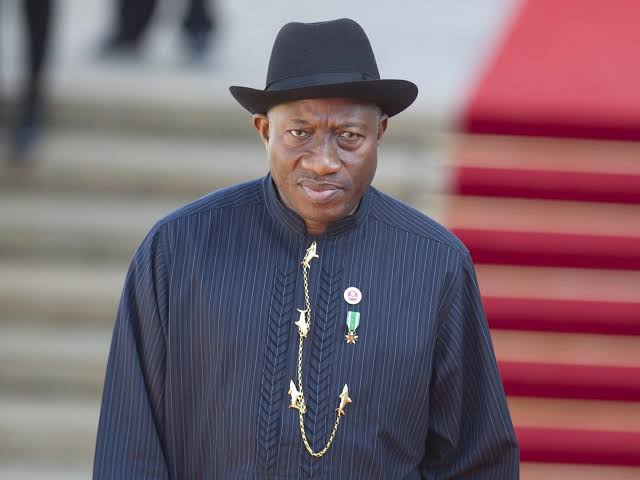
The Independent National Electoral Commission (INEC) has refused to accept the presidential nomination of former President Goodluck Jonathan and other candidates submitted by the Kabiru Turaki-led faction of the Peoples Democratic Party (PDP).
The rejection intensifies an ongoing leadership crisis within the opposition party ahead of the 2027 general elections. The Turaki faction had previously announced that it manually delivered the candidacy lists to the electoral commission on Friday.
Victoria Eta-Messi, INEC’s Director of Voter Education and Publicity, clarified that the commission exclusively accepts candidate submissions through its designated electronic portal in accordance with current regulations and guidelines.
Standoff Over Electronic Access Codes
Comrade Ini Ememobong, the National Publicity Secretary for the Turaki camp, explained that the faction resorted to manual submission after INEC allegedly withheld the access codes required for electronic filing. The faction argued that the portal codes represent a matter of administrative convenience rather than a strict legal requirement.
Ememobong maintained that the manual submission—covering the presidential nomination as well as governorship, National Assembly, and state assembly candidates—fully complies with the Electoral Act 2026 and received acknowledgment from the commission despite the recognition dispute.
The faction warned the electoral body against publishing any candidate list that contradicts the documents they submitted. Ememobong stated that the camp is prepared to pursue all constitutional, legal, and democratic avenues to prevent the party structure from being co-opted.
Origins of the Internal Leadership Dispute
Explaining the background of the conflict, the faction pointed to a previous Supreme Court judgment that left the PDP without a legally recognized national leadership. In response, the party’s Board of Trustees (BoT) and a requisitioned National Executive Committee (NEC) meeting established an Interim National Working Committee (NWC).
The faction criticized INEC for refusing to recognize the interim leadership despite formal notifications, which ultimately forced the party to seek judicial intervention. Furthermore, the camp contested a subsequent Federal High Court ruling, characterizing it as an attempt to relitigate matters already settled by higher courts. Ememobong confirmed that the party has appealed the decision and intends to challenge discrepancies identified between the ruling delivered in open court and its Certified True Copy (CTC).
Accusations of Partiality and Threats to Democracy
The PDP faction strongly criticized INEC, alleging that the commission has compromised its constitutional neutrality in managing the dispute. Ememobong claimed that the electoral umpire withheld material facts during court proceedings and ignored congresses that it had officially monitored.
The faction further alleged that the troubles facing the PDP are part of a coordinated strategy to weaken opposition parties and establish a one-party dominant system in the country. Concluding with an appeal to the public, the faction urged Nigerians to defend multi-party democracy, warning that unchecked electoral authoritarianism poses a severe threat to the survival of genuine political competition in the nation.