


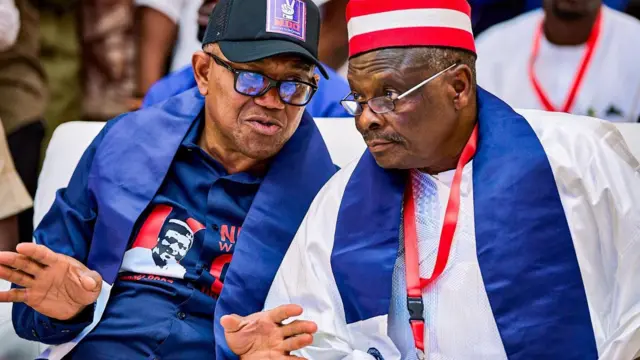
The presidential aspirations of former Anambra State Governor, Peter Obi, are encountering significant resistance from prominent political stakeholders and sections of the electorate in Northern Nigeria. Sources indicate that a substantial portion of northern voters have yet to embrace his political platform, the Nigeria Democratic Congress (NDC). Furthermore, some regional leaders have reportedly begun advising their followers against supporting the party, characterizing Obi and his running mate, Rabiu Kwankwaso, as working against northern interests. Hostility has already manifested in certain areas, including an incident where campaign posters were destroyed by disgruntled youths in Kano State, and the defection of some politicians back to the ruling All Progressives Congress (APC).
Perceptions of Visibility and Acceptance
Representatives from the Arewa Consultative Forum (ACF) state that the NDC currently lacks substantial visibility and recognition among ordinary voters across the northern region. While opposition figures maintain a strong media presence, their actual grassroots influence remains highly debated. Analysts note that Kwankwaso’s traditional stronghold in Kano State may be less secure than it was during the 2023 elections, and his influence outside of that state is uncertain.
Economic and social pressures have also shifted voter priorities. Observers suggest that northern voters are increasingly disillusioned with politics centered purely on ethnic or religious sentiments, such as Muslim-Muslim tickets. Instead, the electorate is applying greater scrutiny to the consistency, past statements, and shifting alliances of politicians across all major platforms.
Key Obstacles to Regional Integration
Political analysts and youth leaders highlight specific hurdles preventing the NDC from gaining widespread trust in the North:
-
Security Concerns and Alleged Sympathies: Some regional organizations argue that Obi faces trust issues due to his perceived stance on the Indigenous People of Biafra (IPOB). Critics contend that his past remarks regarding the legal and terrorist designations of the group have alienated northern voters who prioritize national stability.
-
Lack of Grassroots Infrastructure: Political scientists within the region note that outside of Kano State, the NDC lacks a functional physical presence or established party offices in critical states like Sokoto, Kaduna, Jigawa, Katsina, and Taraba, making it less competitive against traditional dominant parties.
-
Accusations of Political Betrayal: Groups such as the Northern Youth Assembly have openly criticized Kwankwaso, accusing him of compromising northern political interests and abandoning the core principles of his traditional movement for transactional electoral calculations.
NDC Growth Strategies and Support Networks
Conversely, NDC party officials and local coordinators strongly reject the notion that the party lacks a future in the North, pointing to active grassroots mobilization efforts ahead of the 2027 general elections.
| State / Organization | Mobilization Strategy & Current Progress |
| Borno State | Party leadership reports a significant influx of new members, including thousands of defectors from rival opposition parties, alongside the establishment of structures across all local government areas. |
| Jigawa State | Local chieftains have appointed coordinators across all local government areas and are actively leveraging youth dissatisfaction with the economic status quo to build grassroots momentum. |
| Civil Liberty Organisation (CLO) | Representatives argue that the lack of a single, dominant political figure inheriting past voting blocs allows northern voters to freely align with the NDC based on the individual reputations of Obi and Kwankwaso. |
| NDC Coalition Alliance Network | National coordinators emphasize that the combination of Obi’s reputation for economic management and Kwankwaso’s grassroots influence positions the alliance as a highly credible alternative for national unity. |
While internal party coordinators project optimism regarding their expanding structures, official national spokespersons for the campaign have yet to offer definitive statements regarding the regional resistance identified by independent observers.