


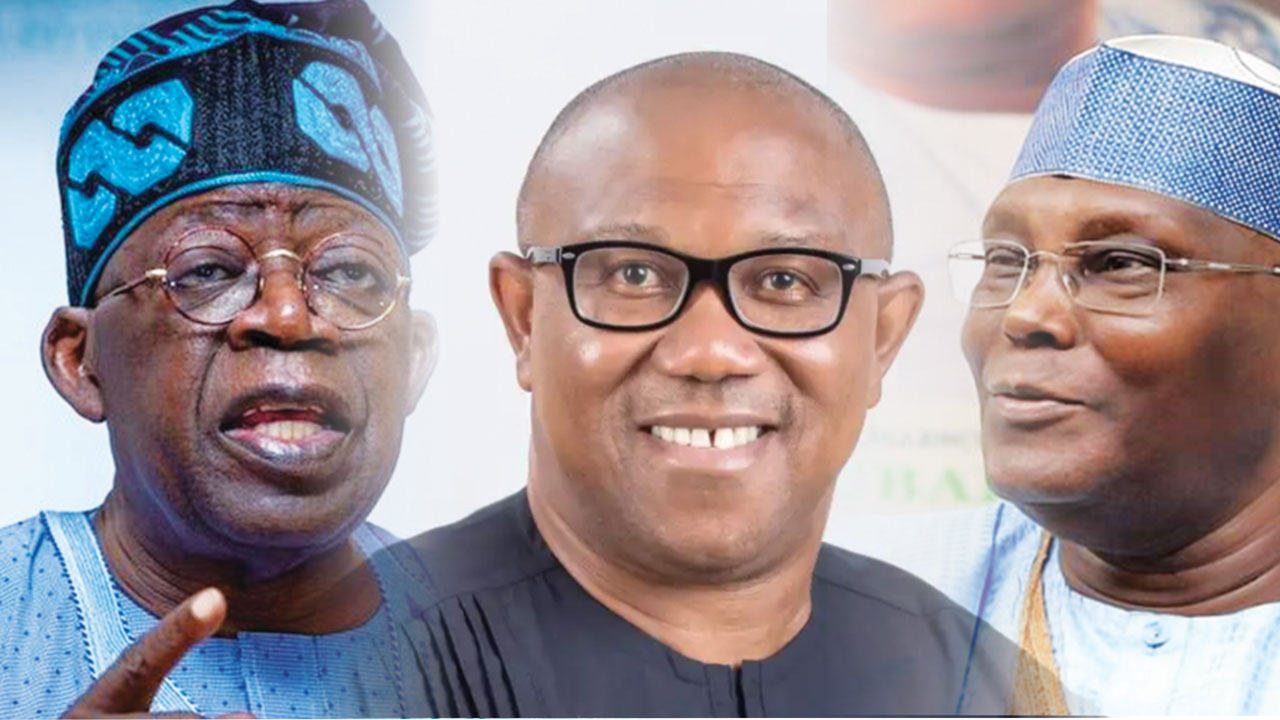
Tinubu, Obi and Atiku
As the official campaigns for Nigeria's 2027 general elections get underway following the signing of the National Peace Accord, growing concerns are mounting among civil society organizations, legal experts, and political stakeholders regarding the potential for the political contest to devolve into divisive rhetoric, misinformation, and violence.
Campaign Timelines and the Peace Accord
The campaigns for the presidential and National Assembly elections officially commenced on August 19, 2026, and are scheduled to run until January 15, 2027, ahead of the polls on January 16, 2027. Meanwhile, governorship and state House of Assembly campaigns are set to begin on September 9, 2026, leading up to elections on February 6, 2027.
To foster a peaceful environment, key presidential candidates—including Peter Obi of the National Democratic Congress (NDC), Adewole Adebayo of the Social Democratic Party (SDP), and Omoyele Sowore of the African Action Congress (AAC)—signed a National Peace Accord facilitated by the National Peace Committee and the Kukah Centre. President Bola Tinubu, representing the All Progressives Congress (APC), was represented by the Secretary to the Government of the Federation, George Akume, while the African Democratic Congress (ADC) candidate, Atiku Abubakar, did not participate.
Core Concerns and Stakeholder Perspectives
Analysts and civil rights leaders have warned that despite the signing of the accord, recurring patterns from previous election cycles threaten to overshadow substantive discussions on national issues such as the economy, security, education, and healthcare.
-
Weaponization of Social Media and Misinformation: Experts, including Dr. Joe Okei Odumakin of the Centre for Change, have expressed deep apprehension over the rapid spread of false information, deepfakes, and inflammatory content online. Similar warnings were echoed by ActionAid Nigeria Country Director Dr. Andrew Mamedu, who emphasized that digital platforms are frequently exploited to spread ethnic slurs and unverified claims.
-
Ethnic and Religious Profiling: Stakeholders have cautioned against utilizing identity politics to polarize the electorate. Reports from human rights groups and analysts highlight instances where public rhetoric crossed lines into dangerous territory, prompting warnings from institutions like the National Human Rights Commission (NHRC) and the Independent National Electoral Commission (INEC).
-
Pre-Election Violence and Electoral Integrity: Legal practitioners and public analysts have pointed to localized violence during recent off-cycle elections—such as the Osun State governorship election—as a worrying precedent. Observers stress the urgent need for security agencies and regulatory bodies, including the National Broadcasting Commission (NBC), to enforce legal provisions under the Electoral Act and the Cybercrimes Act consistently and impartially from the outset of the campaigns.
The Call for Issue-Based Politics
Stakeholders across the board maintain that the 2027 general elections must focus on competing policy ideas and governance records rather than personal attacks, mudslinging, and identity-based divisions. Civil society groups emphasize that robust citizen engagement, rigorous fact-checking, and strict adherence to the rule of law are vital to safeguarding national unity and ensuring a credible electoral process.