


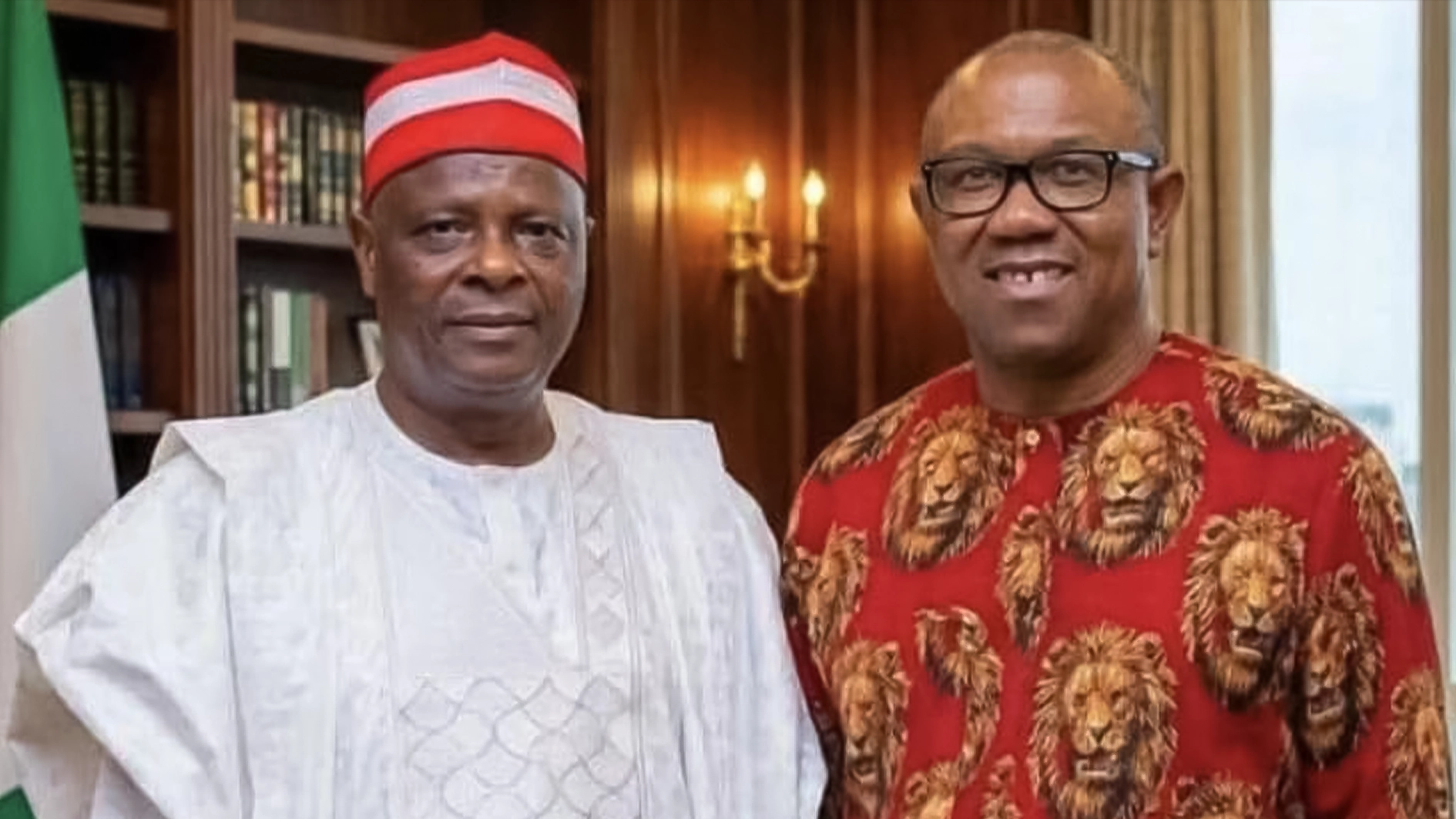
Rabiu Musa Kwankwaso and Peter Obi
In a major shake-up of the Nigerian political landscape ahead of the 2027 general elections, former presidential candidates Peter Obi and Rabiu Musa Kwankwaso have officially defected to the newly formed Nigeria Democratic Congress (NDC).
The move, finalized at the party’s national secretariat in Abuja, saw NDC National Chairman Cleopas Moses Zuwoghe present membership cards to both leaders. The duo cited the persistent internal crises within their former platform, the African Democratic Congress (ADC), as the primary catalyst for their departure.
Seeking a "Safe Haven"
The Kwankwasiyya movement, the powerful political machinery behind Kwankwaso, characterized the transition as a strategic necessity. Spokesperson Habeeb Saleh Mohammed revealed that the ADC had become "entangled in legal disputes," including potential deregistration threats by INEC and leadership legitimacy battles.
"We are looking for a safer platform one that does not have internal crises or legal issues," Mohammed stated, noting that the NDC’s "brand new" status allows the movement to help build the party’s leadership structure from the ground up.
The "OK Ticket": Unity or Political Gamble?
While party loyalists are touting a potential Obi-Kwankwaso (OK) joint ticket as a symbol of national unity and competence, political analysts remain divided.
Proponents argue:
National Appeal: Supporters believe the ticket bridges the North South divide.
Economic Discontent: In Kano, residents like Naziru Dalhatu suggest that the current economic hardship makes the ruling APC vulnerable to any credible opposition alliance.
Rapid Growth: Reports from within the NDC claim a surge in grassroots registration, with supporters anticipating a wave of defections from sitting National Assembly members.
Critics warn:
-
The "Leper" Risk: Public affairs commentator Mahdi Shehu described the frequent party-switching as a "monthly pilgrimage" that may overrate the duo’s current popularity. He warned that if the opposition remains fragmented, one bloc might strike a deal with the APC, leaving Obi and Kwankwaso as "political lepers."
-
Northern Skepticism: In states like Jigawa, some youth leaders have raised concerns over the lack of a clear governance blueprint. "What will they do differently?" questioned Muhammad Rabiu Musa, adding that entrenched religious and ethnic sentiments in the core North could pose a significant hurdle to an "Igbo presidency" ticket.
A Race Against Time
With the electoral clock ticking, the NDC faces the immediate challenge of submitting its membership registers and formalizing its structures.
The Kwankwasiyya movement remains optimistic, suggesting that the ruling APC is too preoccupied with its own internal flag-bearer selections to effectively destabilize the emerging NDC. However, as Peter Obi urged party members to "avoid litigation" and focus on rebuilding, the success of this alliance will ultimately depend on whether they can convert social media momentum into a cohesive, nationwide electoral machine.