


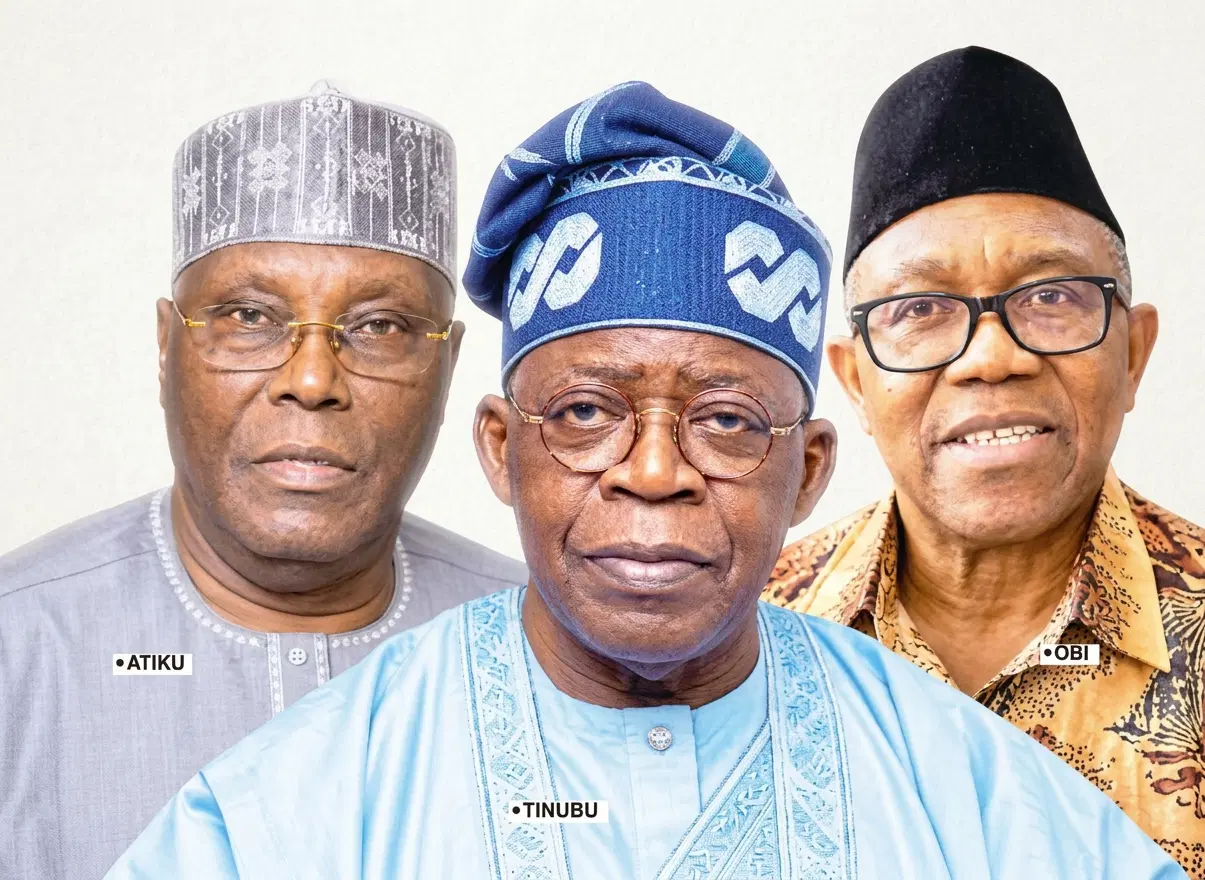
The race for the 2027 Nigerian presidency is shaping up as a high-stakes contest defined by voter numbers, party machinery, and strategic alliances. While President Bola Tinubu enters the race with the advantages of incumbency, key opposition figures like Atiku Abubakar and Peter Obi are positioning themselves to challenge his hold on power. With no region serving as a guaranteed political inheritance, the path to Aso Rock hinges heavily on two pivotal geopolitical zones: the North-West and the South-West.
The Electoral Landscape & Voter Statistics
According to the Independent National Electoral Commission’s (INEC) 2026 voter register, Nigeria has a total of 103,428,715 registered voters. The electoral distribution is heavily anchored by two dominant zones:
-
North-West: 25,083,411 registered voters (Nigeria’s largest geopolitical voting bloc)
-
South-West: 19,614,274 registered voters (Second largest bloc, anchored by Lagos leading nationally with 7,488,633 voters)
-
North-Central: 16,970,000 registered voters (Third largest bloc)
Together, the North-West and South-West account for 44,697,685 registered voters, representing more than 43 percent of the entire national electorate.
However, political analysts emphasize that raw registration numbers are only part of the equation. Turnout, voter accreditation, logistical efficiency, and the conversion of registered supporters into actual ballots on election day will determine how these numbers translate into real electoral power.
Inside the Key Battleground Zones
Neither of the two major zones can be treated as a predictable political monopoly:
-
The North-West Realities: While states like Kano, Kaduna, and Katsina command massive electoral weight, the zone is fractured by competing party structures, local leadership dynamics, and shifting voter sentiments. Issues surrounding security, economic conditions, and the performance of elected officials heavily influence voter choices. As past elections show, powerful state-level movements can easily disrupt calculations made in national headquarters.
-
The South-West Realities: Although the region serves as Tinubu's home base and political launchpad, support is not uniform. The 2023 election proved that local grievances, urban voting patterns, and credible opposition challenges can turn even a president's home territory into a competitive battleground evidenced by Peter Obi's narrow victory over Tinubu in Lagos during the previous cycle.
Lessons from Past Elections (1999–2023)
Nigeria’s democratic history since 1999 demonstrates that regional strength matters most when it is integrated into a broader national coalition:
-
Olusegun Obasanjo (1999, 2003) & Umaru Musa Yar’Adua (2007): Built victories on wide-ranging national support extending far beyond their regional origins, heavily utilizing the Peoples Democratic Party's nationwide machinery.
-
Goodluck Jonathan (2011): Secured success through substantial backing across the South and select northern areas.
-
Muhammadu Buhari (2015, 2019): Marked a turning point by showing that a unified opposition alliance (the All Progressives Congress) could combine a formidable northern base with multi-regional support to unseat an incumbent.
-
Bola Tinubu (2023): Won the presidency with 8,794,726 votes by combining South-West support with strong northern performance, aided significantly by the fragmentation of the opposition across multiple candidates.
Strategic Calculations and Opposition Challenges
The 2023 election exposed the volatility of Nigeria's voting blocs. While Tinubu performed strongly in both the South-West and core northern states, the opposition split the electorate: Atiku won Kaduna, and Rabiu Kwankwaso carried Kano. Had the opposition consolidated behind a single candidate, the outcome could have looked entirely different.
Strategic assessments indicate that a successful candidate in 2027 must command multiple major voting pillars typically combining strength in the South-West and core North with substantial backing from the North-Central, South-South, or both. Furthermore, candidates must clear the strict constitutional requirement under Section 134 of the Nigerian Constitution, which mandates winning the highest overall vote count alongside at least 25% of the vote in no fewer than two-thirds of the states and the Federal Capital Territory (FCT).
The Outlook for 2027
As the political machinery gears up for 2027, each major player faces distinct hurdles:
-
For President Tinubu: The election will serve as a referendum on his administration's handling of the economy, job creation, living costs, and national security. He must defend his home base and maintain the broad coalition that brought him to power.
-
For Atiku Abubakar: The central challenge lies in converting northern support into a cohesive, broader national coalition while overcoming opposition fragmentation and party defections.
-
For Peter Obi: The objective is to expand his strong youth and southern following into competitive territories where he lagged during the 2023 cycle.
Ultimately, the road to Aso Rock will be decided by which candidate can successfully mobilize voters, withstand local political shifts, and forge robust alliances well beyond their traditional strongholds.