


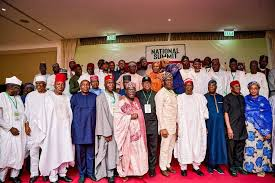
A high-stakes attempt to forge a unified opposition front ahead of the 2027 general elections has been met with immediate internal resistance, exposing deep-seated structural and ideological divisions within Nigeria’s leading anti-establishment parties.
While the National Summit of Opposition Political Parties, hosted by Oyo State Governor Seyi Makinde, aimed to produce a roadmap for a single presidential candidate, the aftermath has instead been defined by public dissension, legal threats, and a swift counter-offensive by the ruling All Progressives Congress (APC).
A Fragile Coalition Under Fire
The summit featured heavyweights such as former Vice President Atiku Abubakar (PDP), Peter Obi (LP), and Rabiu Musa Kwankwaso (NNPP). However, the ink was barely dry on their resolution before key factions began to distance themselves.
-
ADC Internal Crisis: The African Democratic Congress (ADC) was thrust into further turmoil as the Nafiu Bala Gombe-led faction formally disowned the summit. Spokesperson Christopher Okechukwu characterized the participants as "disgruntled elements" pursuing personal ambitions rather than party interests, citing ongoing legal battles over the party's leadership.
-
AAC Rejection: Omoyele Sowore, the 2023 presidential candidate for the African Action Congress (AAC), categorically rejected the coalition. Sowore described the gathering as an attempt to "recycle failed political actors," asserting that the AAC would maintain its independence to provide a "genuine alternative" to the established elite.
Escalating Rhetoric: The "One-Party State" Debate
The summit ignited a firestorm of rhetoric between the APC and the Peoples Democratic Party (PDP). Governor Makinde’s reference to the historical "Operation Wetie"—a period of violent political unrest in the 1960s—as a warning against electoral imposition was met with a stinging rebuke from the ruling party.
APC National Publicity Secretary Felix Morka labeled Makinde’s comments "reckless" and an "incitement to violence," suggesting the Governor was "unworthy of high office." In response, the PDP defended Makinde, arguing that his remarks were a necessary historical cautionary tale against "creeping fascism" and the suppression of opposition voices.
The APC’s Strategic Counter-Move
The ruling party has moved to capitalize on the opposition's perceived incoherence. In official statements, the APC dismissed the Ibadan declaration as "inconsequential" and "stillborn," pointing to:
-
The "Nomadic" Nature of Candidates: Criticizing the frequent party-switching of leaders like Peter Obi and Atiku Abubakar.
-
Structural Impediments: Highlighting that Nigeria’s electoral laws regarding mergers and primaries make a last-minute "single candidate" strategy legally precarious.
-
Governance Focus: Asserting that while the opposition focuses on "fear-mongering," the APC remains focused on President Bola Ahmed Tinubu’s "Renewed Hope" agenda.
Expert Perspectives: Liberation vs. Ego
Despite the friction, some proponents remain optimistic. Professor Pat Utomi described the Ibadan declaration as a "call for national liberation," arguing that the symbolic gathering proved some leaders are willing to set aside egos to rescue the country from a potential one-party system.
Similarly, former APC aspirant SKC Ogbonnia emphasized that a single candidate is not just achievable but essential.
"The opposition cannot afford the luxury of fragmentation," Ogbonnia stated, calling for a candidate with "massive financial backing and high-level competence" to challenge what he termed an "existential threat" to the nation’s democratic order.
The Road to 2027
As the political landscape shifts, the opposition faces a dual challenge: overcoming the legal hurdles of the Electoral Act and managing the "dissonant presidential ambitions" of its top brass. For the APC, the current fractures in the opposition bloc provide a clear strategic advantage, allowing the ruling party to frame itself as the only stable vehicle for national governance.