


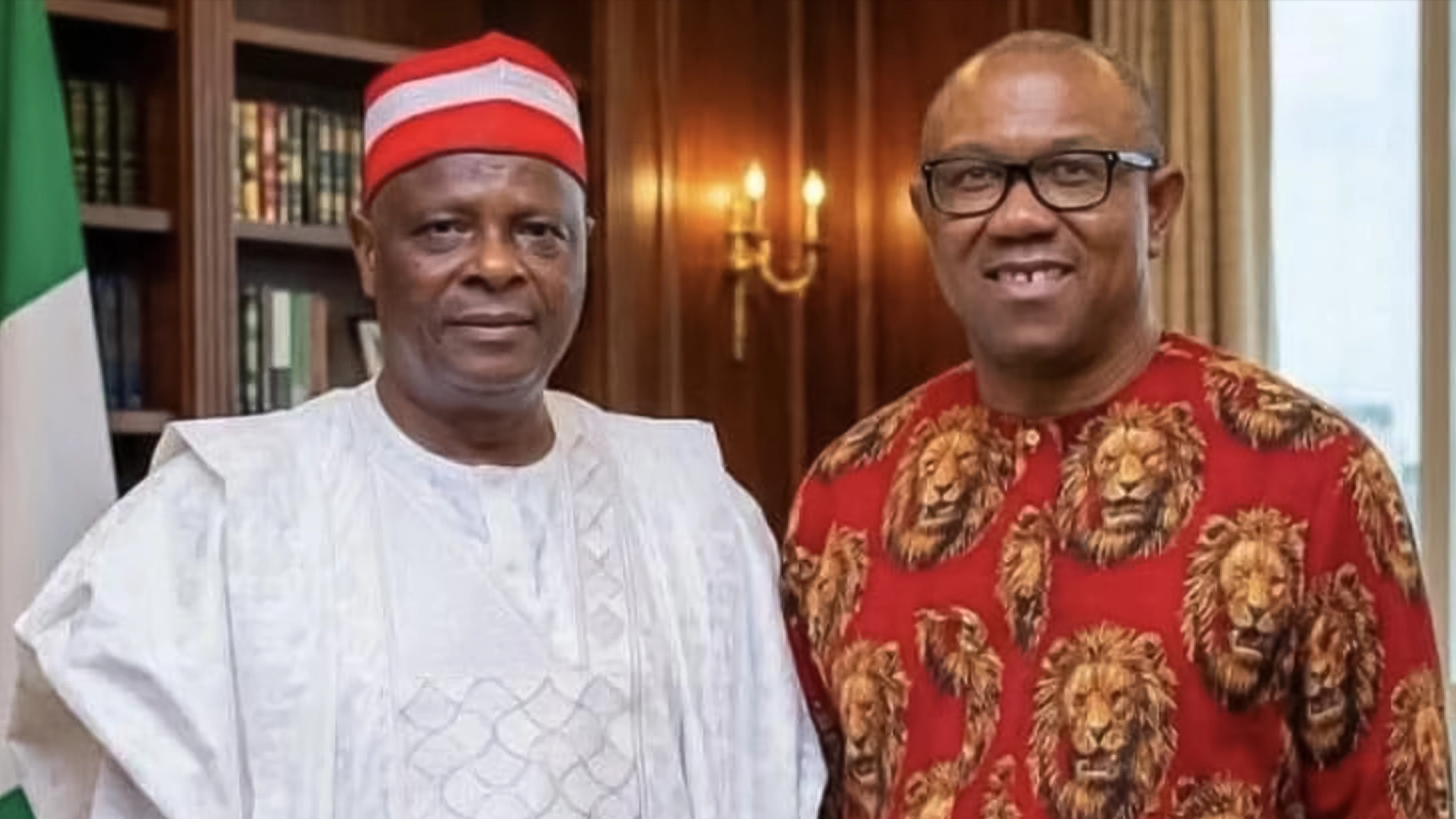
Rabiu Musa Kwankwaso and Peter Obi
Nigeria’s opposition landscape has shifted dramatically this week following the formal entry of former presidential candidates Peter Obi and Rabiu Musa Kwankwaso into the Nigeria Democratic Congress (NDC). The move has triggered a wave of high-profile defections, signaling a potential consolidation of opposition forces ahead of the 2027 general elections.
The transition from the crisis-ridden African Democratic Congress (ADC) to the NDC has instantly provided the fledgling party with significant national visibility and a growing legislative presence. Several members of the National Assembly, including Senator Victor Umeh, have already announced their defection to the NDC, citing the need for a stable platform free from the internal litigation that has plagued other opposition blocs.
The Arithmetic of a New Alliance
The alliance brings together two of the most potent grassroots movements from the 2023 cycle. In the previous election, Obi (6.1 million votes) and Kwankwaso (1.5 million votes) combined for over 7.6 million votes, narrowing the gap significantly against President Bola Ahmed Tinubu’s 8.8 million.
Political analysts suggest that the NDC’s primary strength lies in its potential to merge:
-
Youth and Urban Movements: Tapping into the "Obidient" and "Kwankwasiyya" volunteer networks.
-
Legislative Influence: Providing a unified front in the Senate and House of Representatives.
-
Geographic Reach: Combining Obi’s southern urban appeal with Kwankwaso’s northern populist base.
Escaping the "Cycle of Litigation"
Speaking at his unveiling in Abuja, Peter Obi emphasized that the move was a strategic decision to escape the "endless internal crises" orchestrated to weaken opposition movements.
"We have come to the NDC to help build a united Nigeria that works for everyone," Obi stated, making an overt plea to the ruling class to avoid using the judiciary to destabilize the new party. "We want to have peace; we want to build the party; we don’t want cases."
Senator Henry Seriake Dickson, a national leader of the NDC, positioned the party as the new "hub" for disillusioned members of the PDP, Labour Party, and NNPP, describing the NDC as a stable alternative to the factionalized legacy parties.
APC Dismisses "Political Inconsistency"
The ruling All Progressives Congress (APC) has downplayed the development. APC National Publicity Secretary Felix Morka dismissed the alliance as "unserious," characterizing the move as "running from pillar to post" in search of easy presidential tickets.
"The opposition remains too fragmented and personality-driven to present a serious threat," Morka argued, suggesting that the NDC’s momentum will likely stall when faced with internal debates over zoning and ticket allocations.
Institutional Challenges and 2027 Credibility
While the NDC gathers momentum, concerns remain regarding the environment in which the 2027 elections will be held. Opposition figures continue to express skepticism over whether a united coalition can succeed without significant electoral reforms.
In response, INEC Chairman Joash Ojo Amupitan acknowledged that while insecurity remains a threat, the commission is committed to a transparent process. "Our election in 2027 will be what we expect... a very free, fair, credible, and inclusive election," Amupitan stated.
As Abuja’s political class weighs the staying power of the NDC, the focus now turns to whether the party can translate initial excitement into a sustainable nationwide structure capable of challenging the incumbency of the APC.