


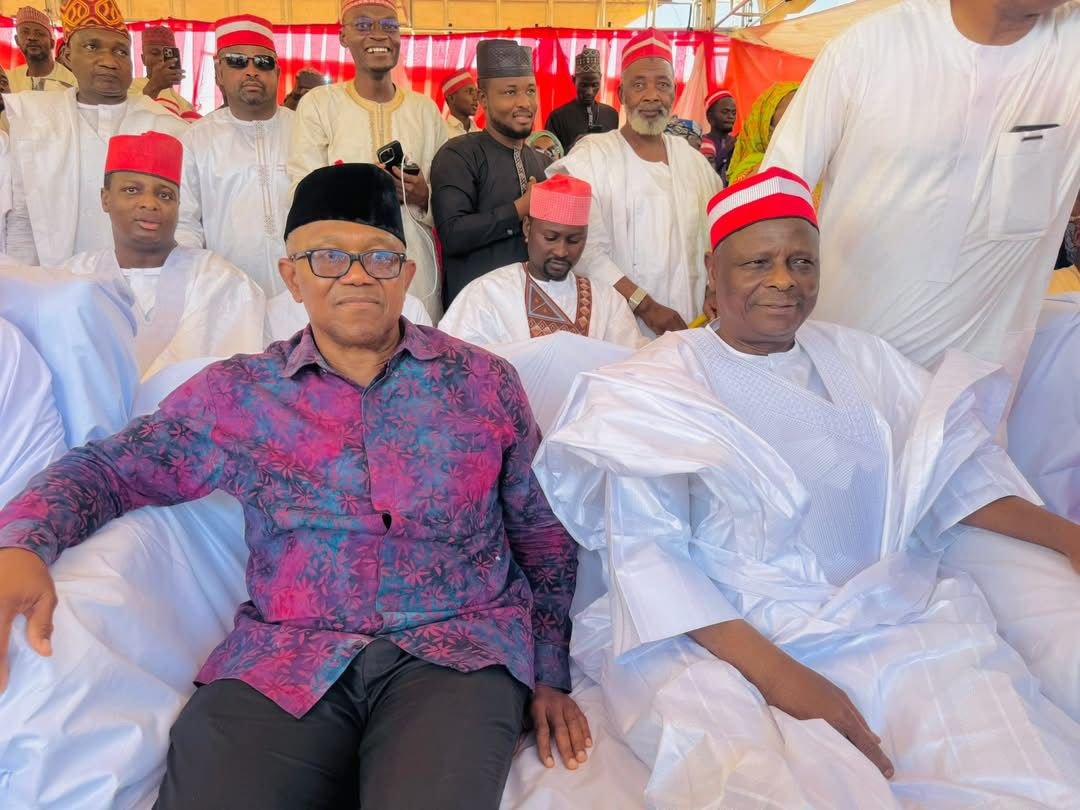
Peter Obi, Kwankwaso Alliance Under New "NDC" Banner Sparks Intense National Debate
ABUJA, NIGERIA: The reported political realignment between former Anambra State Governor Peter Obi and Rabiu Musa Kwankwaso under the aegis of the Nigerian Democratic Congress (NDC) has sent ripples through the country’s political landscape, igniting a fierce debate over the future of opposition politics ahead of the 2027 general elections.
The development has polarized public opinion, drawing reactions that range from cautious optimism regarding a "third force" coalition to deep-seated skepticism over the stability of such an alliance.
Obi Defends Strategic Shift
Addressing the controversy surrounding his departure from the African Democratic Congress (ADC) which he joined after leaving the Labour Party (LP)—Peter Obi characterized the move as a sacrifice for national interest rather than an act of personal ambition.
"The condition of our nation and the urgent need to rescue Nigeria informed my decision to leave ADC for NDC," Obi stated. "This decision was not made out of anger or convenience. It came after deep reflection on the severe, orchestrated litigation and internal crises that have hampered the opposition’s ability to function."
Despite his explanation, critics have been quick to point out his history of party-switching. While supporters on social media platforms like X (formerly Twitter) maintain that their loyalty lies with the candidate rather than the party structure, others, such as user Teejay 2, questioned the strategy: "If you keep changing parties, what exactly are you building?"
Internal Friction and Institutional Criticism
The move has also drawn fire from former allies. Yusuf Datti Baba-Ahmed, Obi’s 2023 running mate, expressed disappointment over the exit, suggesting that true leadership requires staying to resolve internal party disputes.
"Someone who got the ticket so easily should have stayed to fix the problem of the party no matter how difficult it is," Baba-Ahmed remarked. "If you are not ready to fight, stay in your house."
Meanwhile, comments attributed to Senate President Godswill Akpabio, who reportedly labeled the ADC a "dying party," have added fuel to the fire. While some dismissed the remark as standard political rhetoric, others argued that such dismissiveness undermines the healthy competition necessary for a thriving democracy.
Regional Perspectives: A Divided Electorate
The potential partnership between Obi’s urban, middle-class following and Kwankwaso’s formidable grassroots "Kwankwasiyya" movement in the North presents a unique demographic challenge to the ruling party. However, regional feedback remains mixed:
-
Northern Grassroots: In Kano, Mal Bello Hamidu emphasized that any alliance must be a "partnership of equals" rather than an absorption of Kwankwaso’s movement.
-
South-East Loyalty: In the South-East, traders like Amadi Chigozirim noted that while trust in Obi remains high, voters are becoming more transaction-oriented, demanding "results over promises."
-
The Skeptics: In Bauchi, APC supporter Aminu Sani dismissed the "Twitter hype," noting that managing the egos and ambitions of two political heavyweights is often where such coalitions collapse.
The "Stomach Infrastructure" Factor
Despite the high-level political maneuvering, a significant portion of the Nigerian populace remains indifferent to party names. For many, the litmus test for the NDC will not be its manifesto, but its perceived ability to tackle the soaring cost of living.
In markets across Minna and bus parks in Oshodi, Lagos, the sentiment was uniform: "Will this reduce the price of food and fuel?" As one commercial driver put it, "Whether it is Obi or Kwankwaso, what I want is for transport to be affordable. If they can’t fix that, it’s just the same cycle."
As the 2027 election cycle begins to take shape, the NDC faces the dual challenge of proving its structural durability while convincing a weary electorate that this latest alignment is a genuine solution to Nigeria’s systemic woes, rather than a mere marriage of convenience.