


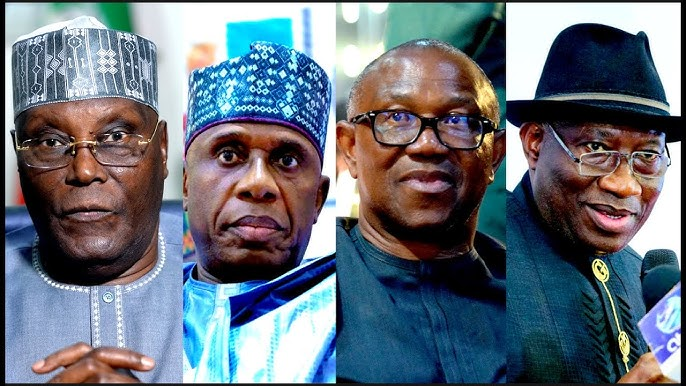
Nigeria 2027: Deep Fragmentation, Legal Hurdles, and Dark Horses Shape Early Presidential Race
ABUJA: With exactly 237 days left before the January 16, 2027 presidential election, the contours of Nigeria’s next general election are rapidly taking shape. Barring a decision by the Independent National Electoral Commission (INEC) to adjust its current timeline in compliance with a recent Federal High Court verdict—which ordered an extension of the window for party primaries and membership register submissions into September—the race currently features a field of 13 cleared aspirants.
Under INEC’s existing guidelines, the deadline for submitting party membership registers was May 10, with primaries mandated to conclude by May 30. This strict window has triggered a high-stakes scramble among political parties to finalize their flagbearers before the end of the month.
Should INEC ultimately push the timetable back to September, analysts predict a significant political realignment. Such an extension would likely see a wave of defections, particularly from the estimated 75 federal lawmakers who recently lost their re-election tickets within the ruling All Progressives Congress (APC) and are seeking alternative platforms to salvage their political ambitions.
For now, the field remains exclusive: all 13 aspirants who have paid millions of naira for nomination forms are male, and Governor Seyi Makinde of Oyo State stands as the sole sitting governor in the race.
The 2027 Presidential Aspirants at a Glance
| Aspirant | Party Affiliation | Key Political Profile |
| Bola Tinubu | All Progressives Congress (APC) | Incumbent President |
| Osifo Stanley | All Progressives Congress (APC) | Businessman & Challenger |
| Atiku Abubakar | African Democratic Congress (ADC) | Former Vice President |
| Rotimi Amaechi | African Democratic Congress (ADC) | Former Minister of Transportation |
| Mohammed Hayatu-Deen | African Democratic Congress (ADC) | Renowned Economist & Banker |
| Goodluck Jonathan | Peoples Democratic Party (PDP) | Former President |
| Sandy Onor | Peoples Democratic Party (PDP) | Former Senator & Academic |
| Seyi Makinde | PDP / Allied People’s Movement (APM) | Incumbent Governor of Oyo State |
| Peter Obi | Nigeria Democratic Congress (NDC) | 2023 LP Presidential Candidate |
| Peter Agada | Labour Party (LP) | Architect & Businessman |
| Samuel Nwaigwe | Labour Party (LP) | Philanthropist & CEO, Omni Group |
| Adewole Adebayo | Social Democratic Party (SDP) | 2023 SDP Flagbearer |
| Abimbola Atanda | Social Democratic Party (SDP) | Factional Aspirant |
Heavyweights and Alignment Strategy
Nigeria’s political landscape is witnessing intense maneuvering as established heavyweights, technocrats, and newcomers position themselves to challenge President Bola Tinubu. While the ruling APC maintains that President Tinubu is its consensus candidate for a second term, the party must still navigate its internal process today across 8,809 wards nationwide, where challenger Stanley Osifo remains on the ballot.
Concurrently, the opposition is attempting to forge strategic coalitions to unseat the ruling party. Analysts suggest the final outcome will hinge on three pivotal factors: coalition politics, regional zoning calculations, and the ability to build a formidable national infrastructure capable of countering the APC's incumbency advantage.
Atiku’s Seventh Presidential Bid
Former Vice President Atiku Abubakar remains the most enduring figure in Nigeria’s contemporary democratic history. Having contested for the presidency six times since 1993, Atiku is preparing for a seventh—and what he declares will be his final—attempt.
Following his exit from the PDP in 2025 due to "irreconcilable differences," Atiku has aligned with the ADC-led opposition coalition. While supporters point to his vast national network and deep financial resources, critics argue that his history of frequent party defections and advanced age could impact his viability. His primary obstacle remains uniting a highly fragmented opposition around a single candidacy.
The Jonathan Eligibility Factor
Former President Goodluck Jonathan’s re-entry into the political arena has introduced a major legal and constitutional debate. Backed by the Tanimu Turaki-led faction of the PDP, Jonathan has already been granted a screening waiver. However, his candidacy hinges on an upcoming Federal High Court ruling scheduled for May 26.
The court will determine whether Jonathan is eligible to run in light of a constitutional amendment barring individuals sworn into executive offices twice from contesting again. Jonathan's camp argues the amendment cannot be applied retroactively to his tenure, which ended in 2015. Proponents also view Jonathan as a strategic transitional option: because he is constitutionally limited to a single four-year term, his presidency would allow power to return to the North by 2031.
Tinubu’s Incumbency Advantage
Despite navigating domestic economic headwinds, rising inflation, and public dissatisfaction with structural economic reforms, President Tinubu’s camp retains a confident outlook. Backed by endorsements from APC governors and key party stakeholders, the administration relies heavily on its control of federal machinery, ongoing infrastructure projects, and the expectation that a fractured opposition will dilute the challenge against him.
Obi and the Third-Force Continuity
Peter Obi, the standard-bearer of the 2023 "Obidient" movement, has transitioned his political base to the Nigeria Democratic Congress (NDC). Obi retains strong appeal among urban youths and the middle class, having secured 6.1 million votes in the previous cycle. His primary strategic challenge is converting grassroots enthusiasm into a sustainable nationwide party structure. The NDC has attempted to address regional sensibilities by zoning its 2027 ticket to the South for a single term, promising to yield the 2031 ticket to the North.
The Dark Horses Testing the Waters
Alongside the dominant political figures, several technocrats and regional actors are positioning themselves as alternative options for an electorate weary of traditional politics.
-
Seyi Makinde (PDP/APM Alliance): The Oyo State Governor has entered the national conversation via a cross-party alliance. His financial capacity and strong southern base make him a potential consensus candidate, depending on how the ongoing leadership disputes within the PDP unfold.
-
Stanley Osifo (APC): The Edo State businessman is actively challenging the APC establishment. Rejecting claims that he is a placeholder candidate, Osifo is independently funding a campaign centered on economic recovery, security, and healthcare reform.
-
Mohammed Hayatu-Deen (ADC): A respected economist, former Director-General of the National Economic Planning Commission, and former Managing Director of FSB International Bank. Hayatu-Deen offers a purely technocratic platform focused on institutional and macroeconomic restructuring.
-
Sandy Onor (PDP): A professor and former Senator representing Cross River Central, Onor commands significant support within the South-South geopolitical zone and operates within the PDP faction aligned with FCT Minister Nyesom Wike.
-
Peter Agada & Samuel Nwaigwe (LP): Leading the new wave within the Labour Party, Agada (an architect and former finance director within the Obi movement) is campaigning on localized, technology-driven intelligence systems to curb insecurity. Nwaigwe, an industrialist and philanthropist from Ebonyi State, relies on deep grassroots networks within the South-East region.