


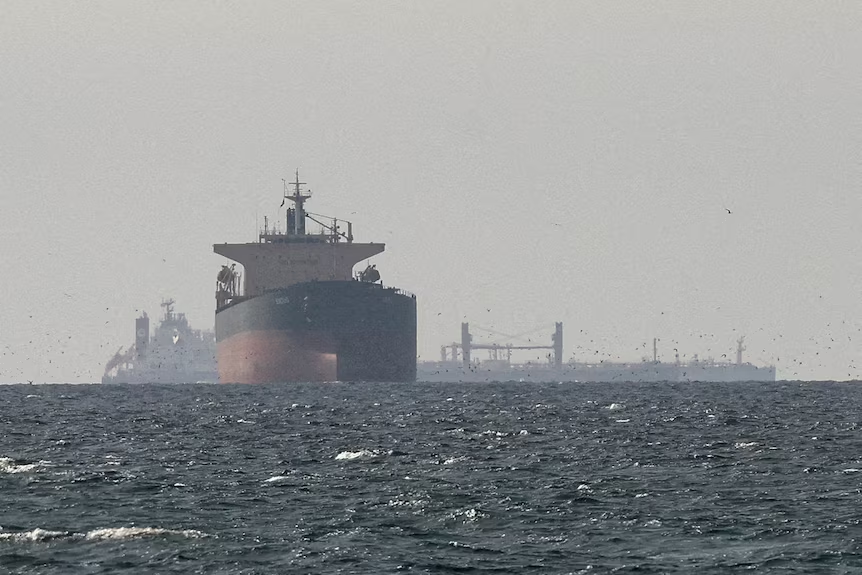
The fragile ceasefire between the United States and Iran faced a significant disruption on Monday following a series of American air strikes in southern Iran, triggering a sharp exchange of accusations between Washington and Tehran as regional peace talks continue.
The United States Central Command (CENTCOM) confirmed it conducted what it termed "self-defense strikes" targeting Iranian missile sites and vessels allegedly attempting to deploy naval mines in the Hormozgan region. According to CENTCOM, the operation was executed to neutralize immediate threats posed to U.S. forces in the area. While official statements did not specify the exact coordinates, a U.S. official cited by the New York Times indicated the strikes occurred near Bandar Abbas, a strategic port city and naval base situated along the Strait of Hormuz.
Iran’s Ministry of Foreign Affairs swiftly condemned the military action, labeling it a "gross violation" of the standing ceasefire and an "aggressive and unjustified" act. Tehran warned that it holds the United States fully accountable for the geopolitical consequences.
"Without a doubt, the Islamic Republic of Iran will not leave any evil unanswered and will not hesitate to defend the Iranian nation," the Iranian foreign ministry stated.
Prior to the official statements, Iranian state media reported localized explosions near Bandar Abbas. Subsequently, the Islamic Revolutionary Guard Corps (IRGC) claimed to have downed a U.S. unmanned aerial vehicle (UAV) and engaged an aircraft allegedly violating Iranian airspace, though specific timelines for those incidents were not provided.
Impact on Diplomatic Negotiations
The escalation occurs during a critical window of diplomatic engagement mediated by Pakistan and Qatar, aimed at formalizing a long-term resolution to the conflict that began on February 28.
The current framework under discussion is reportedly not a permanent peace treaty, but a memorandum of understanding. According to diplomatic sources, the proposed terms include:
-
A 60-day extension of the ceasefire originally enacted on April 8.
-
The reopening of the Strait of Hormuz, a vital maritime corridor through which approximately 20% of global oil shipments pass. The waterway has been heavily restricted since the onset of hostilities, contributing to a sharp increase in global energy prices.
-
A structured framework for renewed negotiations regarding Iran's nuclear program.
Diplomatic progress remains fluid. U.S. Secretary of State Marco Rubio indicated that an agreement remains viable but noted that negotiations would require several additional days. Over the weekend, U.S. President Donald Trump moderated earlier optimism regarding an immediate breakthrough, signaling that he had instructed American negotiators not to expedite the process unnecessarily.
Concurrently, Iranian officials stated on Monday that while some progress has been achieved, a finalized deal is "not imminent."
Core Stumbling Blocks
Negotiations in Doha, which included the participation of the governor of Iran's central bank, are currently focused on several high-stakes issues:
-
Frozen Assets: Tehran has conditioned its cooperation on the release of billions of dollars in frozen Iranian funds currently held in foreign accounts due to international sanctions.
-
Uranium Stockpiles: Western negotiators continue to press for verifiable limits on Iran's stockpile of highly enriched uranium. The U.S., Israel, and Western allies maintain that Iran's enrichment activities are aimed at developing a nuclear weapons capability. Tehran consistently maintains that its nuclear program is strictly designated for peaceful, civilian purposes.