


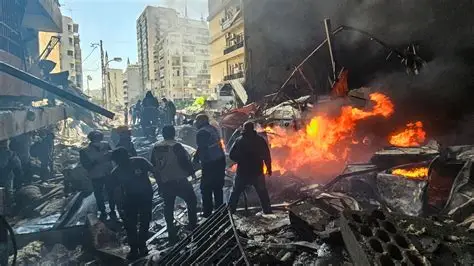
The Israel Defense Forces (IDF) have issued expansive evacuation orders for large sectors of southern Lebanon, designating the region a "combat zone" ahead of a renewed military offensive against Hezbollah.
Residents living south of the Zahrani River—located approximately 40 kilometers (25 miles) from the border—have been urged to relocate immediately further north. The IDF stated it intends to operate "with extreme force," citing repeated ceasefire violations by Hezbollah.
Covering roughly 14% of Lebanese territory and encompassing approximately 300 towns and villages, this marks the largest evacuation directive since the current ceasefire took effect on April 17. The directive has heightened international concerns over a major escalation and the prospect of renewed mass civilian displacement.
Intensified Air Strikes and Ground Clashes
The broader evacuation orders followed targeted directives and subsequent air strikes on the major southern coastal city of Tyre on Wednesday. The bombardments succeeded a devastating 24-hour period during which Lebanon’s health ministry reported at least 31 fatalities, including 15 individuals in the town of Burj al-Shamali. Over 150 air strikes were reported across 50 towns and villages in southern Lebanon and the Bekaa Valley within that timeframe.
On the ground, Hezbollah reported that its fighters engaged in close-quarters combat with Israeli troops in Zawtar al-Sharqiyeh. Notably, the town is located north of the Litani River and lies outside the initially declared Israeli "buffer zone."
Political and Military Justifications
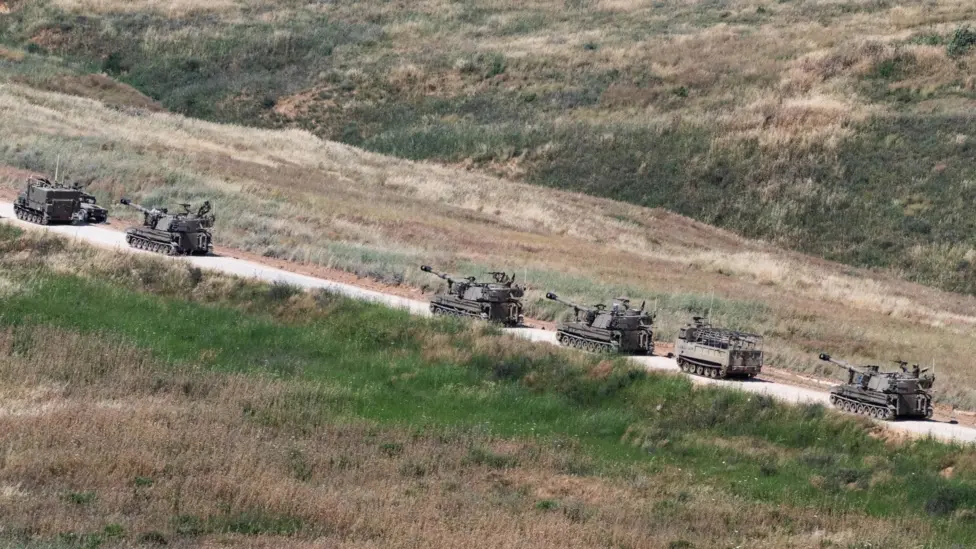
The escalation follows an announcement by Israeli Prime Minister Benjamin Netanyahu regarding the expansion of ground operations. The decision was prompted by recent Hezbollah drone strikes targeting both Israeli troops stationed in southern Lebanon and civilian populations in northern Israel.
Speaking to his cabinet, Netanyahu confirmed that the IDF is "deepening" its operations beyond the current 10-kilometer occupied border strip to fortify the security zone and protect northern Israeli communities.
Both factions accuse the other of undermining the temporary ceasefire agreement, which has been extended twice since its implementation last month:
The Israeli Government maintains it is acting defensively against persistent Hezbollah breaches and reserves the right to counter threats to its security.
Lebanese Officials argue that the scale and frequency of the Israeli air strikes constitute direct violations of the truce.
Humanitarian Crisis Nears "Tipping Point"
International aid organizations have raised alarms over the rapidly deteriorating humanitarian situation. Agnes Dhur, head of the International Committee of the Red Cross (ICRC) delegation in Lebanon, warned that conditions in the south are "nearing a perilous tipping point," stating that ongoing hostilities have rendered civilian life untenable.
Local officials note that neighboring safe havens are reaching maximum capacity. The coastal city of Sidon is reportedly unable to absorb further displaced families, prompting directives for fleeing civilians to seek refuge further east in the Beqaa Valley and Mount Lebanon.
Broader Regional Context
The current escalation threatens to disrupt complex diplomatic negotiations involving the United States, Israel, and Iran aimed at securing a broader regional peace. While Tehran insists that any diplomatic resolution must comprehensively cover Lebanon, Israel maintains its stance on neutralizing the threat posed by Hezbollah.
The conflict intensified significantly on March 2, following a Hezbollah rocket barrage launched in retaliation for an Israeli strike that killed Iran's supreme leader. According to the Lebanese Health Ministry, at least 3,213 people have been killed in Lebanon since the onset of the conflict; the ministry's figures do not differentiate between combatants and civilians. Israel has reported the casualties of 23 soldiers and four civilians during the same period.