


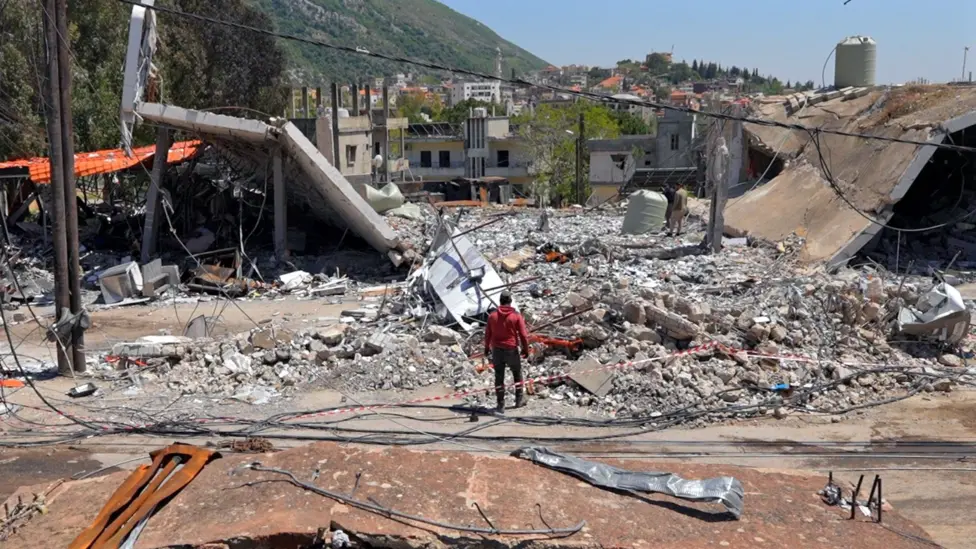
Southern Lebanon: Despite the announcement of a ceasefire last month, intense fighting continues to devastate southern Lebanon, where a collapse in diplomatic efforts has left the region under near-constant bombardment.
The human cost of the conflict was highlighted last Saturday, when an Israeli air strike destroyed a residential building in the town of Saksakiyeh. Local reports indicate that nine people were killed in the blast, including multiple generations of a displaced family. The Israeli military stated that the site was targeted due to its use by Hezbollah for military operations, describing the individuals within as an "immediate threat." While Israel has pledged to review reports regarding civilian casualties, the incident serves as a stark example of the ongoing violence facing non-combatants in the region.
A Landscape of Destruction and Displacement
The conflict has led to widespread displacement, with approximately one-fifth of Lebanon's population over one million people forced to flee their homes. Many of those who remain, particularly in the south, reside in partially abandoned towns and villages, living under the persistent threat of aerial surveillance and missile strikes.
In areas such as Arab Salim and the coastal city of Tyre, infrastructure is in ruins, and local economies have been decimated. Residents describe a daily existence defined by insecurity and the constant presence of drones and fighter jets overhead. Despite these conditions, many within the local Shia community continue to view Hezbollah as their primary, and often only, defense against Israeli territorial encroachment.
Regional Tensions and Political Impasse
The current escalation, which began in early 2026, followed broader regional volatility, including the death of Iran’s Supreme Leader, Ayatollah Ali Khamenei. While U.S. President Donald Trump brokered a ceasefire agreement on April 16, the truce has proven ineffective. Israel maintains that its military actions are necessary to establish a "security zone" free of Hezbollah to protect its northern border communities from rocket and drone attacks.
Conversely, Hezbollah, which continues to operate both as a militia and a powerful political force in Lebanon, rejects calls to disarm. The organization's leadership argues that their arsenal is essential for Lebanese sovereignty. This position has created a deep political divide within the country:
-
Government Stance: Lebanese President Joseph Aoun has formally called for the disarmament of Hezbollah but has warned that attempting to do so by force would risk severe sectarian instability.
-
Domestic Criticism: While the group retains strong support in its heartlands, there is growing, albeit quiet, domestic opposition to the group’s involvement in regional conflicts that many feel have left Lebanon vulnerable and isolated.
-
Humanitarian Impact: International human rights organizations have voiced concerns regarding the scope of the destruction, questioning whether the leveling of entire villages and civilian infrastructure adheres to the laws of war.
The Road Ahead
As of mid-May, the toll of the conflict has reached at least 2,800 fatalities in Lebanon, with hundreds killed since the ceasefire was technically initiated. With diplomatic channels stalled and the Israeli military continuing its operations in occupied territory, the path to a sustainable peace remains unclear. For the residents of southern Lebanon, the immediate future remains defined by the uncertainty of war, a sentiment captured by local survivors who, despite significant losses, remain resolute in their commitment to their land and their support for the forces they believe protect it.