


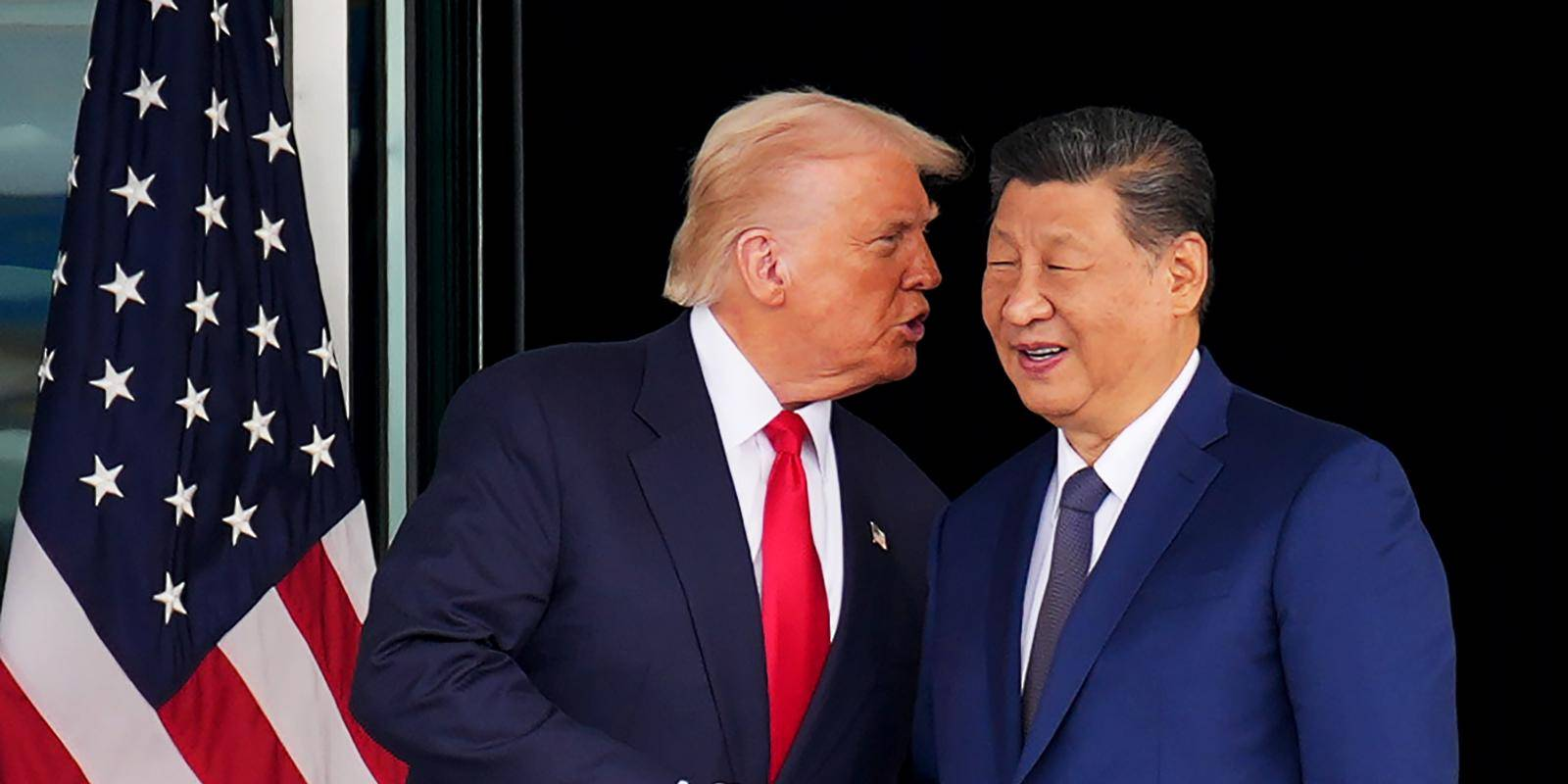
Trump and Xi Jinping
BEIJING: In a meticulously choreographed display of "state visit-plus" diplomacy, President Xi Jinping welcomed President Donald Trump to the Great Hall of the People today, signaling a potential recalibration of ties between the world’s two largest economies. The visit, marked by an elaborate military honor guard and effusive praise, comes at a critical juncture as both leaders navigate a volatile global landscape and deep-seated bilateral tensions.
A Contrast in Optics and Rhetoric
The warm reception stands in stark contrast to President Trump’s historically combative stance toward Beijing. After years of "tough on China" rhetoric and a trade war that saw tariffs exceed 100%, the atmosphere in Beijing was one of deliberate cordiality.
Diplomatic Gestures: Trump lauded Xi as a "great leader" and described their discussions as a "cherished" opportunity.
The Delegation: Notably, the visit is heavily focused on commerce. Trump is accompanied by a "Who’s Who" of American tech and industry, including Elon Musk, Tim Cook, and Jensen Huang, highlighting the administration's push for increased market access.
A New Framework: The leaders have agreed to define the bilateral relationship as "constructive, strategic, and stable," a mantra intended to guide diplomacy for the next three years.
The Leverage of Crisis: Iran and the Global Economy
While the red carpet suggests harmony, the underlying agenda is dominated by urgent geopolitical crises. With the Strait of Hormuz blocked due to the ongoing conflict involving Iran, the global economy is reeling.
Washington is reportedly seeking Beijing’s intervention to nudge Tehran—its long-term trading partner—toward the negotiating table. However, analysts suggest that China’s cooperation will not come without a price.
"Beijing is now the second world capital," says John Delury of the Asia Society. "President Xi has been eager to portray himself as a stable global leader in contrast to a mercurial U.S. president."
Points of Friction: Taiwan and Trade
Beneath the pageantry, the "thorny issues" remain unresolved. State media reports indicate that President Xi used the initial talks to issue a stern warning regarding Taiwan, characterizing it as a flashpoint that could lead to direct conflict.
| Key Issue | U.S. Objective | China’s Stance |
| Trade | Greater market access for U.S. firms; reduction of "rip-off" practices. | Defense of manufacturing dominance (EVs, Solar, Rare Earths). |
| Iran | Reopening the Strait of Hormuz and nuclear non-proliferation. | Leveraging diplomatic ties with Tehran for concessions elsewhere. |
| Taiwan | Continuation of arms sales and defense support. | Demand for the cessation of military aid and recognition of sovereignty. |
A Pragmatic Truce
Economic realities are driving this pragmatic shift. China is currently grappling with internal challenges, including a real estate crisis and high local government debt. Conversely, the U.S. remains deeply dependent on Chinese manufacturing, which accounts for one-third of global goods.
The summit concluded with a symbolic exchange of invitations: Trump invited Xi to the White House this September, while Xi offered a rare alignment of slogans, suggesting that the "Great Rejuvenation of the Chinese Nation" and "Make America Great Again" could coexist.
Whether this "magnificent welcome" translates into a durable treaty or remains a temporary ceasefire in a shifting world order remains the defining question of the summit.