


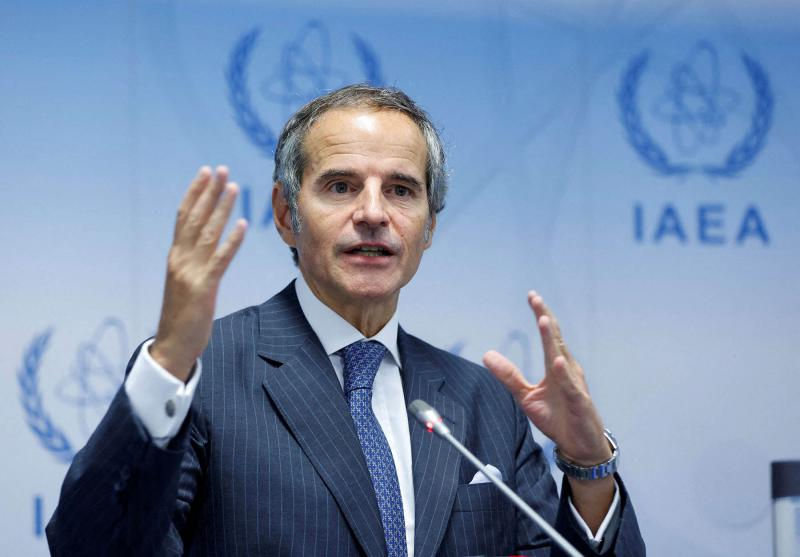
The head of the International Atomic Energy Agency, Rafael Grossi, has confirmed that the organization will conduct inspections in Iran following a preliminary peace agreement between Tehran and Washington. Speaking in Japan, Grossi stated that the agency is currently finalizing the specific dates, procedures, and locations for the visits. He emphasized that the memorandum of understanding signed by both nations explicitly mandates IAEA supervision for the dilution of Iran's highly enriched uranium.
However, conflicting narratives have emerged regarding the scope of the inspections. Iranian Deputy Foreign Minister Kazem Gharibabadi indicated that access to damaged nuclear facilities and materials remains contingent on a final agreement and the practical lifting of all sanctions. This contrasted with statements from US Vice President JD Vance and President Donald Trump, who both asserted that Iran had fully committed to the return of inspectors. Grossi dismissed the conflicting rhetoric as political positioning, maintaining that the signed memorandum guarantees the IAEA's supervisory role.
Diplomatic and Economic Ripple Effects
The diplomatic developments coincide with a regional tour by US Secretary of State Marco Rubio, who is visiting Gulf nations to discuss the preliminary deal. Rubio has already met with UAE President Mohamed bin Zayed Al Nahyan, with subsequent stops planned for Kuwait and Bahrain.
The initial agreement also includes provisions for maritime security, stipulating that Iran will permit safe passage through the Strait of Hormuz in exchange for the US lifting its naval blockade on Iranian ports. Following reports that some vessels have begun navigating the strait under a UN-backed evacuation scheme for stranded sailors, global energy markets reacted. The price of Brent crude oil dropped below $75 per barrel for the first time since the outbreak of the US-Israeli conflict with Iran.
Technical Context and Remaining Hurdles
Under the current 14-point memorandum, the US and Iran have 60 days to negotiate a final treaty. A central component involves managing Iran's stockpiled enriched material through a mutually agreed mechanism, with a baseline requirement for on-site down-blending overseen by the IAEA.
A recent IAEA report noted that while inspectors were granted access to the Bushehr nuclear power plant earlier this month, they remain barred from sensitive facilities damaged during military strikes last year. Consequently, the watchdog cannot currently verify the size, composition, or location of Iran's enriched uranium stockpile, much of which is believed to be secured in underground tunnels at Isfahan. Prior to the escalation of hostilities in late February, the IAEA estimated Iran possessed 440 kilograms of uranium enriched up to 60% purity. Tehran continues to maintain that its nuclear program is entirely peaceful.