


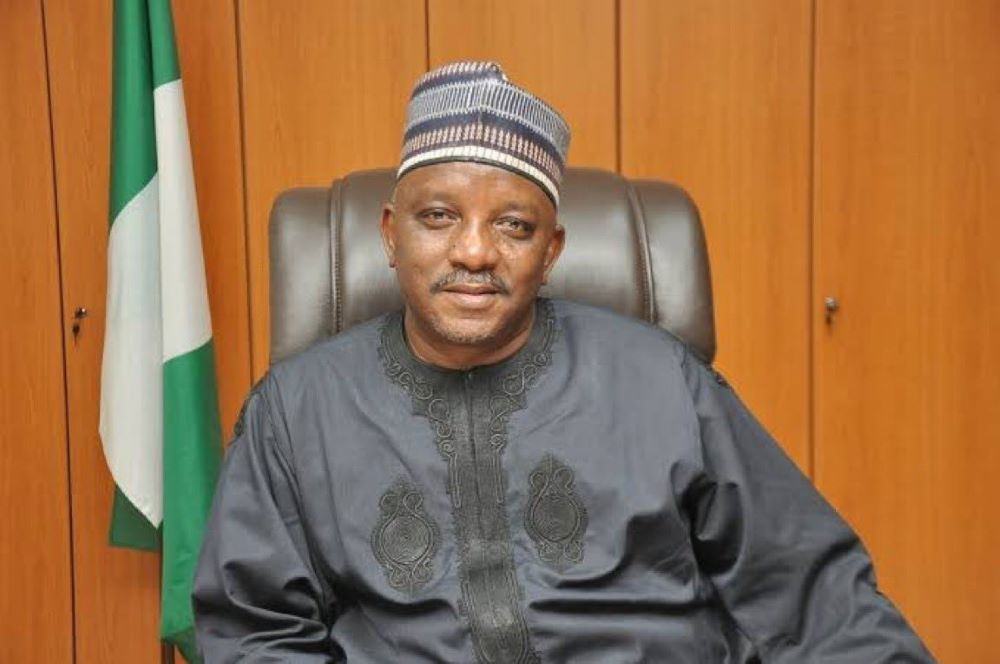
In a landmark ruling that intensifies the scrutiny on Nigeria’s long-stalled Mambilla Hydroelectric Power Project, Justice James Omotosho of the Federal High Court sitting in Abuja has convicted former Minister of Power, Sale Mamman, on a 12-count charge of money laundering.
The conviction, delivered on Thursday, centers on the diversion of N33,804,830,503.73. The court found that Mamman conspired with ministry officials and private entities to illegally convert funds originally earmarked for the Mambilla and Zungeru hydroelectric projects.
Legal Maneuvers and Bench Warrant
The former minister was notably absent during the proceedings. Defence counsel Mohammed Ahmed argued that Mamman was "indisposed," though he admitted to having difficulty reaching his client. This claim was sharply contested by the Economic and Financial Crimes Commission (EFCC) lead counsel, Rotimi Oyedepo, SAN, who noted the lack of medical evidence to justify the absence.
Invoking the Administration of Criminal Justice Act (2015), Justice Omotosho proceeded with the judgment. While the conviction was secured, the judge deferred sentencing until May 13, 2026, to allow for the defendant’s presence. To ensure Mamman does not flee the country, the court granted the EFCC’s application for a bench warrant for his immediate arrest.
The Mambilla Project: A Legacy of Stagnation
The conviction of Mamman, who had recently declared his intent to contest the Taraba State governorship in 2027, has reignited public outrage over the 3,050MW Mambilla plant. Designed over 40 years ago to be Nigeria’s largest power installation, the project remains at a "zero megawatt" status despite decades of funding.
The Project’s Critical Objectives:
Capacity: 3,050MW (expected to increase national generation by 30%).
Regional Impact: Intended to export power to Niger, Togo, Benin, and Chad.
Economic Goal: A key pillar for Nigeria to achieve a 90% electricity access rate by 2030.
A Web of Litigation and Alleged Fraud
The Mambilla project has been paralyzed by a complex history of legal disputes and administrative irregularities:
The 2003 Contract: Originally awarded to Sunrise Power and Transmission Company Limited (SPTCL) for $6 billion. Former Minister Olu Agunloye is currently facing separate EFCC charges for allegedly awarding this contract without Federal Executive Council (FEC) approval.
International Arbitration: The government’s move to bypass Sunrise in 2017 in favor of a Chinese consortium led to a $400 million compensation claim by Sunrise at the International Court of Arbitration in Paris.
Presidential Testimony: The legal battle became so high-stakes that former Presidents Olusegun Obasanjo and Muhammadu Buhari reportedly testified before the ICC in 2025.
Current Status and Sector Reaction
Under the current administration of President Bola Tinubu, funding for the project has been suspended. Minister of Power Adebayo Adelabu confirmed a "zero allocation" in the 2024 budget, stating that no progress can be made until the international arbitration is settled.
Energy experts and stakeholders have hailed the conviction of Sale Mamman as a necessary step toward accountability. Tayo Adegbemile, Executive Director of Power-Up, called for the government to publish full details of all funds allocated to the project since its inception.
“Nigerians deserve to know the challenges crippling the project,” Adegbemile stated, urging the government to seek new foreign partnerships to resuscitate the plant once legal hurdles are cleared.