


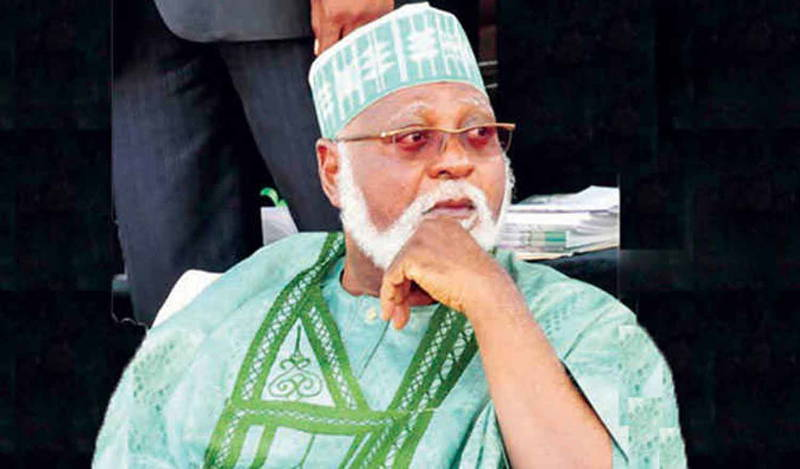
Former Nigerian Military Head of State, General Abdulsalami Abubakar (rtd), has released a new 264-page autobiography titled Call of Duty alongside two other volumes, Nigeria’s Grand Patriot and Mediating for Peace in Africa. The book launch, which took place in Abuja and coincided with his 84th birthday, drew prominent African leaders, diplomats, and business magnates who gathered to honor his role in transitioning Nigeria to democratic rule in 1999.
Key Historical Revelations
In his memoir, General Abdulsalami addresses several critical moments in Nigerian political history:
-
The 1993 Election Annulment: Despite his close relationship with the military President at the time, General Ibrahim Babangida, Abdulsalami clarifies that he was serving as the Chief of Policy and Plans at Army Headquarters and was not a member of the Armed Forces Ruling Council. He emphasizes that he had no prior knowledge of the decision and learned about the annulment of the June 12 election through public news broadcasts.
-
The Death of General Sani Abacha: Abdulsalami recounts the highly unusual circumstances surrounding the sudden demise of his predecessor on June 8, 1998. He notes that he and the late Chief of Army Staff, Lieutenant General Ishaya Bamaiyi, were unexpectedly locked inside a waiting room at the Presidential Villa for nearly an hour before receiving official confirmation of Abacha's death.
-
The Demise of Chief MKO Abiola: The former leader firmly dismisses long-standing rumors regarding the poisoning of Chief MKO Abiola, the presumed winner of the 1993 election. He states that an international medical team comprising pathologists from Nigeria, the United States, the United Kingdom, and Canada conducted an autopsy that concluded Abiola died of natural causes after collapsing during a meeting with an American diplomatic delegation.
Continental Leaders Pay Tribute
Current and former Heads of State commended General Abdulsalami for his patriotism, moderation, and adherence to his promise of restoring constitutional order, which established the foundation for Nigeria's current Fourth Republic.
President Bola Tinubu, represented by Vice President Kashim Shettima, praised Abdulsalami's continued diplomatic efforts through the National Peace Committee. To honor this legacy, President Tinubu directed the allocation of a prominent plot of land in the Federal Capital Territory for the construction of the Abdulsalami Abubakar African Resource Centre.
Former South African President Thabo Mbeki and Sierra Leonean President Julius Maada Bio highlighted Abdulsalami's extensive mediation work across the African continent. Meanwhile, former Nigerian Presidents General Yakubu Gowon, Chief Olusegun Obasanjo, and Dr. Goodluck Jonathan credited him with resisting internal military pressures to extend his regime, choosing instead to prioritize national stability over personal power. Obasanjo further noted that Abdulsalami had actively worked toward releasing political prisoners, including himself, and had been arranging for Abiola's release just prior to his sudden death.
High-Profile Attendance and Funding
The event attracted significant regional representation, including the Prime Minister of Niger, Ali Lamine Zeine, alongside former Nigerian Vice Presidents Namadi Sambo and Yemi Osinbajo.
The book presentation also secured substantial financial backing for the new resource center. Major donations included substantial contributions from prominent business leaders Aliko Dangote and Abdul Samad Rabiu, alongside significant institutional financial pledges from the Nigerian Senate, the House of Representatives, state governors, and various commercial banking institutions.