


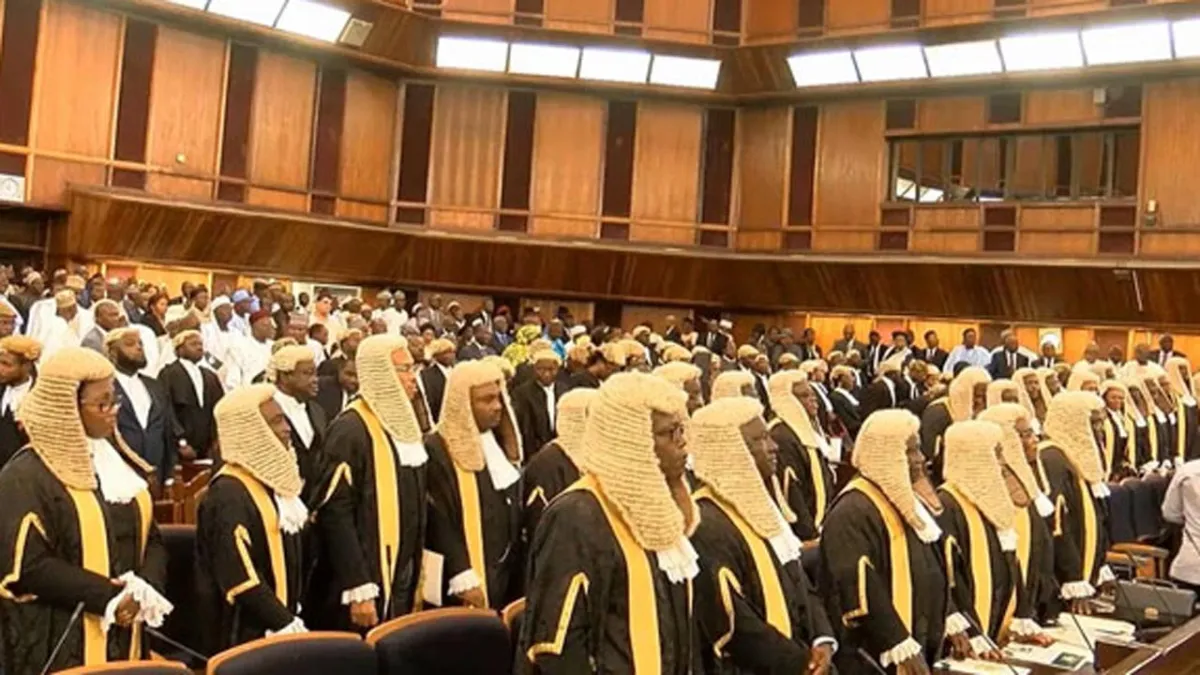
The Nigerian Court of Appeal has set aside a Federal High Court judgment that ordered the deregistration of the African Democratic Congress (ADC) and four other political parties. The appellate court's unanimous decision has renewed discussions regarding judicial discipline, adherence to due process, and the role of the courts in protecting the democratic framework.
Background of the Case
The legal dispute centered on a suit filed by the National Forum of Former Legislators (NFFL) seeking to deregister the ADC, Action Alliance (AA), Action Peoples Party (APP), Accord Party, and Zenith Labour Party (ZLP). On June 15, 2026, Justice Peter Lifu of the Federal High Court in Abuja ruled in favor of the plaintiffs, ordering the Independent National Electoral Commission (INEC) to deregister the five parties on the grounds that they failed to meet constitutional requirements for continued registration. The ruling also restrained INEC from recognizing the parties or accepting their candidates for the upcoming 2027 general elections.
The Appellate Court Ruling
In a unanimous decision delivered on July 28, 2026, the Court of Appeal nullified the High Court's judgment in its entirety. The lead judgment, delivered by Justice Abba Mohammed, held that the trial court lacked jurisdiction because the suit was initiated by a non-juristic body lacking the legal capacity to file the action.
The appellate court further criticized the trial judge for proceeding with the case in direct defiance of an earlier order to stay proceedings pending appeal. Describing the conduct as a breach of judicial hierarchy, the court emphasized that lower courts are strictly bound by the directives of superior courts. With this ruling, the legal status of the affected political parties has been restored, affirming that they remain duly registered under the Nigerian Constitution and the Electoral Act.
Broader Implications and Reactions
Legal practitioners and civil society organizations have commented extensively on the judgment, noting its significance for Nigeria's electoral jurisprudence. Experts emphasized that obedience to superior court orders is mandatory to maintain coherence within the judicial system.
Civil society leaders have called for internal reforms and stricter accountability measures to address instances where lower court rulings conflict with established legal precedents. Stakeholders stress that safeguarding the integrity of the judiciary is essential for preserving public trust, upholding the rule of law, and ensuring that political contests are determined through the democratic process rather than conflicting judicial interventions.