


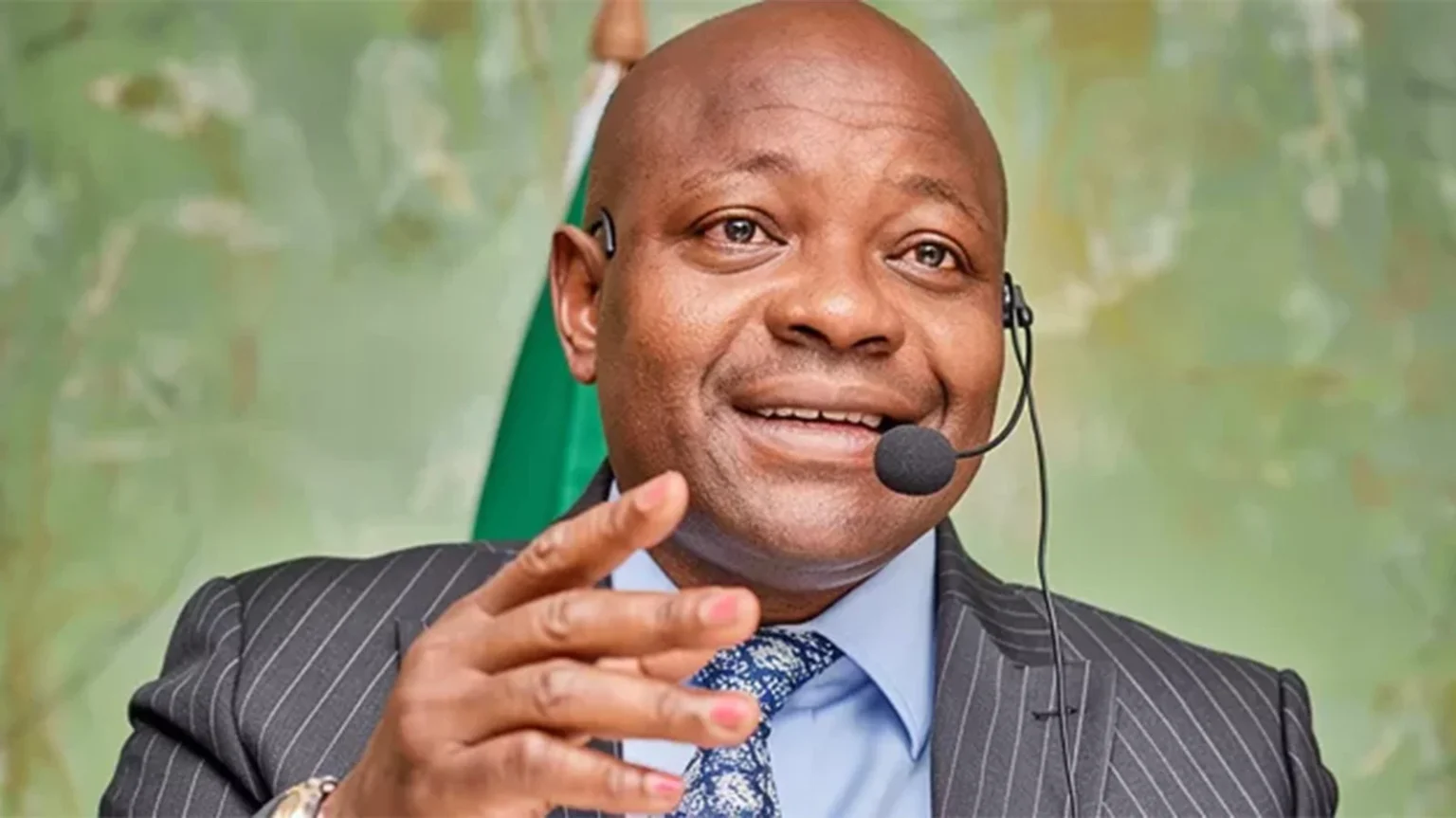
The Department of State Services (DSS) has banned its operatives from making arrests in civil matters, marking a significant shift toward strengthening human rights and upholding the rule of law.
Director-General Oluwatosin Ajayi announced the policy during a media briefing, outlining broader agency reforms spanning law enforcement, inter-agency cooperation, accountability, and administrative efficiency. Ajayi acknowledged that the agency historically blurred the lines between civil and criminal cases, noting that force is entirely inappropriate for resolving civil disputes.
Under the new directive, the agency relies on judicial channels rather than detentions. As an example, the DSS avoided arresting political economist Professor Pat Utomi over allegations regarding a "shadow government," choosing instead to seek a court ruling, which ultimately declared the initiative an unconstitutional security threat. Similarly, when the Socio-Economic Rights and Accountability Project (SERAP) filed a lawsuit alleging operatives had invaded its office, the agency addressed the matter legally without resorting to arrests, resulting in a court-ordered settlement in favor of SERAP.
Reaffirming this approach, Ajayi confirmed that journalists and other individuals involved in non-criminal disputes will face legal proceedings rather than detention. He emphasized that the press and the intelligence service share a parallel professional mission—informing the public versus informing the government—with the key distinction lying in the classified nature of intelligence data.