


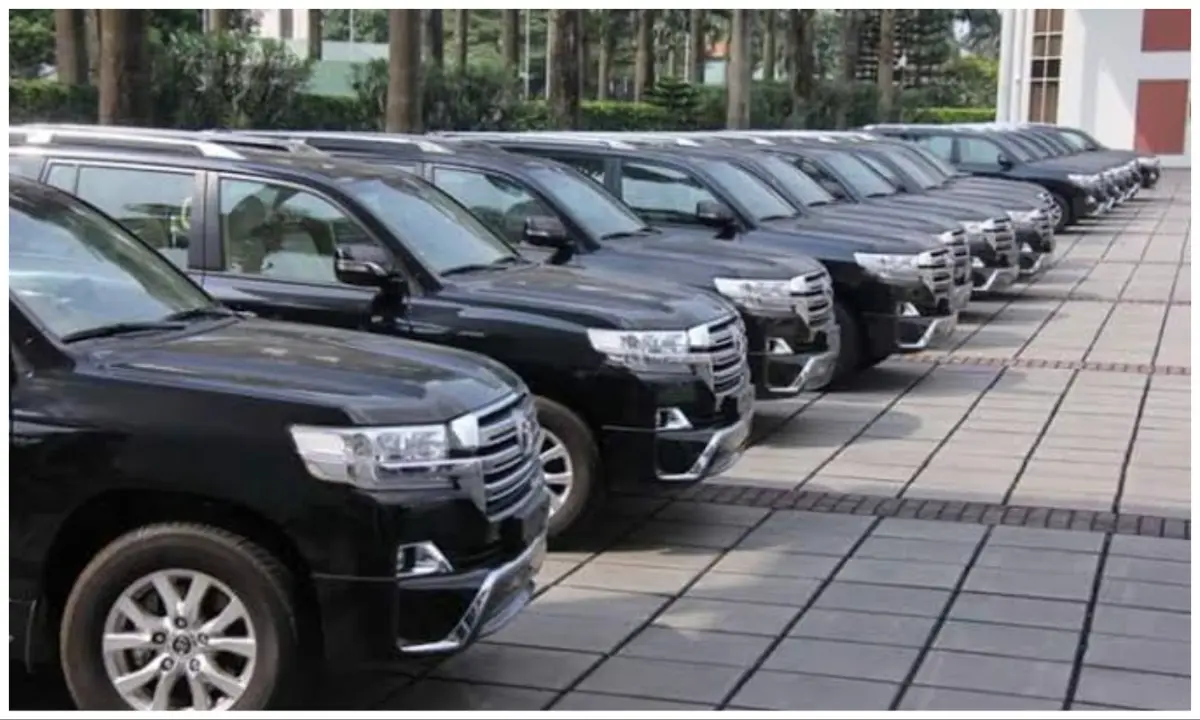
The Federal Government’s allocation of N962.83 billion for Sport Utility Vehicles (SUVs) and empowerment projects in the 2026 Appropriation Act has drawn sharp criticism from economists, civic organizations, and political figures. According to a comprehensive analysis by the civic technology organization Tracka, the total expenditure exceeds the combined allocations of seven key federal ministries.
The disputed allocation comprises N15.13 billion designated for the procurement of 39 SUVs and N947.70 billion allocated across 2,579 empowerment projects. This figure surpasses the N960.27 billion collectively distributed to the Ministries of Industry, Trade and Investment; Housing and Urban Development; Women Affairs; Justice; Livestock Development; Aviation and Aerospace Development; and Petroleum Resources.
Tracka highlighted severe transparency issues within the budgetary provisions, noting that only 70 out of the 2,579 empowerment projects possess clearly identified implementation locations. Furthermore, these initiatives are spread across 184 implementing agencies, including several bodies whose statutory mandates do not cover empowerment programs, such as the Federal Cooperative College, Oji River, and the National Agricultural Development Fund. High-value allocations within the budget include N89.09 billion for the Renewed Hope Fertiliser Support Programme and multiple N14 billion distributions earmarked for youth initiatives, agricultural support, and medical outreaches.
Fiscal Deficits and Growing Debt Concerns
The controversy surrounding the empowerment projects coincides with broader economic worries regarding Nigeria's fiscal trajectory. The Federal Government has expanded its 2026 borrowing plan to N29.20 trillion, driven by a widening fiscal deficit where total spending is estimated at N68.32 trillion against projected revenues of N36.87 trillion.
Financial analysts and private sector leaders have expressed deep concern over these figures. Dr. Muda Yusuf, Chief Executive Officer of the Centre for the Promotion of Private Enterprise, warned that high deficits and accelerated debt accumulation threaten the fragile macroeconomic stability recently achieved by the country. Yusuf cautioned that aggressive borrowing risks trapping the economy in a vicious cycle that could reignite inflationary pressures and strain foreign exchange rates.
Political figures have also weighed in on the fiscal management of the administration. Former Vice President Atiku Abubakar challenged the government to account for an estimated N7.98 trillion oil revenue windfall, questioning the necessity of heavy domestic borrowing when international crude oil prices have consistently exceeded the 2026 budget benchmark. Similarly, former APC Deputy National Publicity Secretary Timi Frank called for stronger legislative oversight and greater transparency from the National Assembly to restore public confidence in the budgetary process.
Economic Experts Call for Policy Realignment
Economists interviewed regarding the budget allocations emphasized the need for better fiscal prioritization and structural alignment to protect the domestic economy.
Professor Sheriffdeen Tella of Olabisi Onabanjo University cautioned that spending public funds on imported vehicles and empowerment goods diminishes the domestic impact of the expenditure. He urged the government to direct empowerment funding toward locally manufactured goods to stimulate local production, create jobs, and retain economic value within Nigeria.
Adewale Abimbola, a Lagos-based economist, echoed these sentiments, stating that allocating nearly one trillion naira to SUVs and empowerment programs while depending heavily on debt financing sends negative signals to investors and international partners. Abimbola argued that long-term sustainable growth requires a primary focus on critical infrastructure and human capital development rather than opaque empowerment schemes prone to administrative inefficiencies and political patronage.