


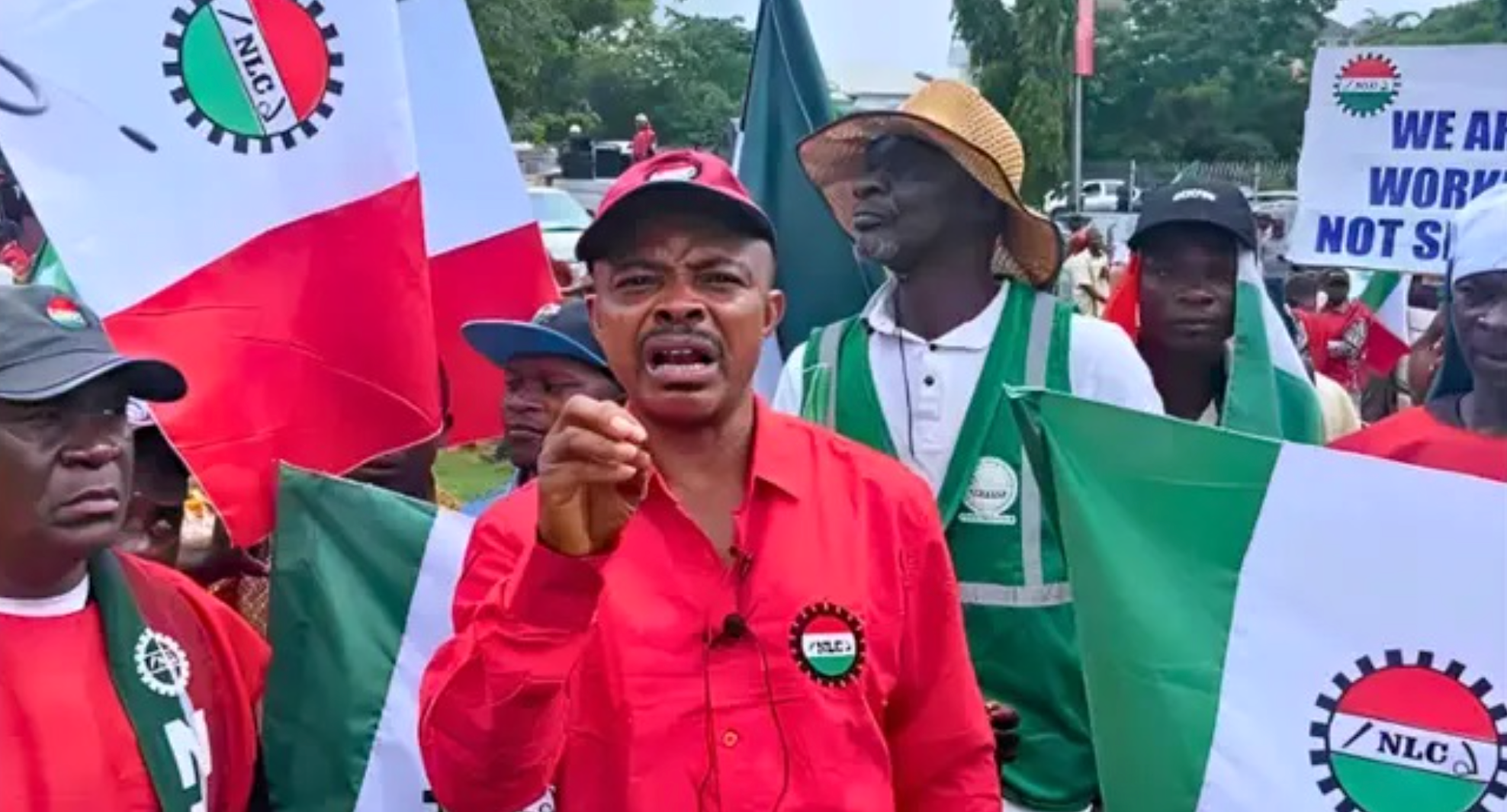
NLC President, Joe Ajaero
The Nigeria Labour Congress (NLC) has issued a stark warning regarding the deteriorating state of the nation, asserting that a volatile mix of rising insecurity, deepening poverty, and relentless economic pressure is pushing Nigerian citizens to a breaking point.
This alarm comes as the Federal Government, through the Minister of Finance and Coordinating Minister of the Economy, Taiwo Oyedele, reaffirmed that the Presidency will not reinstate fuel subsidies, despite the severe impact on the cost of living and mounting public outcry.
Survival Over Productivity: The Labor Perspective
NLC President Joe Ajaero characterized the current climate as a "critical point" where the fundamental struggle for survival has superseded economic productivity. Ajaero highlighted a growing national consensus that insecurity has fundamentally dismantled the country's economic foundations.
"Insecurity has finished the country," Ajaero stated, noting that the psychological toll of movement and the physical displacement of workers into Internally Displaced Persons (IDP) camps have crippled the labor force. He emphasized that the crisis has shifted from a demand for "decent work" to a desperate search for any employment at all, as insecurity stifles investment and drives rural farmers away from their livelihoods.
Ajaero further criticized the "disconnect" between official macroeconomic data and the lived experiences of Nigerians. He pointed out the irony of rising government revenues from global crude oil price hikes while workers face stagnant wages and fuel prices ranging between ₦1,300 and ₦1,400.
"Which human rights are worse than starvation? When you don’t pay people adequately, their fundamental rights are already compromised," Ajaero added.
The Government’s Stance: Market Realities and Long-term Vision
Speaking to global investors during President Bola Tinubu’s state visit to France, Finance Minister Taiwo Oyedele maintained a firm stance against subsidy restoration. Oyedele argued that subsidies create "economic distortions" and insisted that the market must remain self-regulating to ensure long-term stability.
Despite inflation surging from 22.41% in May 2023 to over 34% in mid-2024, the Minister pointed to a 11.2% GDP growth in dollar terms in 2025 as evidence that reforms are working. He reiterated the administration's goal of achieving a $1 trillion economy by 2030, suggesting that global energy shifts—specifically tensions in the Middle East—present opportunities for Nigeria to attract new market investments.
Labor’s Counter-Proposal: Strategic Interventions
The NLC has dismissed the government’s "rigid policy posturing" as unresponsive to current hardships. An NLC official, speaking on condition of anonymity, argued that while a return to the old subsidy regime may be off the table, the government should adopt "pragmatic, people-centered" alternatives, including:
-
Sector-Specific Subsidies: Targeted support for transportation, manufacturing, pharmaceuticals, and food production.
-
Fiscal Relief: Temporary tax freezes or reductions on essential commodities and production inputs.
-
Supply-Side Management: Allocating dedicated crude oil volumes to local refineries to stabilize domestic pricing.
-
Infrastructure Development: Accelerating the rollout of Compressed Natural Gas (CNG) and electric vehicle infrastructure, which the NLC claims remains largely non-existent.
The Growing Civic Strain
The NLC also raised concerns over the shrinking civic space, citing instances where police have restricted peaceful protests against non-payment of wages. In a notable observation, Ajaero pointed out that even members of the security forces are beginning to express frustration, signaling the depth of the current socio-economic crisis.
As the government remains committed to its market-driven reforms, the NLC warns that without urgent, creative interventions to cushion the blow for the average worker, the nation faces a persistent and deepening humanitarian challenge.