


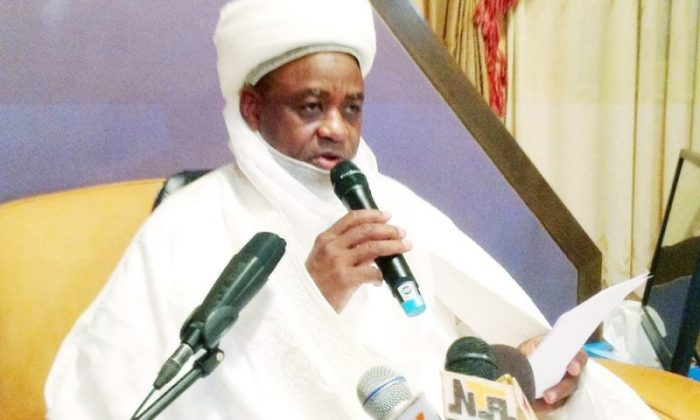
Alhaji Sa’ad Abubakar, the Sultan of Sokoto
In a significant push for national reconciliation, the Sultan of Sokoto, Sa’ad Abubakar III, and the President of the Christian Association of Nigeria (CAN), Archbishop Daniel Okoh, have issued a joint call to decouple criminal activity from religious identity.
Speaking at the first triannual meeting of the Nigeria Inter-Religious Council (NIREC) in Abuja, the Sultan dismissed fears of a "religious agenda," categorically stating that there are no plans by the Muslim community to marginalize or eliminate Christians in Nigeria.
Debunking the Narrative of Religious War
The Sultan, who co-chairs NIREC, emphasized that the persistent framing of Nigeria’s security challenges as a religious conflict is both inaccurate and dangerous. He urged Nigerians to stop labeling perpetrators of violence by their faith.
"Let us call them what they are: criminals," the Sultan stated. "Not Muslim terrorists, not Muslim bandits. Even if someone claims to be Muslim, what they do goes against Islam."
Addressing those who commit acts of terror in the name of God, the Sultan was blunt: "You can blow yourself up and shout 'Allahu Akbar.' Yes, God is great, but you are going to hell for taking innocent lives."
The Push for Religious Literacy
Archbishop Daniel Okoh echoed these sentiments, advocating for "religious literacy" as a tool to dismantle stereotypes. He noted that while many tensions appear to be faith-based, their root causes are often socio-economic or political.
-
Beyond Rituals: Okoh defined religious literacy as the cultivation of empathy and respect rather than just academic knowledge.
-
Common Ground: He highlighted that NIREC serves as proof that Nigerians can share core values of justice and human dignity despite theological differences.
Government Commitment to Stability
Representing the federal government, the Secretary to the Government of the Federation (SGF), George Akume, linked religious understanding directly to national security. He called for a shift in the educational curriculum to include more inclusive teachings about diverse worldviews to prevent suspicion from taking root.
Akume also reaffirmed the government's commitment to ending the wave of kidnappings targeting students, asserting that the state must protect those seeking the very education required to bridge these communal divides.
Key Takeaways from the NIREC Meeting
| Theme | Leadership Stance |
| Security | Crimes should be treated as individual acts of lawlessness, not religious movements. |
| Coexistence | Both leaders affirmed that neither faith can—or should—displace the other in Nigeria. |
| Education | Arabic proficiency does not equal religious authority; formal education is vital to prevent radicalization. |
| Dialogue | Sustained communication was identified as the "only workable path" toward mutual trust. |