


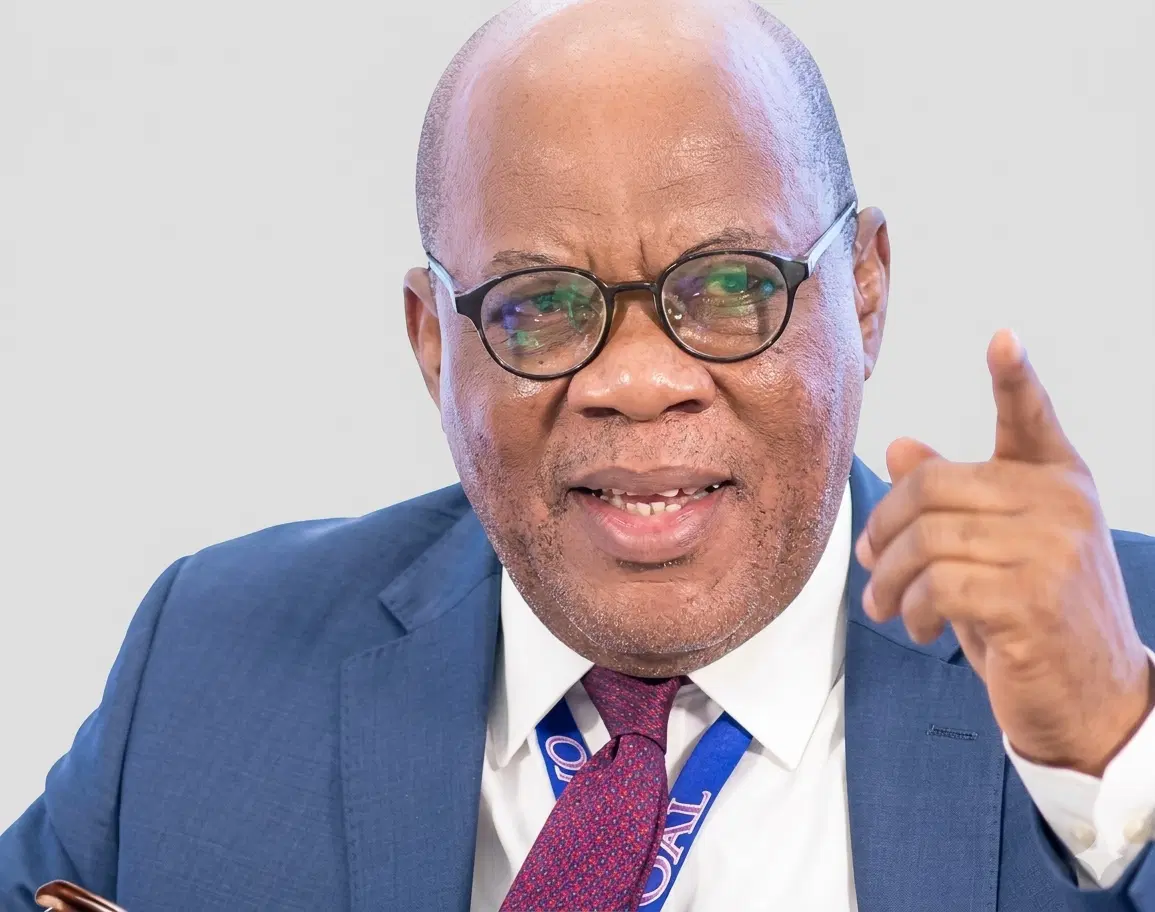
66 years after gaining independence, Nigeria’s judiciary stands at a critical crossroads, heavily burdened by public skepticism, institutional decay, and questions regarding its independence. In a sweeping appraisal of the justice sector, legal luminary and former Nigerian Bar Association (NBA) President Dr. Olisa Agbakoba, SAN, dissected the structural ailments plaguing the courts and proposed comprehensive pathways for redemption.
The Crisis of Public Perception and Judicial Overreach
Public confidence in the judiciary has plummeted to historic lows, largely driven by perceived interference and unpredictable rulings, particularly in election petitions. While acknowledging the presence of brilliant and dedicated jurists on the bench, Agbakoba noted that the judiciary is widely viewed as struggling with low performance.
A central grievance is the courts' increasing involvement in determining political office holders—such as presidents, governors, and lawmakers—a function constitutionally reserved for the electorate. When jurisdiction becomes fluid and cases are heard far outside their logical venues, it fuels uncertainty. Agbakoba argued that the courts must resist being drawn into functioning as electoral umpires, as this fundamentally distorts their constitutional role and heats up the polity.
Root Causes: Competence, Integrity, and Conflicting Rulings
Two primary drivers explain the alarming trend of conflicting judgments: declining competence and compromised integrity.
-
The Erosion of Standards: In earlier eras, individuals elevated to the bench had already built successful, lucrative legal careers, insulating them from financial desperation. Today, vetting standards have slipped, resulting in appointments where some judges struggle with the rudimentary rules of evidence and decision-making.
-
The Transparency Deficit: To restore integrity, the appointment process must undergo a complete overhaul. Agbakoba advocates for a transparent, public-scrutiny model akin to marriage banns in churches—where judicial applicants are publicly advertised, allowing citizens to bring forward valid objections. Furthermore, the National Judicial Council (NJC) must strictly adhere to its own established appointment criteria rather than sidelining them.
Structural Paralysis and the National Judicial Council
The NJC currently suffers from severe structural flaws. The Chief Justice of Nigeria (CJN) wields near-absolute authority, effectively appointing almost all members and leaving the body without dedicated administrative staff to drive long-term judicial policy.
Barring rare exceptions—such as the brief, visionary tenure of the late Justice Dahiru Musdapher, who instituted panels to tackle administration of justice—reforms quickly stall upon a leader's departure. Consequently, while politicians enjoy a swift six-month timeline for election disputes, ordinary citizens, commercial litigants, and individuals languishing on death row for decades face debilitating delays. Agbakoba stressed that the NJC must transition from a reactive body into an active policymaker prioritizing the speed and accessibility of justice across all case types.
Technology, Legal Architecture, and Constitutional Compliance
The operational architecture of Nigerian courts remains archaic. It is unacceptable that in a modern digital age, judges still record testimonies and proceedings longhand—a system unchanged since the 19th century.
Beyond courtroom technology, the state of constitutional compliance remains precarious, particularly regarding the intersection of religion and the state. Section 10 of the Nigerian Constitution explicitly establishes the country as a secular state where religion is a private matter. However, chronic non-compliance—manifested in government-sponsored religious pilgrimages and the unconstitutional adoption of state-level religious legal codes—continues to ignite avoidable socio-political friction.
Financial Autonomy and Executive Influence
True judicial independence is impossible without absolute financial freedom. Although the Constitution provides a clear framework for judicial funding, these provisions are routinely flouted.
-
Budgets are currently submitted to the executive branch rather than directly to the legislature via the NJC, allowing the Ministry of Finance to arbitrarily cap allocations.
-
Accepting executive handouts—such as housing provided by political office holders—severely compromises the perceived impartiality of judges in the eyes of the public.
Agbakoba noted that even the Supreme Court has previously issued rulings undermining its own funding framework—a misstep that must be corrected. When judges are financially independent, secure in their tenure, and free from the fear of arbitrary punitive transfers, they can dispense justice truly without fear or favour.
Reforming the Legal Profession and Empowering the NBA
The push for structural reform extends equally to the legal profession itself. Currently constrained by statutory bureaucracy, the Nigerian Bar Association lacks the robust self-regulatory powers enjoyed by professional counterparts like accountants (ICAN) or the legal profession in the United Kingdom.
Agbakoba argued that the NBA should be fully emancipated to regulate its own examinations, curriculum, and disciplinary processes. Misconduct should be swiftly handled at the local branch level, empowering regional bars to hold erring lawyers accountable and strip them of their license when warranted. Only by granting the legal profession full autonomy and restoring rigorous standards of entry and conduct can the justice delivery system regain its former prestige.