


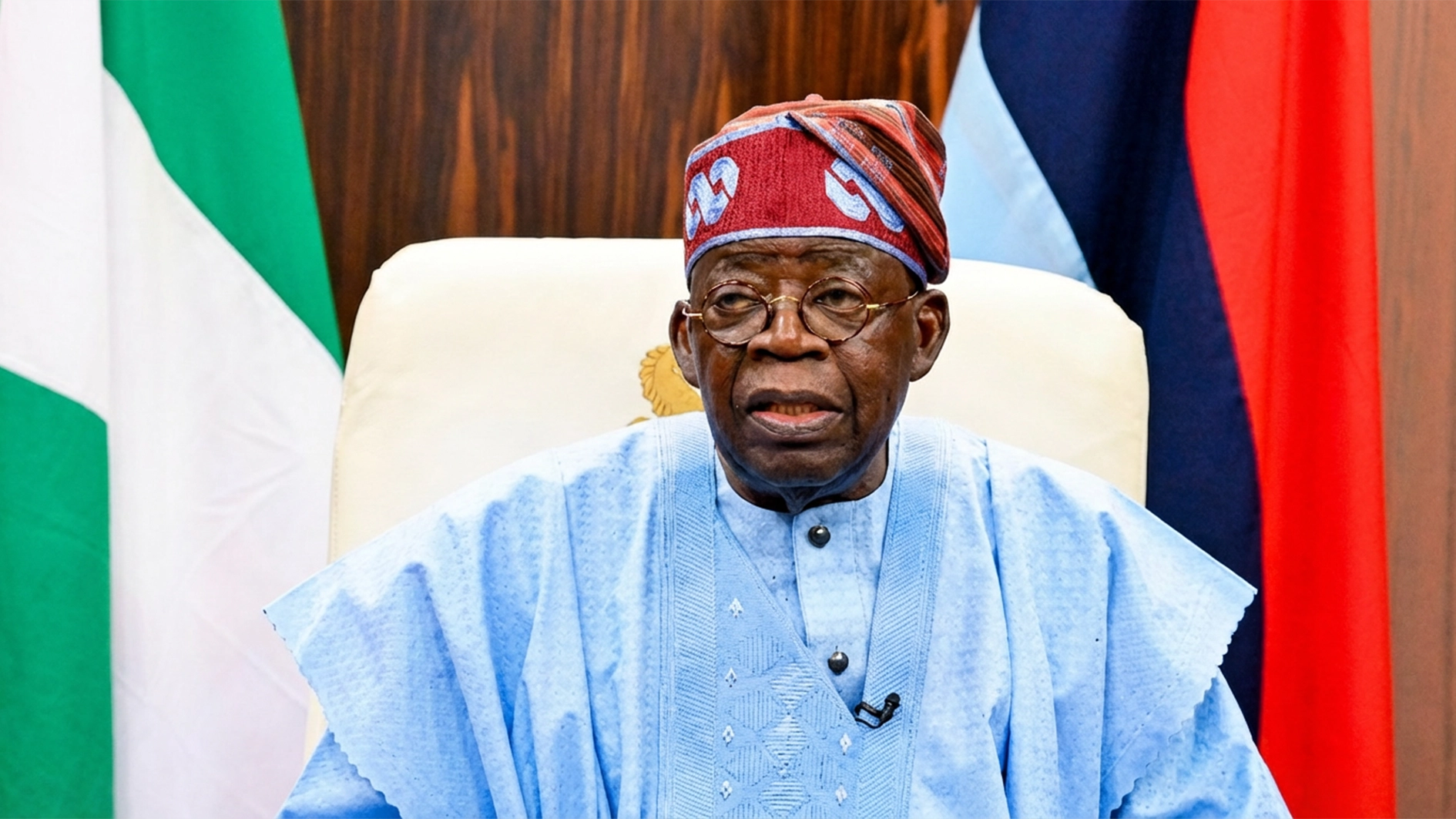
President Bola Tinubu has declared a national emergency on poverty and insecurity, framing the twin crises as the primary obstacles to Nigeria’s socio-economic stability. The announcement was made during his 2026 May Day address to the nation's workforce, delivered via the Secretary to the Government of the Federation, Senator George Akume.
The President’s declaration comes at a pivotal moment, as organized labor—represented by the Nigeria Labour Congress (NLC) and the Trade Union Congress (TUC)—issued a stern ultimatum: their support in the upcoming 2027 general elections will be contingent upon a candidate’s commitment to a specific "Charter of Demands" focused on security, free education, and public healthcare.
A Strategy of "Deliberate Action"
President Tinubu characterized the state of the nation as a "national emergency," noting that the "hydra-headed challenges" of banditry and economic hardship have severely undermined productivity and investor confidence.
To combat these issues, the President highlighted several key pillars of his Renewed Hope Agenda:
-
Security Infrastructure: The recruitment of 45,000 personnel under the Community Protection Guards Initiative and the deployment of 10,000 "Agro-Rangers" to protect farming communities.
-
Social Safety Nets: The expansion of cash transfers to 15 million households and the enrollment of 800,000 informal workers into micro-pension schemes.
-
Economic Drivers: Infrastructure projects like the Lagos-Calabar Coastal Highway and the AKK Gas Pipeline, which the administration claims have generated over 600,000 jobs.
-
Worker Incentives: The reintroduction of gratuity payments (effective January 2026) and a 40% reduction in transportation costs for some workers via the Presidential CNG Initiative.
"Strike should be the last resort, not the first," Tinubu urged, appealing to labor unions for continued dialogue and "industrial restraint."
Opposition and Labor: A "Grief-Stricken" Commemoration
Despite the government's optimistic outlook, the political opposition and labor leaders painted a starkly different picture of the Nigerian reality.
Atiku Abubakar, former Vice President, lambasted the administration, stating that May Day has become a period of "grief" rather than celebration. He argued that the "Renewed Hope" slogan has yielded only "renewed hardship," questioning the whereabouts of the trillions of naira purportedly saved from the removal of fuel subsidies.
Peter Obi, the Labour Party’s 2023 presidential candidate, urged workers to leverage their "voice and vote" to demand leadership defined by competence rather than ethnic division. He noted that the current minimum wage has been completely eroded by the soaring costs of food and transportation.
The NLC and TUC leadership criticized recent policies for achieving "narrow technical targets" at the expense of human welfare. They called for a transition to a "production-driven" economic strategy, emphasizing that true stability is measured by rising wages rather than mere macroeconomic indicators.
Regional Interventions: States Step In
As federal policies face scrutiny, several state governors announced localized relief measures:
-
Lagos: Governor Babajide Sanwo-Olu approved a flat N50,000 salary supplement for all state workers for the month of May to offset rising fuel prices.
-
Edo: Governor Monday Okpebholo launched a N1 billion interest-free loan scheme for small-scale entrepreneurs and artisans.
-
Anambra: Governor Chukwuma Soludo challenged unions to move from "protest unionism" to "development-oriented unionism," urging workers to focus on wealth creation.
-
Rivers: Governor Siminalayi Fubara commended the workforce for maintaining stability despite "political storms" and pledged the continued clearance of pension arrears.
The Human Rights Perspective
The National Human Rights Commission (NHRC) added its voice to the discourse, warning that the "breaking point" for Nigerian workers is imminent. Executive Secretary Tony Ojukwu noted that recent petrol price hikes have turned basic mobility into a "luxury," threatening both the productivity and the inherent dignity of the nation's labor force.
As Nigeria moves toward the 2027 electoral cycle, the intersection of labor welfare and national security remains the defining fault line of the country’s political landscape.