


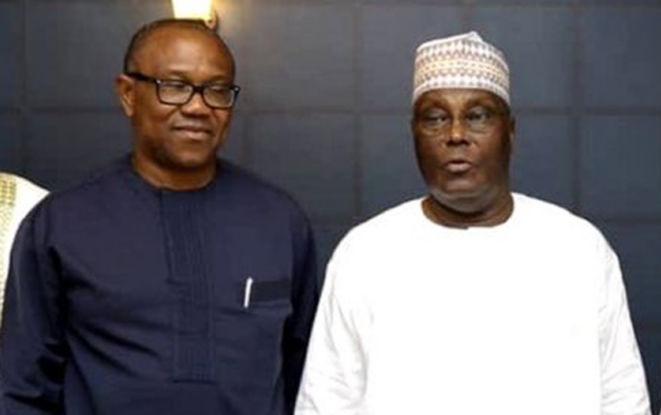
NDC Presidential Candidate Peter Obi, ADC Presidential Candidate Atiku Abubakar
Leaders from six major Nigerian opposition political parties gathered in Abuja at the Shehu Musa Yar’Adua Centre for their first formal summit to establish a collaborative framework ahead of the 2027 general elections. Organised by the G100 group and facilitated by Mallam Salihu Moh. Lukman, the meeting brought together prominent party figures, national executives, and former presidential candidates, though high-profile absentees included Peter Obi, Atiku Abubakar, and Governor Seyi Makinde.
Key Proposals and Structural Framework
The summit focused heavily on avoiding the vote-splitting dynamics of the 2023 elections, where fragmented opposition ballots handed victory to the ruling party despite collective opposition numbers exceeding thirteen million votes. To prevent a repetition of this outcome, participants agreed to establish three central standing committees—Leadership, Publicity, and Legal—alongside five specialized working groups. These groups are tasked with formulating a binding Transition Charter, a National Reform Programme, and a roadmap toward selecting a consensus presidential candidate within a four-week window. A cornerstone of the proposed framework involves committing any future coalition government to a single, enforceable four-year transition term backed by a signed charter.
Stakeholder Commitments and Reactions
Representatives from various participating parties expressed strong support for structural unity, emphasizing that personal ambition and ego must be set aside for collective success. Donald Duke of the Peoples Redemption Party explicitly stated his willingness to step down for a jointly agreed-upon candidate, while parliamentary leaders from the Minority Caucus pledged full legislative and political partnership with the coalition. Party chairmen from the Social Democratic Party, Allied Peoples Movement, and other factions echoed the need to halt internal cross-fire and focus entirely on building a unified electoral front.
Resolutions and Communiqué
At the conclusion of the discussions, the parties formally ratified a joint communiqué outlining the four-week timeline for the working groups to report back ahead of a second summit. The coalition also addressed international dimensions, calling upon the United States government to ensure the lawful disclosure of public records concerning President Bola Ahmed Tinubu related to ongoing legal proceedings, with plans to officially brief the ECOWAS Commission on their resolutions.