


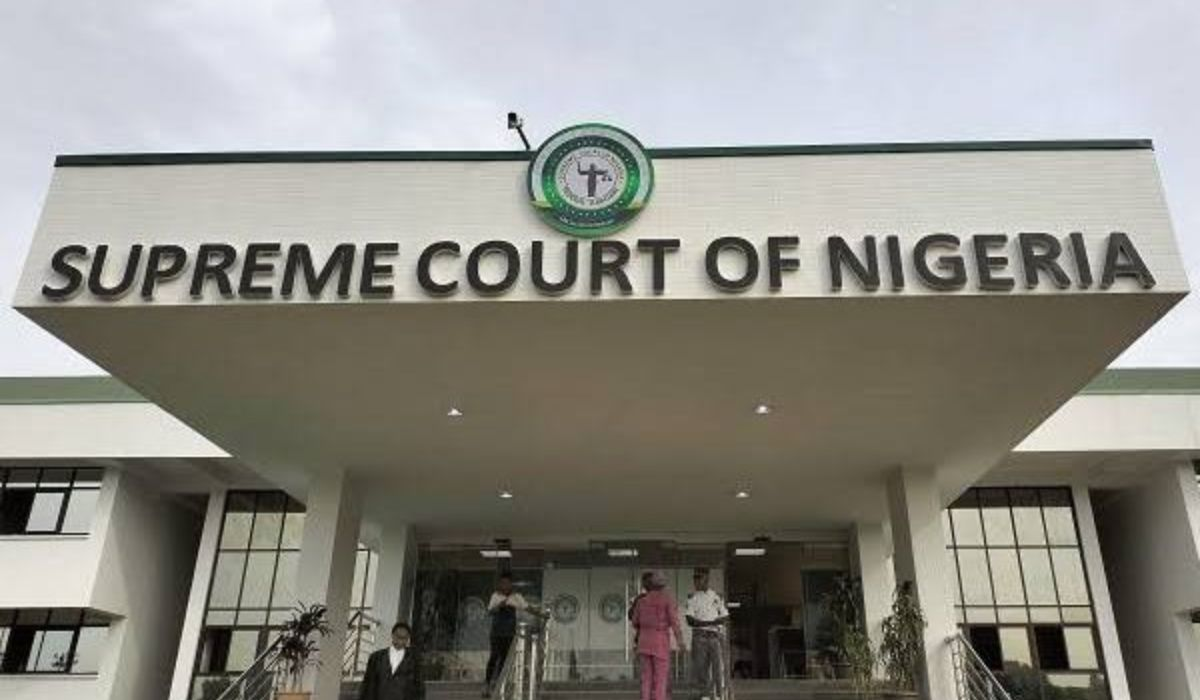
The Supreme Court of Nigeria has reserved judgment in the high-stakes leadership disputes involving the Peoples Democratic Party (PDP) and the African Democratic Congress (ADC). The outcome of these legal battles is widely seen as a litmus test for the future of Nigeria’s multi-party democracy, as concerns mount over a potential slide toward a one-party state.
A five-member panel of justices, presided over by Justice Mohammed Garba, announced the decision to reserve judgment after legal counsel for all parties adopted their final briefs of argument last Wednesday.
The PDP Crisis: Internal Autonomy vs. Judicial Intervention
The legal battle within the PDP centers on the party’s national convention held in Ibadan, which produced a national executive led by Tanimu Turaki. This convention has been the subject of intense litigation:
-
The Conflict: Loyalists of FCT Minister Nyesom Wike have challenged the Turaki-led executive, favoring the faction led by Ambassador Iliya Damagum.
-
Previous Rulings: Despite initial court orders from Justices James Omotosho and Peter Lifu to halt proceedings, the PDP proceeded with the Ibadan convention. Subsequently, the Court of Appeal nullified the convention, granting recognition to the Wike-aligned faction.
-
The Appeal: Lead counsel for the Turaki-led executive, Chief Chris Uche (SAN), has urged the apex court to overturn the appellate ruling. Uche argues that lower courts lack the jurisdiction to adjudicate on the internal affairs of a political party—a sentiment echoed by Jibrin Okutepa (SAN), who cited a March 2025 Supreme Court precedent on party autonomy.
The ADC Dispute: Allegations of External Interference
The leadership crisis within the ADC follows a similar trajectory of internal division and allegations of political sabotage.
-
The Claimants: Former Senate President David Mark and former Deputy National Chairman Hon. Nafiu Bala Gombe are both vying for the national chairmanship.
-
INEC’s Role: The Independent National Electoral Commission (INEC) recently derecognized Mark’s leadership, citing a Court of Appeal order. This move has sparked allegations from opposition figures that the commission and the judiciary are being leveraged by the ruling All Progressives Congress (APC) to destabilize the opposition ahead of the 2027 general elections.
Implications for 2027 and Democratic Pluralism
The political undercurrents of these cases are significant. Critics argue that if the courts affirm leadership factions perceived to be sympathetic to the APC, the opposition’s ability to field formidable challengers to President Bola Tinubu in 2027 will be severely compromised.
Currently, the APC controls 32 of Nigeria’s 36 states. Analysts point to the following factors as evidence of a shrinking democratic space:
| Factor | Description |
| Factional Alliances | Key opposition figures, such as Nyesom Wike, currently serve in the APC-led cabinet, leading to claims that the PDP has become an "appendage" of the ruling party. |
| Executive Rhetoric | Recent public comments by high-ranking officials, including Chief of Staff Femi Gbajabiamila, have been interpreted by some as overt support for factions seeking to "scatter" existing opposition structures. |
| Institutional Independence | The judiciary and INEC are under intense scrutiny to prove their neutrality amidst claims of "political engineering." |
Awaiting the Verdict
As Nigerians await the final word from the Supreme Court, the central question remains: will the judgments reinforce the principle of party internal autonomy and strengthen the opposition, or will they pave the legal way for an uncontested political landscape?
The Supreme Court has stated that a date for the judgments will be communicated to all parties in due course.