


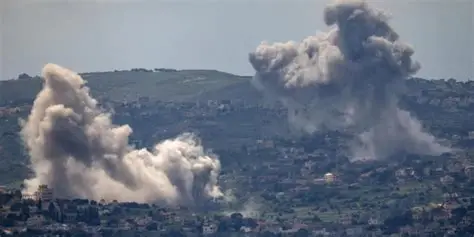
BEIRUT: At least nine people, including two children, were killed in Israeli airstrikes across southern Lebanon on Thursday, according to the Lebanese Health Ministry. The surge in violence occurs during the second week of a tenuous ceasefire, as both sides trade accusations of violating the truce.
In addition to the fatalities, the ministry reported that 23 people were wounded, including eight children and seven women. The Israel Defense Forces (IDF) stated the strikes targeted Hezbollah infrastructure in response to what it characterized as breaches of the agreement.
Escalating Hostilities
Despite the ceasefire announced on April 16 following US-mediated talks in Washington, military operations have persisted. Hezbollah confirmed it conducted retaliatory attacks on Israeli forces, including a drone strike targeting soldiers in the Bint Jbeil district.
Lebanese President Joseph Aoun condemned the operations, citing ongoing strikes and the demolition of homes and places of worship.
"Pressure must be exerted on Israel to ensure it respects international laws and conventions, and ceases targeting civilians, paramedics, civil defense, and humanitarian organizations," President Aoun stated.
On Thursday, the Israeli military issued evacuation orders for 15 villages in southern Lebanon. Notably, several of these locations sit outside the "Yellow Line"—a 10km buffer zone where Israel maintains it will continue to operate against perceived threats.
The Legal and Political Divide
The ceasefire agreement remains a point of intense contention:
-
The Israeli Position: Israel maintains that the terms of the truce allow for responses to "planned, imminent, or ongoing attacks."
-
The Hezbollah Position: While not a formal signatory, the group initially signaled it would abide by the terms if Israel did the same. However, it explicitly rejects Israel’s interpretation of the "right to respond."
-
Internal Lebanese Politics: The conflict has deepened the rift between President Aoun, who advocates for direct talks to establish a "permanent agreement," and Parliament Speaker Nabih Berri, who opposes face-to-face negotiations with Israel.
Humanitarian Impact
The current conflict, which ignited on March 2 following a Hezbollah rocket barrage and subsequent Israeli invasion, has resulted in a staggering death toll.
Casualty Overview (Since March 2):
| Category | Reported Fatalities (Lebanon) |
| Total Deaths | Over 2,500 |
| Health Professionals | 103 |
| Women | At least 270 |
| Children | Over 170 |
On the Israeli side, the military confirmed the death of a soldier in combat on Thursday, bringing the total number of Israeli troop fatalities to 17 since the escalation began in early March. While the truce has significantly reduced strikes on Beirut, the continued bloodshed in the south underscores the volatility of the current security arrangement.