


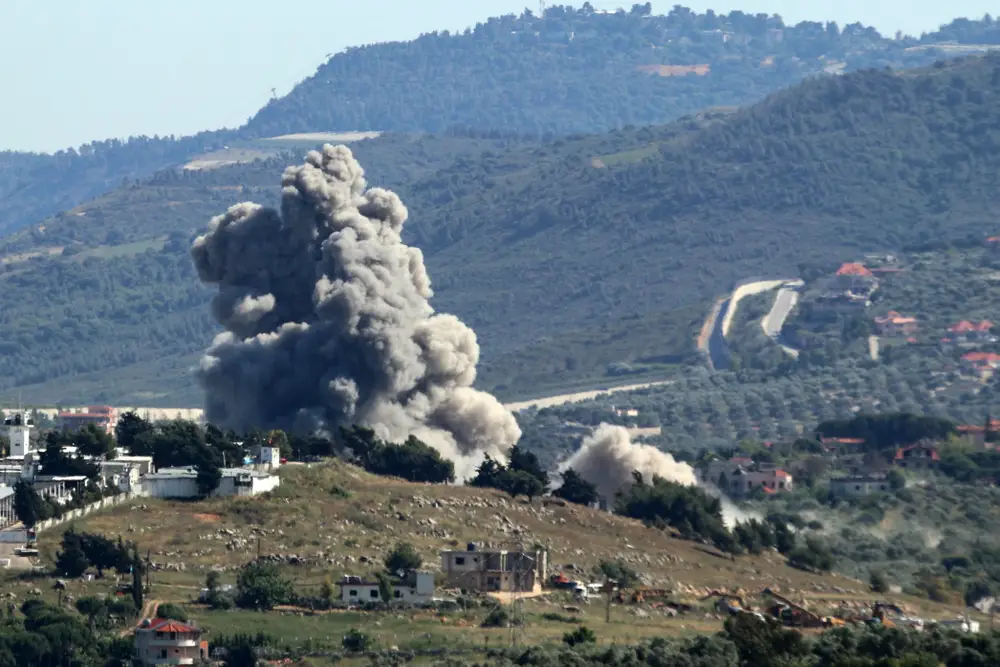
An Israeli drone strike in the southern Lebanese town of Nabatieh al-Fawqa has killed one person and wounded at least two others, according to Lebanon's health ministry and state media. The Israeli military stated that the operation targeted an individual who posed an immediate threat to its forces. The incident occurred just one day after Israel and Lebanon signed a US-brokered agreement intended to establish a framework for lasting peace.
Opposition to the Washington Agreement
The deal has faced immediate domestic opposition within Lebanon. Naim Qassem, the leader of the Hezbollah militant group—which was excluded from the Washington negotiations—strongly rejected the terms. Qassem accused the Lebanese government of compromising national sovereignty and making damaging concessions. He specifically criticized provisions that tie the withdrawal of Israeli forces to the disarmament of Hezbollah, warning that the agreement could lead to the permanent loss of Lebanese territory and pledging that the group would maintain its armed resistance.
Conversely, Israeli Prime Minister Benjamin Netanyahu praised the agreement as a historic achievement that weakens the influence of both Iran and Hezbollah.
Security Framework and Territorial Control
The four-point framework outlines the following security measures:
-
Lebanese Army Deployment: Israel is set to withdraw its forces from the South Litani region, handing exclusive territorial control to the Lebanese military.
-
Israeli Security Zone: Israeli forces are permitted to maintain a presence within an expanded security zone in southern Lebanon.
-
Extended Stay: Following the recent tensions, Israeli Defence Minister Israel Katz instructed military forces to prepare for a prolonged deployment within this security zone, which extends up to 10 kilometers (six miles) into Lebanese territory.
Context of the Conflict
The current conflict escalated on March 2, following a missile barrage launched by Hezbollah into Israel in response to an Israeli strike that killed Iran's supreme leader. In response, Israel initiated a widespread air campaign and a ground offensive in southern Lebanon.
Previous diplomatic efforts, including a US-brokered ceasefire on April 16 and a renewed agreement in June, failed to permanently halt hostilities. The latest framework builds on prior initiatives aimed at establishing pilot zones where the Lebanese Armed Forces would maintain exclusive authority to the exclusion of all non-state actors.
Humanitarian Impact
The protracted hostilities have resulted in significant casualties and displacement:
-
Lebanon: According to the Lebanese health ministry, at least 4,192 people have been killed, over 11,600 injured, and more than 1.2 million citizens displaced.
-
Israel: Israeli authorities report that the conflict has claimed the lives of 36 soldiers and four civilians along the border region.