


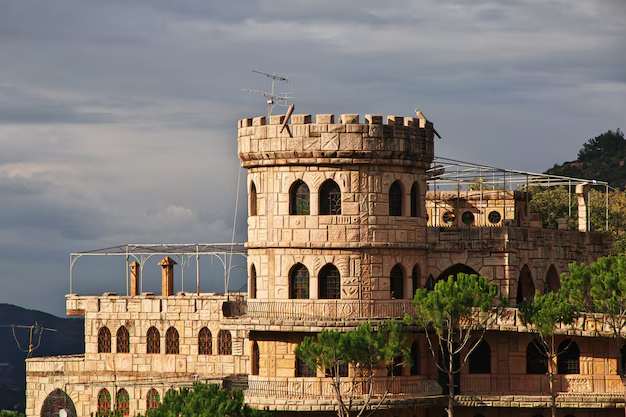
The Israeli military has seized the strategic and historically significant site of Beaufort Castle in southern Lebanon, marking what Prime Minister Benjamin Netanyahu termed a "decisive shift" in the ongoing offensive against Hezbollah.
The capture comes as Israel Defense Forces (IDF) ground troops advance deeper into Lebanese territory, moving past the Litani River—the initial demarcation line of the operation. In tandem with the advance, the IDF issued fresh evacuation orders on Sunday, instructing residents to vacate a wider swathe of southern Lebanon below the Zahrani River. An IDF spokesperson stated that a "significant number of ground soldiers" are engaged in the expanding operation, warning that anyone near Hezbollah elements or facilities is endangering their life.
International Condemnation and Diplomatic Friction
The escalation has drawn sharp criticism from European allies, who warn of a growing humanitarian crisis and the erosion of diplomatic pathways.
-
United Kingdom: Foreign Secretary Yvette Cooper called for an immediate halt to the hostilities, stating on social media that Israel's military escalation has "killed and displaced civilians, destroyed infrastructure, and eroded space for diplomacy." She added that Hezbollah must also cease its attacks on Israel and disarm.
-
France: President Emmanuel Macron urged that "weapons fall silent—all of them, and for good," asserting that nothing justifies the current escalation. French Foreign Minister Jean-Noël Barrot characterized the advance as a "major mistake for Israel," and France has formally requested an emergency meeting of the United Nations Security Council.
-
Germany: Foreign Minister Johann Wadephul expressed "serious concern," noting that further escalation would worsen the regional crisis and trigger new waves of internal displacement within Lebanon.
Lebanese Prime Minister Nawaf Salam delivered a televised address accusing Israel of executing a "scorched-earth policy and collective punishment" in the south. Salam emphasized that while the Lebanese government and military remain largely sidelined by the conflict, upcoming negotiations in Washington represent the country's sole viable path toward stability.
Strategic and Symbolic Value of Beaufort Castle
Perched on a ridge overlooking the Litani Valley, the 900-year-old Crusader-era Beaufort Castle holds immense tactical and symbolic value. Located approximately 14.5 kilometers (9 miles) from the Israeli border, control of the high ground allows military forces to dominate the surrounding region.
The site carries historical resonance for both nations. The IDF previously captured the fortress 44 years ago during the 1982 First Lebanon War, eventually withdrawing in 2000 from their self-declared southern buffer zone. Defence Minister Israel Katz confirmed that the Golani Brigade—the same unit involved in the 1982 capture—raised the Israeli flag over the site. Katz stated that securing the ridge is a vital step toward protecting northern Israeli communities.
For Lebanon, the loss of the fortress is the latest in a series of historic landmarks seized by advancing forces, as the northern city of Nabatieh increasingly becomes a primary IDF target.
Ceasefire Collapses Amid Escalating Casualties
Israel defended the intensification of its campaign as a necessary response to an increase in Hezbollah drone and missile strikes targeting both IDF positions inside Lebanon and civilian communities across the border. On Saturday, Hezbollah launched approximately 25 projectiles into northern Israel, prompting domestic political pressure on the Israeli government to bolster border security. Schools in northern Israel remained closed on Sunday as a precaution.
Both sides have traded accusations of violating a temporary ceasefire agreement, which had been extended twice since taking effect last month. While Israeli officials point to sustained Hezbollah rocket fire, Lebanese authorities cite Israeli airstrikes as direct breaches of the truce.
The conflict has taken a heavy toll on civilians and infrastructure:
-
Casualties: According to Lebanese authorities, more than 3,300 people have been killed in Lebanon since the escalation began, with an additional 25 Israeli military fatalities reported.
-
Infrastructure Impact: On Sunday, Lebanon's Health Ministry reported that an airstrike near Hiram Hospital in Tyre caused significant structural damage and injured 13 medical staff members.
Despite the effective collapse of the ceasefire, delegations from the Israeli and Lebanese governments are scheduled to meet in Washington this week for a fourth round of negotiations. However, Hezbollah is not a party to these direct talks.
The current confrontation erupted into open warfare on March 2, following a Hezbollah rocket barrage launched in retaliation for an Israeli strike that killed Iran's Supreme Leader Ali Khamenei, drawing Lebanon into a broader regional conflict involving Israel, the United States, and Iran.