


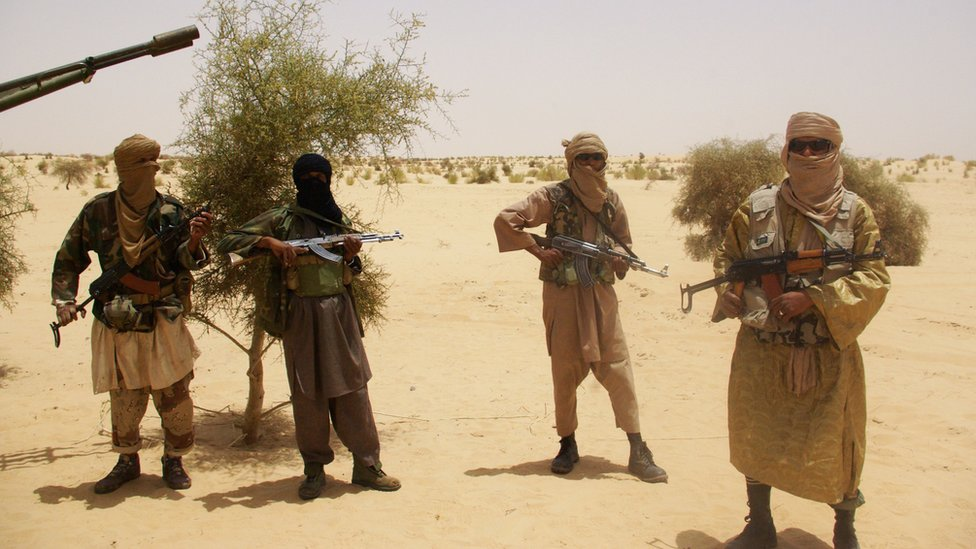
Heavy explosions and sustained gunfire erupted across Mali on Saturday as armed groups launched what analysts are describing as the most significant coordinated assault the country has faced in years. The attacks targeted several strategic locations, including the capital, Bamako, and key urban centers in the north and central regions.
Escalation in the Capital and Kati
The Malian military confirmed that "fighting is ongoing" and stated that defense and security forces are actively working to repel the attackers. Significant combat was reported near the Kati military base, a vital installation located just outside Bamako. In response, the military has established roadblocks to secure the area and restrict movement.
The U.S. Embassy in Mali issued an emergency advisory urging citizens to shelter in place, citing reports of gunfire and explosions near Modibo Keita International Airport and the Kati district. Consequently, international travel has been disrupted, with reports indicating that all flights into Bamako were canceled early Saturday morning.
Regional Instability
The violence is not limited to the capital. Coordinated strikes have been reported in:
-
Gao and Kidal: Strategic hubs in the northern desert regions.
-
Sevare: A critical town in central Mali.
Ulf Laessing, head of the Sahel Programme at the Konrad Adenauer Foundation, characterized the events as the "largest coordinated jihadist attack on Mali for years," noting the unprecedented scale and synchronization of the maneuvers.
Claims of Responsibility and Identity of Attackers
While the Malian military has referred to the assailants as unidentified "terrorist groups," unconfirmed social media reports and videos suggest the involvement of:
-
Jama'at Nusrat al-Islam wal-Muslimin (JNIM): An Al-Qaeda-affiliated jihadist coalition.
-
Tuareg Azawad Liberation Front (FLA): A separatist rebel group.
Mohamed Elmaouloud Ramadane, a spokesperson for the FLA, claimed on social media that his forces had seized several positions in Gao and Kidal. He further issued a warning to neighboring Burkina Faso and Niger, advising against military intervention. These claims have not yet been independently verified.
Political and Security Context
Mali is currently governed by a military junta led by Gen. Assimi Goïta, who assumed power in 2020 following a coup. The junta's rise was initially met with public support based on promises to resolve the decade-long security crisis involving Tuareg separatists and Islamist militants.
Under the current administration, the security landscape has shifted dramatically:
-
Withdrawal of International Allies: Both UN peacekeeping missions and French military forces have exited the country at the junta's request.
-
Russian Involvement: The military government has increasingly relied on Russian mercenaries to address domestic insecurity.
-
Regional Realignments: Mali, alongside Niger and Burkina Faso—all currently led by military governments—recently withdrew from the Economic Community of West African States (ECOWAS) to form the Alliance of Sahel States, seeking deeper economic and security integration outside traditional Western-backed frameworks.
Despite these shifts, large swaths of northern and eastern Mali remain outside of central government control, as evidenced by the reach and sophistication of Saturday’s offensive.