


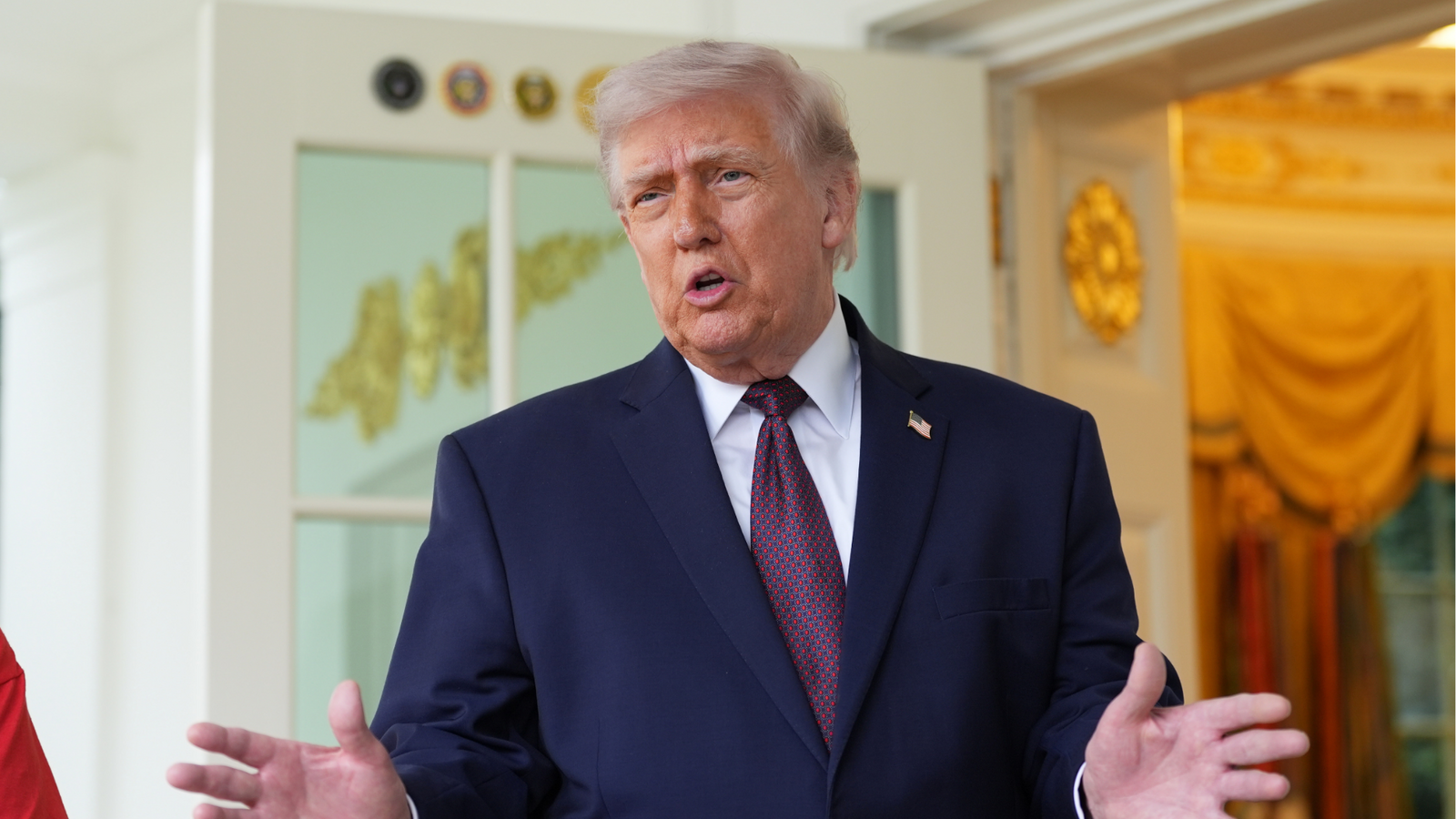
A fragile ceasefire between the United States and Iran remains under intense pressure following a significant exchange of fire in the Strait of Hormuz late Thursday. Despite the flare-up, President Donald Trump maintained on Friday that the truce is technically still in place, even as both nations traded accusations over who initiated the hostitilites.
Conflicting Accounts of the Engagement
The skirmish began late Thursday night with conflicting reports from both military commands.
Iranian Allegations: Iran’s top military command alleged that U.S. forces targeted an Iranian oil tanker and a secondary vessel near the Strait of Hormuz. Tehran further claimed that the U.S. conducted "aerial attacks" on coastal regions, specifically citing strikes in Bandar Khamir, Sirik, and Qeshm Island.
U.S. Defense: U.S. Central Command (CENTCOM) characterized the Iranian actions as "unprovoked," stating that Iranian missiles, drones, and small boats targeted U.S. Navy guided-missile destroyers during a routine transit. CENTCOM confirmed it launched "self-defense strikes" against Iranian launch sites, command centers, and surveillance nodes.
President Trump addressed the engagement on social media, confirming the destruction of several Iranian small boats and warning of "great damage" to Iranian military assets.
Regional Instability and the UAE Response
The volatility shifted geographically early Friday as the United Arab Emirates (UAE) Ministry of Defence reported that its air defense systems were "actively engaging" incoming missiles and drones launched from Iran. This marks a concerning expansion of the immediate conflict zone beyond the Strait.
Diplomatic Efforts Stalled
The escalation comes at a critical juncture for diplomacy. Just 24 hours prior, Iran’s foreign ministry indicated it was reviewing a 14-point memorandum of understanding proposed by the U.S. to formalize an end to the conflict.
However, domestic rhetoric in Tehran remains defiant. Ebrahim Rezaei, spokesperson for the Iranian parliament’s national security commission, dismissed the U.S. proposal as a "wish list," stating that Iranian forces keep their "finger on the trigger" unless specific conditions are met.
The Path Forward: "Epic Fury" and Nuclear Ambitions
The current friction follows the recent conclusion of Operation Epic Fury, a joint U.S.-Israeli offensive. While Secretary of State Marco Rubio previously suggested the operation had achieved its objectives, President Trump has tied a permanent end to hostilities to Iran's acceptance of a nuclear-free mandate.
"If they don't get their Deal signed, FAST... the bombing starts, and it will be, sadly, at a much higher level and intensity than it was before," Trump posted on Truth Social, reiterating his "maximum pressure" stance.
Key Sticking Points:
Nuclear Program: The U.S. maintains that Iran has agreed to forgo nuclear weapons, a claim Tehran has not officially verified.
Mediated Talks: Pakistan continues to act as a primary mediator, with its foreign minister stating that Islamabad is "endeavouring to convert this ceasefire into a permanent end to this war."
While the White House remains optimistic about a diplomatic breakthrough, the renewed combat in the Strait and the involvement of UAE air defenses suggest that the path to a regional settlement remains fraught with military risk.