


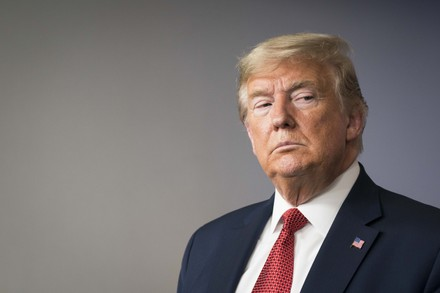
President Donald Trump
U.S. President Donald Trump has issued a stark warning to Iran regarding stalled negotiations aimed at ending the ongoing military conflict, stating on his Truth Social platform that "time is of the essence" and urging Tehran to accelerate the peace process.
The statement followed a Sunday phone call between President Trump and Israeli Prime Minister Benjamin Netanyahu, according to a report from the Prime Minister’s office cited by the Times of Israel.
The warning mirrors rhetoric used by the U.S. President prior to the implementation of the early-April ceasefire, when he cautioned that failure to reach an agreement could result in catastrophic consequences for the region. Earlier in the week, Trump characterized the current truce as being on "massive life support" after rejecting Iran's latest diplomatic proposals as unacceptable.
Diverging Demands and Sticking Points
Iranian state and semi-official media outlets reported a lack of progress, attributing the friction to a failure by Washington to offer concrete concessions. According to the Mehr news agency, Iranian officials warned that a lack of compromise from the U.S. would result in a diplomatic impasse.
The state-aligned Tasnim news agency outlined Tehran's core demands, described by Iranian Foreign Ministry spokesperson Esmail Baghaei as "responsible" and "generous." These include:
-
An immediate cessation of hostilities across all regional fronts, including Israeli operations against Hezbollah in Lebanon.
-
The lifting of the U.S. naval blockade on Iranian ports.
-
Formal security guarantees against future military strikes.
-
Financial compensation for war-related damages.
-
Explicit recognition of Iranian sovereignty over the Strait of Hormuz.
Conversely, Iran's Fars news agency reported that the United States has countered with five strict conditions. Notably, Washington is reportedly demanding that Iran restrict its operations to a single nuclear site and transfer its entire stockpile of highly enriched uranium to U.S. custody.
However, signaling a potential shift in the U.S. negotiating posture, President Trump suggested on Friday that he might accept a 20-year suspension of Iran's nuclear program rather than demanding its permanent, total dissolution.
Economic and Strategic Context
The diplomatic gridlock persists against the backdrop of a highly volatile security and economic environment. Following the launch of large-scale joint U.S. and Israeli airstrikes on Iran on February 28, the subsequent April ceasefire has largely held despite sporadic exchanges of fire.
The economic stakes remain critical as Iran continues to restrict transit through the Strait of Hormuz—a vital maritime chokepoint responsible for the transit of approximately 20% of the world's petroleum and liquefied natural gas (LNG). Tehran maintains the closure is a retaliatory measure against U.S. and Israeli military actions. The disruption has triggered a sharp increase in global oil prices, while the U.S. continues to enforce a maritime blockade on Iranian ports to maintain economic leverage.
While Pakistan continues to act as the primary diplomatic mediator between Washington and Tehran, the two sides remain significantly divided on key geopolitical and nuclear terms.