


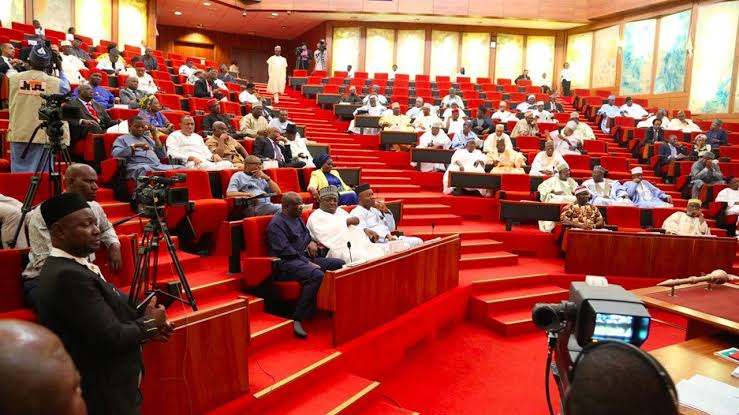
The Nigerian Senate has passed the Constitution Alteration Bill, a landmark piece of legislation aimed at establishing state police forces across the country. This development represents a significant shift in Nigeria’s long-standing debate over decentralizing its security architecture to combat rising insecurity, including banditry, terrorism, and kidnapping.
The bill passed following a rigorous clause-by-clause review and a manual voting process on the Senate floor, where more than two-thirds of the lawmakers voted in favor. Senate President Godswill Akpabio announced the passage during the plenary session after considering a report presented by the Deputy Senate President and Chairman of the Senate Committee on the Review of the Constitution, Barau Jibrin.
Key Framework and Operational Guidelines
The newly passed legislation establishes a state policing system designed to operate alongside the existing federal structure, effectively ending the federal government's exclusive control over national policing.
-
Leadership and Appointments: Under the new provisions, the Federal Police Service will remain under the leadership of the Inspector-General of Police. Conversely, each State Police Service will be led by a Commissioner of Police appointed by the state governor and confirmed by the state House of Assembly.
-
Gubernatorial Authority: State governors will hold the authority to issue lawful, written directives to their respective Police Commissioners regarding general policy matters tied to public safety and order.
-
Civil Liberty Safeguards: To counter fears of political weaponization, lawmakers embedded explicit legal protections within the bill. The legislation strictly prohibits state police from arresting, detaining, investigating, or deploying force against individuals, journalists, or political groups solely for criticizing the government. All police actions must strictly adhere to due process and existing laws.
Shift to Manual Voting for Transparency
The final vote occurred shortly after the Senate decided to abandon plans to use an electronic voting system for the constitutional amendments. The transition to a manual, open-call vote followed a motion by Senate Leader Opeyemi Bamidele, who raised concerns that technical glitches with electronic devices could disenfranchise lawmakers.
Senate President Akpabio supported the change, noting that an open voting process would ensure full legislative participation and provide transparency by making each senator's stance public. The high-profile voting session was observed by several senior officials, including the Chief of Staff to the President, Femi Gbajabiamila, and the governors of Kaduna, Ogun, and Ondo states.
Next Steps in the Legislative Process
While proponents argue that a centralized police force is too overstretched to handle localized security threats, critics remain concerned that state governors might abuse the system to suppress political dissent.
Having cleared this major federal legislative hurdle, the bill must now secure the mandatory approval of two-thirds of the state Houses of Assembly and complete the remaining constitutional requirements before it can be signed into law and fundamentally reshape Nigeria's internal security framework.