


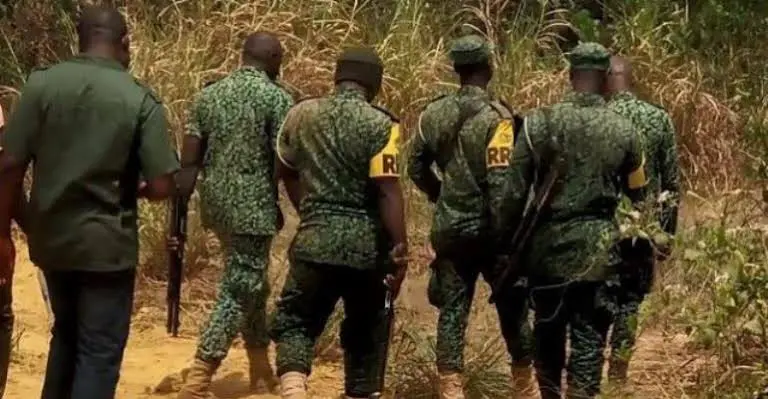
A federal initiative to deploy specialized forest guards has gained significant momentum across Nigeria, with multiple states expanding operations to secure vulnerable forest corridors. The renewed focus follows President Bola Tinubu’s approval to recruit 1,000 forest guards, a decision prompted by recent insurgencies and abductions in Oyo and Kwara states.
Speaking at a Democracy Day commemorative service in Abuja, President Tinubu reaffirmed the federal government's determination to eliminate terrorism and banditry. Represented by the Secretary to the Government of the Federation, George Akume, the President emphasized that safeguarding citizens and securing the safe release of all captives remain top national priorities.
Regional Implementation and Recruitment Progress
The adoption of the initiative varies across the country, with several states recording significant progress in training and deployment:
-
Kebbi State: The government has deployed 819 newly trained National Forest Guards to ungoverned spaces and vulnerable forest corridors following an intensive nine-week training program in Kalgo. Officials have urged local communities and traditional rulers to assist the operatives with intelligence gathering.
-
Kwara State: Approximately 3,300 operatives have been engaged. An initial cohort of 700 guards is already active in the Kwara North and Kwara South senatorial districts, while an additional 2,600 recruits are scheduled for advanced tactical training to expand coverage.
-
Kaduna State: A six-week training program has commenced for 1,000 recruits drawn primarily from communities heavily impacted by banditry. Coordinated by the Office of the National Security Adviser, the initiative positions these guards as the first line of intelligence gathering in high-risk areas such as Birnin Gwari, Giwa, and Chikun.
-
Gombe State: Roughly 700 screened recruits are currently undergoing specialized training in surveillance, intelligence gathering, and forest security operations at the Mobile Police Training School in Osun State.
-
Kano State: The government has deployed 150 forest guards across six operational zones to counter recent cross-border banditry attacks and address environmental challenges like deforestation and desertification.
-
Edo State: Newly recruited personnel, who have completed medical screenings and Department of State Services profiling, are scheduled to begin formal training at the Police Training School in Benin City.
Southern Strategies and Structural Integration
In the southern region, states are adapting forest security to complement existing local architectures:
-
Ekiti State: Local governments have integrated community-sourced forest guards into active joint operations, including bush-combing exercises alongside the military, police, and the Amotekun Corps.
-
Imo State: More than 400 forest guards and vigilante operatives have been deployed to high-risk zones in Owerri West, resulting in the disruption of criminal hideouts and the recovery of illicit items.
-
Anambra and Bayelsa States: Anambra has legally integrated forest guards into its wider security framework under the Homeland Security Law 2025. Meanwhile, Bayelsa operates a dual system consisting of a state-backed Forest Security Service and 46 Community Forest Rangers, though operations face logistical and funding constraints.
-
Ondo State: The government has bypassed the federal initiative, opting instead to strengthen its existing Amotekun Corps by approving the recruitment of up to 1,000 additional personnel, including dedicated Amotekun Rangers for forest patrols.
Operational Debates and Pending Implementations
Despite widespread adoption, the framework governing the forest guards has generated differing perspectives on their exact role. Security officials in Sokoto State have cautioned against deploying these forces to frontline combat, arguing that forest guards are fundamentally structured for conservation, anti-poaching, and resource protection rather than complex military engagements. Conversely, officials in Benue State noted that their recruits have reported for training, maintaining that the initiative remains strictly a federal responsibility.
Several states, including Zamfara, Rivers, Abia, Osun, and Lagos, have yet to officially launch the scheme. Zamfara officials stated they are awaiting explicit federal directives before proceeding, though the state continues to utilize its established Community Protection Guards. In Osun State, plans are being finalized to merge conventional and unconventional security groups into a unified forest enforcement unit.
As Nigeria approaches its 27th anniversary of uninterrupted democratic rule, the federal government continues to urge the public, particularly the youth, to resist political violence and support national security architectures ahead of upcoming election cycles.