


The Lebanese armed group Hezbollah has categorically rejected the terms of a newly proposed, US-backed ceasefire agreement between Israel and Lebanon.
In a strongly worded statement, Hezbollah leader Naim Qassem characterized the diplomatic negotiations as "futile" and "humiliating" for Lebanon, asserting that the terms are widely opposed across broad segments of the Lebanese populace.
Terms of the Proposed Agreement
The rejection follows an announcement by Israel and Lebanon regarding a potential renewal of their fragile ceasefire. The framework, developed during a fourth round of US-mediated talks in Washington, includes the following key provisions:
Pilot Security Zones: The establishment of temporary security zones inside southern Lebanon where Hezbollah operatives would be entirely banned.
Demilitarization to the Litani River: The contingent evacuation of all Hezbollah operatives from the region between the Israeli border and the Litani River—an area approximately 30 kilometers (19 miles) north of the border, currently occupied by Israeli ground forces.
Lebanese Military Control: US assistance in transitioning these "pilot zones" to the exclusive control of the Lebanese Armed Forces (LAF), effectively excluding all non-state actors.
However, the joint statement released by the US State Department on Wednesday noted that the agreement depends on a "complete cessation" of fire by Hezbollah. Because Hezbollah was not a direct party to the talks, Qassem argued that requiring the group to halt fire and withdraw from the southern front amounts to an unconditional surrender that fulfills Israel's military objectives.
Public Reaction and Local Sentiment
The sentiment from Hezbollah's leadership resonated within the group's strongholds in Beirut’s southern suburbs, known as Dahieh. Local business owners expressed deep skepticism regarding the viability of a unilateral truce.
"You cannot have a ceasefire from one side; it’s going to be an all-side or no ceasefire," said Sami, a local shopkeeper, pointing to active military strikes occurring the same day. "This is surrender. This is not a peace agreement."
Other residents expressed long-standing disillusionment with the political situation. Hadi, another local merchant, noted that generations of his family have seen little hope for a lasting resolution under successive Israeli governments.
Continued Military Operations and Casualties
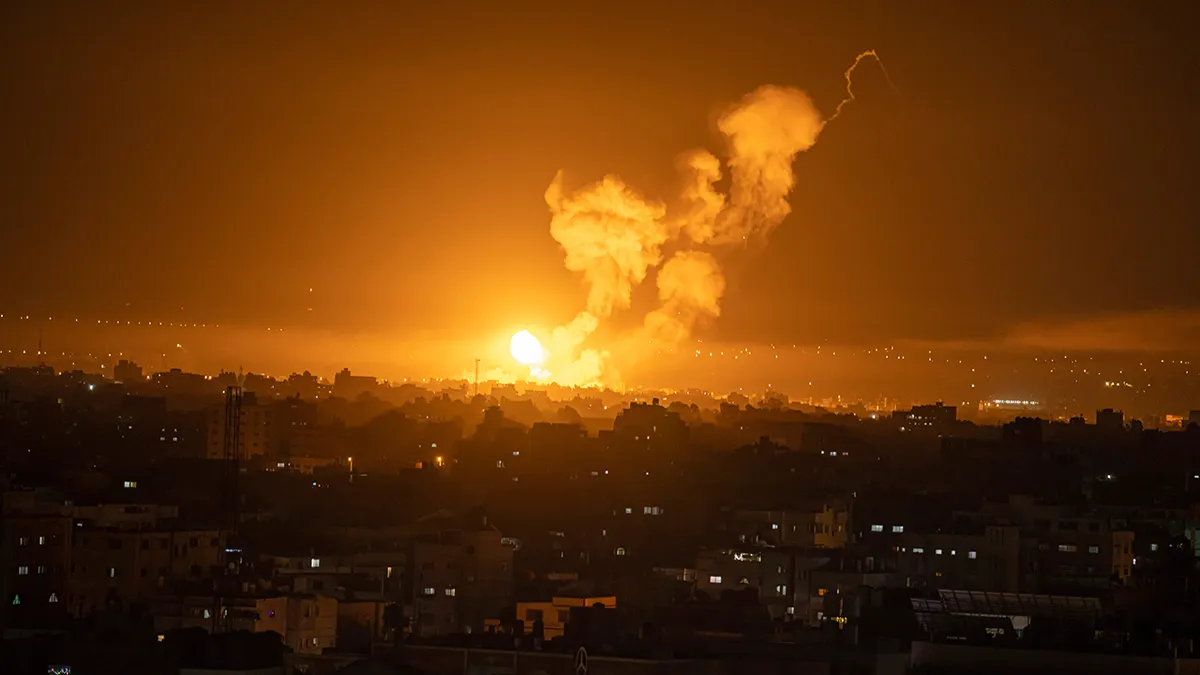
Despite the diplomatic framework—which followed a partial ceasefire agreement on Monday intended to halt Israeli bombardment of Beirut in exchange for a cessation of Hezbollah rocket fire—heavy fighting continued on Thursday.
Israeli Defence Minister Israel Katz confirmed that the Israel Defense Forces (IDF) will continue ground and air operations "for the time being" to dismantle infrastructure associated with the group. Lebanese state media reported multiple Israeli airstrikes across southern Lebanon, including an attack in the Bekaa Valley town of Sohmor that killed five people, and a fatal drone strike on a motorcycle near Tyre.
Concurrently, the United Nations Interim Force in Lebanon (UNIFIL) confirmed the death of a peacekeeper, identified by the Serbian Defense Ministry as Senior Sergeant Milovan Jovanovic. The IDF attributed the fatal mortar fire to Hezbollah positions; Hezbollah has not commented on the specific incident but claimed responsibility for separate drone and rocket strikes targeting Israeli military vehicles near Qantara and Beaufort Castle.
Context of the Conflict
The current conflict intensified significantly on March 2, following a series of retaliatory escalations involving Israel, Hezbollah, and Iran. A previous US-brokered ceasefire on April 16 failed to hold, leading Israeli Prime Minister Benjamin Netanyahu to order intensified operations and deeper ground maneuvers into Lebanon last week in response to continued rocket fire on northern Israeli communities.
According to the Lebanese Health Ministry, at least 3,526 people have been killed in Lebanon since the escalation began, a figure that does not distinguish between civilians and combatants. The United Nations reports that more than one million people have been internally displaced within Lebanon, with Israeli evacuation orders encompassing more than an eighth of the country's territory. Israel reports that 26 soldiers and four civilians have been killed during the conflict.
Representatives from Israel and Lebanon are scheduled to reconvene on June 22 to continue discussions aimed at achieving a comprehensive agreement.