


The US State Department has announced that Israel and Lebanon have agreed to implement a ceasefire, a development that remains strictly dependent on a complete cessation of attacks by the Iran-backed armed group Hezbollah.
According to the official statement, the agreement stipulates the total evacuation of Hezbollah operatives from an Israeli-controlled zone in southern Lebanon, stretching from the Litani River to the border. The international community reaffirmed that the future relationship between the two nations must be determined solely by their respective sovereign governments, explicitly rejecting attempts by any state or non-state actor to disrupt Lebanon's sovereignty.
To ensure long-term stability, the US will assist in establishing pilot zones where the Lebanese Armed Forces will maintain exclusive territorial control, entirely excluding non-state factions. The framework follows a preliminary agreement intended to halt Israeli bombardments in Beirut in exchange for a cessation of Hezbollah attacks on Israel. Both nations are scheduled to reconvene on June 22, 2026, to pursue a comprehensive agreement. US Secretary of State Marco Rubio expressed optimism that the process would establish a secure, independent framework for Lebanon.
Ongoing Conflict and Casualties
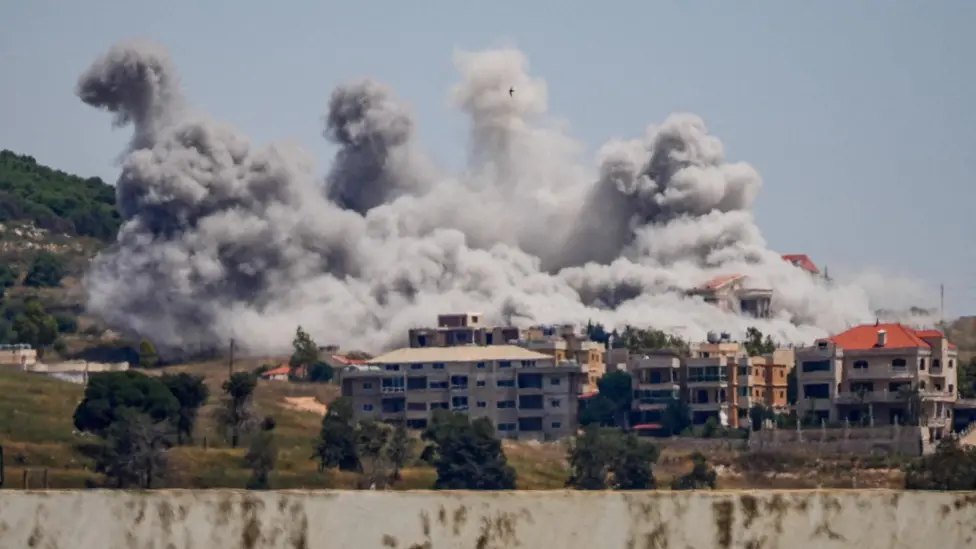
The diplomatic breakthrough follows intense hostilities that severely tested earlier truce efforts. Recent Israeli airstrikes in southern Lebanon resulted in multiple casualties, including two paramedics inside an ambulance in Chehour and a Lebanese soldier traveling by motorbike near Nabatieh. The Lebanese Health Ministry and military officials condemned the strikes, accusing Israeli forces of targeting medical personnel and military infrastructure. Israel has previously alleged that emergency vehicles have been utilized for military operations.
In response to the airstrikes, Hezbollah launched cross-border rocket and drone attacks targeting Israeli troop concentrations, prompting interceptions by the Israeli military. Prior to the ceasefire announcement, Israeli leadership warned of resumed bombardments on the Dahieh suburb of Beirut if northern Israeli communities faced continued threats.
The humanitarian impact of the conflict remains severe. Lebanese health officials report over 3,510 fatalities since the onset of hostilities, a figure that includes both civilians and combatants. Furthermore, United Nations data indicates that more than one million residents have been displaced due to expansive Israeli evacuation orders covering roughly an eighth of the country. On the Israeli side, officials have confirmed the deaths of 26 soldiers and four civilians along the border regions.
Diplomatic Frictions and Internal Disagreements
The viability of the negotiations faces significant internal and external challenges. Mahmoud Qamati, a member of Hezbollah’s political council, disputed the characterization of the initial agreement, framing it merely as a localized protection measure for Dahieh rather than a broader ceasefire. He asserted that the group does not recognize the decisions stemming from the Washington talks.
The broader conflict escalated significantly on March 2, 2026, when Lebanon was drawn into hostilities following a Hezbollah rocket barrage launched in retaliation for an Israeli strike that killed Iran's supreme leader. This prompted an extensive Israeli air campaign and subsequent ground operations in southern Lebanon.
On the geopolitical front, US President Donald Trump indicated that the initial pause in Beirut bombings followed direct, high-level communications with Israeli Prime Minister Benjamin Netanyahu regarding the scale of the military offensive. While Netanyahu acknowledged tactical disagreements, he emphasized Israel’s intent to maintain operations in southern Lebanon to secure its northern border. Concurrently, Iranian officials have warned that regional stability depends on a comprehensive cessation of hostilities, though the US administration has expressed a preference to handle bilateral discussions with Iran separately from the localized Israel-Hezbollah conflict.