


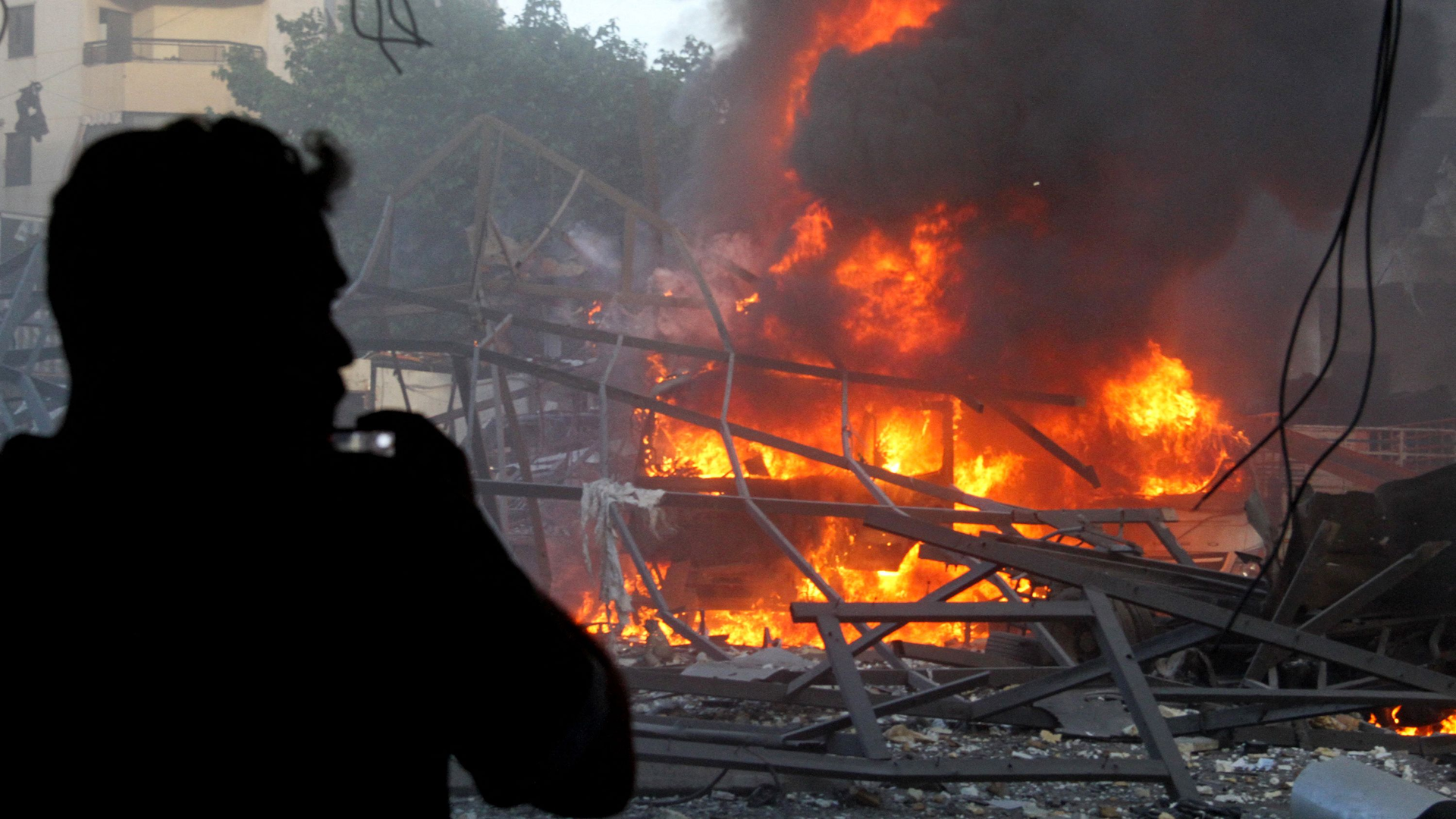
Lebanon announced that Hezbollah has accepted a United States-brokered proposal to halt attacks on Israel in exchange for a cessation of Israeli strikes on the Lebanese capital, Beirut. The development comes amid intense diplomatic efforts by the Trump administration to prevent a wider collapse of regional ceasefire initiatives.
Key Developments of the Agreement
The Lebanese embassy in the U.S. confirmed it received formal assurance of Hezbollah's compliance with the mutual cessation of hostilities. According to a statement released late Monday, the arrangement stipulates that Israeli strikes on Beirut’s southern suburbs will cease, provided Hezbollah refrains from launching attacks into Israel. The embassy noted that the ultimate objective is to extend this truce across all Lebanese territory.
While Israeli Prime Minister Benjamin Netanyahu confirmed the parameters of the discussions, he issued a strict caveat, warning that operations in Beirut would resume if civilian areas were targeted.
"Strikes on Beirut will go ahead if Hezbollah does not stop attacking our cities and civilians," Netanyahu stated, adding that the Israel Defense Forces (DF) would continue planned operations in southern Lebanon.
U.S. President Donald Trump indicated via social media that direct and indirect diplomacy had yielded progress, stating he had held productive talks with both Prime Minister Netanyahu and high-level representatives of Hezbollah, concluding that "all shooting will stop."
Continued Clashes and Diplomatic Friction
Despite the diplomatic announcements, localized engagements persisted on the ground:
-
Hezbollah Operations: The group reported launching drone and artillery strikes against Israeli armored units and personnel near two villages in northern Israel.
-
IDF Countermeasures: The Israeli military reported the successful interception of two projectiles fired from Lebanon, with no casualties reported.
-
Southern Lebanon Strikes: Lebanon’s state-run National News Agency reported ongoing Israeli bombardment in several southern districts, including a major detonation in the town of Debbine.
The latest diplomatic push follows a series of Israeli strikes on Beirut's southern suburbs, ordered by Netanyahu in response to prior rocket and drone line fire. Those strikes triggered sharp warnings from Tehran. Iranian Foreign Minister Abbas Araghchi emphasized that the broader U.S.-Iran truce must be treated as "unequivocally a ceasefire on all fronts, including in Lebanon," warning that a breach on one front jeopardizes the entire framework.
Broad Implications for U.S.-Iran Negotiations
The conflict in Lebanon remains deeply intertwined with broader negotiations between Washington and Tehran. While the U.S. has attempted to decouple the Lebanese theater from direct bilateral talks with Iran, Tehran—a primary backer of Hezbollah—maintains that any comprehensive agreement must guarantee peace in Lebanon.
Earlier, U.S. Secretary of State Marco Rubio proposed a "gradual de-escalation" framework to Prime Minister Netanyahu and Lebanese President Joseph Aoun. Although Israel has struck Beirut twice since the formal April 16 Israel-Lebanon ceasefire took effect, the frequency of the attacks has decreased following reported pressure from the White House.
Economic Impact and Energy Market Volatility
The ongoing instability continues to disrupt global energy markets. A separate U.S.-Iran truce enacted on April 8 has faced severe strain, highlighted by recent military exchanges in the Strait of Hormuz, including U.S. strikes on Iranian military sites and subsequent retaliatory targeting of a U.S. base in Kuwait.
Consequently, global oil benchmarks experienced significant volatility:
Brent Crude: Prices surged by nearly $5 per barrel to a high of $97.44 before stabilizing around $95.70.
Supply Chain Disruptions: The three-month-old conflict has severely restricted maritime traffic through the Strait of Hormuz, a critical transit route handling approximately 20% of the world's oil and liquefied natural gas (LNG) supplies.
While President Trump has repeatedly signaled that Washington and Tehran are approaching a permanent resolution, a formal, comprehensive agreement has yet to be finalized.