


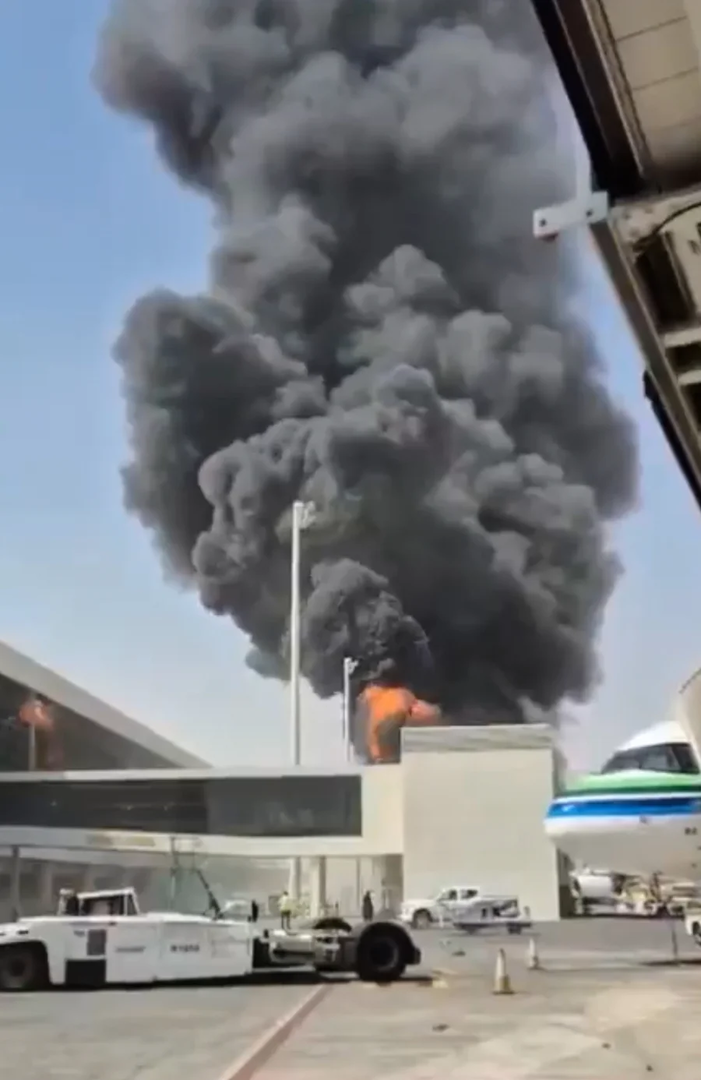
At least 12 people have been killed and 309 injured in an attack on King Khalid International Airport in Riyadh, the capital of Saudi Arabia, according to local authorities. The incident has prompted the suspension of airport operations, flight cancellations and international condemnation.
The Saudi civil aviation authority confirmed that the fatalities included four Saudi nationals, two Bangladeshi nationals and one citizen each from the United States, Jordan, Palestine, Syria, Sudan and Egypt. Several of the injured remain in critical condition.
Authorities are assessing the damage to the airport, while emergency services responded to reports of casualties at one of its passenger terminals.
Saudi Arabia Blames Houthis for Deadly Airport Attack
A Saudi-led military coalition has blamed Yemen's Houthi movement for Saturday's attack and warned that a response would follow. The coalition described the incident as a serious violation of international law, alleging that the strike deliberately endangered civilian passengers and airport employees.
The Houthis have not commented on Saturday's attack. However, the group previously claimed responsibility for separate strikes targeting Riyadh airport on Thursday, which reportedly killed three people and damaged an aircraft.
Additional Houthi attacks on two other Saudi airports on 6 and 7 October killed three more people, according to reports.
Saturday's incident is being described as the deadliest attack in Saudi Arabia since May 2015, highlighting the growing security threat posed by the escalating conflict between Saudi Arabia and the Iran-backed Houthi movement.
Airport Operations Suspended as Flights Are Cancelled
King Khalid International Airport has suspended operations following the attack as security officials investigate the incident and assess the extent of the damage.
An eyewitness who was inside the domestic terminal said a strike hit gate 401, causing injuries among people nearby. The witness described scenes of panic as passengers attempted to escape the affected area.
More than a dozen ambulances were reportedly seen heading towards the airport as emergency teams worked to assist the injured.
Saudi-led coalition spokesman Maj Gen Turki al-Maliki said the attack on a passenger terminal had resulted in deaths and injuries among civilian travellers and airport staff.
Western embassies in Saudi Arabia have advised their citizens to avoid the airport. The UK Foreign Office has also urged British nationals to stay away from the area until security conditions improve.
Several Gulf airlines have cancelled flights to and from Riyadh because of the security situation. Kuwait Airways was among the carriers to announce cancellations, while aviation tracking data showed that flights bound for the Saudi capital had been cancelled or diverted.
US Condemns Attacks as Trump Considers Possible Response
The United States has condemned the recent attacks on Saudi Arabia. Secretary of State Marco Rubio confirmed that an American citizen was among those killed in the strikes.
US President Donald Trump said Washington was assessing the situation before deciding whether to participate in potential military action against the Houthis alongside Saudi Arabia.
His comments come as concerns grow that the latest attacks could draw additional countries into the conflict and trigger a broader regional escalation.
United Nations Secretary-General António Guterres also condemned the attacks, warning that the violence violated international law and must stop immediately.
Egypt, Palestine and Qatar have also expressed their condemnation of the attacks, adding to international pressure for an end to the escalating hostilities.
Projectile Reported Near Airport in Eastern Saudi Arabia
The Saudi-led coalition also reported that a projectile fell near King Fahd International Airport in Dammam, in the eastern part of the country, on Saturday.
The incident has raised concerns about the possibility of further attacks against Saudi Arabia's aviation infrastructure, particularly as the Houthis continue to target strategic locations in response to the kingdom's involvement in Yemen's civil war.
Saudi authorities have yet to complete their assessment of the damage caused by the latest strikes, while airport security and flight operations remain key concerns.
Why Are the Houthis Attacking Saudi Arabia?
The Houthis say their attacks on Saudi Arabia are linked to the kingdom's support for internationally recognised Yemeni government forces in the country's long-running civil war.
The conflict has intensified in recent weeks following a series of military developments along Yemen's Red Sea coast. Houthi forces have made advances in strategically important areas, while pro-government forces have sought to regain control of key positions near major shipping routes.
The Red Sea remains a critical corridor for international trade, and the Bab al-Mandab Strait, at its southern entrance, is one of the world's most important maritime chokepoints.
Yemeni pro-government forces have said they secured the strait following recent fighting, although the wider conflict continues to threaten regional stability and commercial shipping.
Yemen Conflict Raises Fears of Wider Regional Escalation
The Saudi-led coalition was established in 2015 after several Arab countries joined the military campaign to prevent the Houthis from taking control of Yemen's internationally recognised government.
Years of air strikes, ground battles and other violence have caused extensive destruction and contributed to one of the world's most severe humanitarian crises, with hundreds of thousands of deaths attributed to the conflict's direct and indirect effects.
A temporary ceasefire was brokered in 2022, reducing hostilities and raising hopes for a lasting political settlement. However, the informal truce began to deteriorate in July as tensions increased and military operations resumed.
The Houthis subsequently announced a maritime embargo targeting Saudi Arabia and intensified missile and drone attacks against airports, oil facilities and vessels operating in the Red Sea.
The group has presented its actions as retaliation for what it describes as a prolonged Saudi blockade and an air strike on the airport in Sanaa, Yemen's capital, which remains under Houthi control.
The latest attack on Riyadh's international airport marks a significant escalation, with civilian casualties, widespread flight disruption and the possibility of further military retaliation raising concerns about the future course of the conflict.
With Saudi Arabia promising a response, Washington reviewing its options and international leaders calling for an immediate halt to the violence, attention is now focused on whether the latest developments will lead to a broader regional confrontation.