


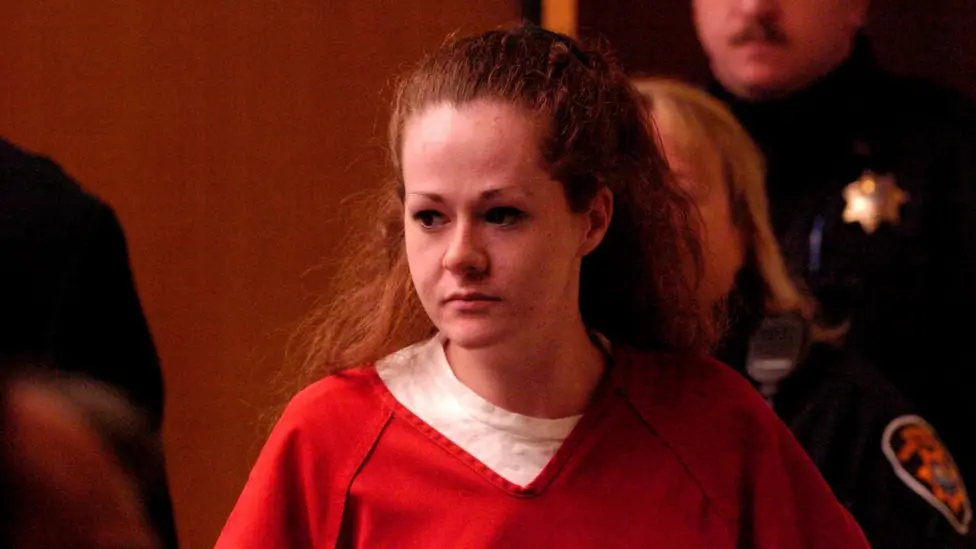
US death row inmate Christa Pike has been discharged from hospital 10 days after surviving a botched execution in Tennessee, with her lawyers confirming that she has been returned to prison to continue her recovery.
The 50-year-old, who has spent the past 30 years behind bars, was released from hospital following a failed execution attempt on September 30. Her legal team confirmed on Saturday that she had returned to the prison where she has been held for decades.
Pike is continuing to receive medical care while in custody, although details of her current treatment have not been made public.
She survived two attempted lethal injections using the drug pentobarbital on September 30, leaving her in a critical condition and raising serious questions about the state's execution procedures.
Earlier this week, Pike regained consciousness and began speaking again, surprising medical staff, experts and members of her legal team, who had feared she might never recover.
Her lawyers said she was thankful to the emergency responders and medical professionals who treated her during the medical crisis.
Christa Pike's Condition After Failed Execution
Pike's recovery has been closely watched after her condition initially appeared extremely serious following the failed execution.
After surviving the two lethal injections, she lost consciousness and was rushed to a local hospital for emergency treatment.
For several days, her legal team believed she had suffered catastrophic brain damage and feared she was unlikely to regain consciousness. They reportedly expected her life support to be withdrawn as her condition remained critical.
However, Pike eventually woke up and began speaking on Tuesday, marking a significant development in her recovery.
Her lawyer, Randy Spivey, previously revealed that her first words after regaining consciousness were questions about where she was and the identities of the people around her.
At a press conference on Wednesday, her legal representatives disclosed that Pike was experiencing several serious health complications.
She was reportedly shackled to her hospital bed, suffering from pneumonia and significant swelling in her arms. She was also unable to swallow, adding to concerns about the extent of her injuries and the challenges she could face during rehabilitation.
Her legal team has warned that her recovery could be lengthy, with the full physical and psychological effects of the failed execution still unknown.
Uncertainty Over Another Execution Attempt
Pike's survival has placed Tennessee authorities in an unprecedented legal situation, as she is believed to be the only person to have survived an execution attempt involving lethal injection.
The circumstances surrounding the failed procedure could have significant implications for the state's handling of her case and any future execution plans.
During a court hearing on Wednesday, Tennessee Assistant Attorney General Will Ayers told the judge that he did not know whether the state intended to make another attempt to execute Pike.
The court also ordered Tennessee officials to preserve all evidence connected to the failed injections.
The evidence could prove crucial in determining what went wrong during the procedure and may form the basis of a future legal challenge against the state.
For now, it remains unclear whether Tennessee will pursue another execution attempt or how Pike's medical condition will affect the next steps in her case.
Why Is Christa Pike on Death Row?
Pike was 18 years old when she took part in the brutal killing of 19-year-old Colleen Slemmer in 1995.
She and her then-boyfriend, Tadaryl Shipp, beat and tortured Slemmer before killing her. The three had met at a job training camp for disadvantaged young people.
Pike was subsequently convicted of the murder and sentenced to death. She has remained on death row for approximately three decades.
Her case has now attracted renewed attention following the failed execution, her unexpected recovery and the uncertainty surrounding whether Tennessee authorities will attempt to carry out the sentence again.
Although Pike has been discharged from hospital, the extent of her long-term injuries remains unclear. Her return to prison marks the next stage of her recovery, while questions about the failed execution and the possibility of further legal action remain unresolved.