


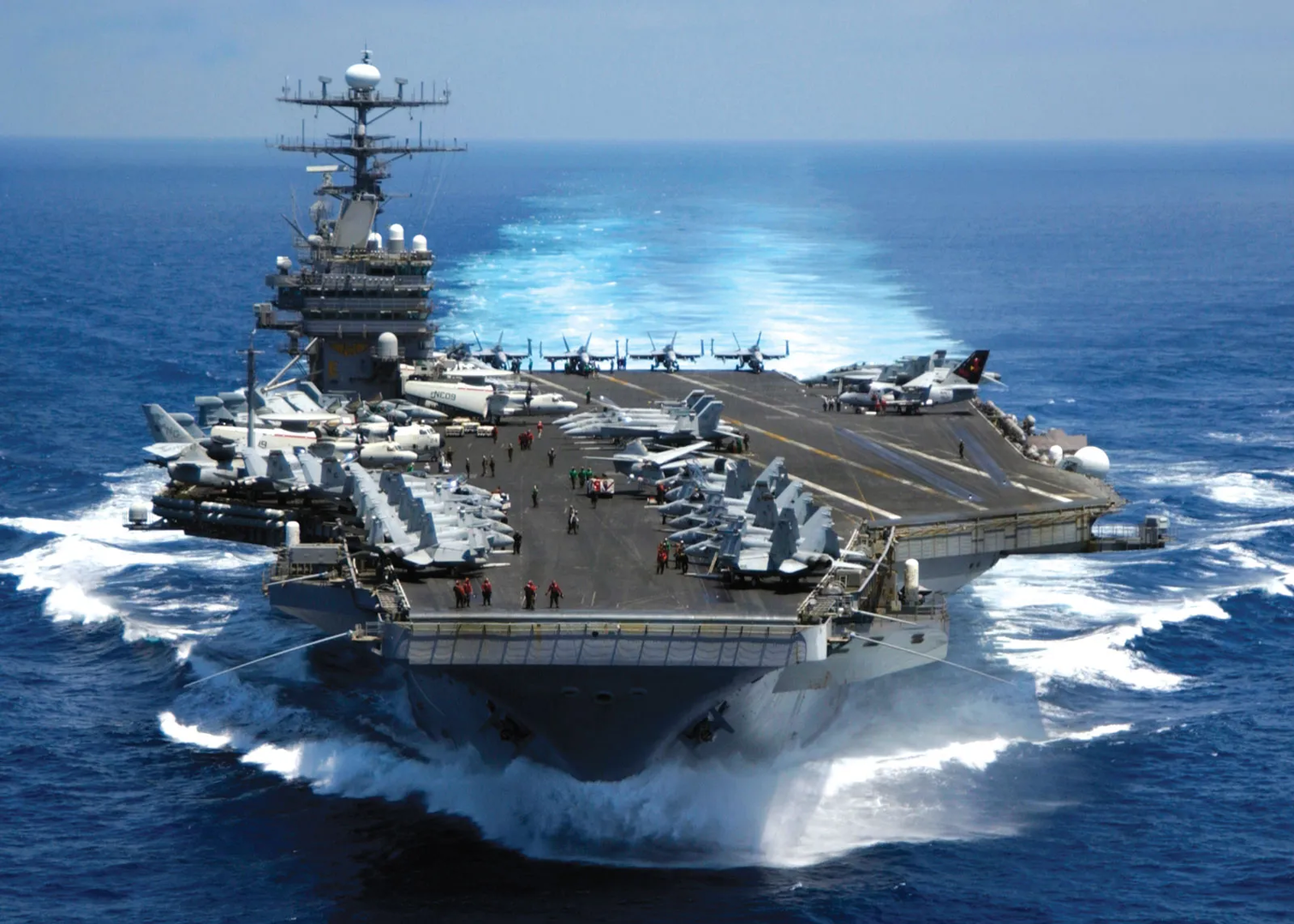
The United States has officially ended its naval blockade of Iran following the signatures of a comprehensive agreement designed to terminate the conflict in the Middle East. US Central Command confirmed the cessation of the blockade via social media, noting that while naval operations have shifted in accordance with presidential directives, a select number of American vessels will remain stationed in the region.
Leadership Responses and Regional Reaction
In his first public statement since assuming office in March, Iran's Supreme Leader Mojtaba Khamenei announced his approval of the accord. He indicated that while his personal perspectives on the matter differed, he permitted the agreement to proceed based on executive assurances that Iranian national interests would be safeguarded. Khamenei characterized the diplomatic shift as a result of American leverage tactics and clarified that upcoming bilateral negotiations would not signal an acceptance of Washington's overarching positions.
Concurrently, US President Donald Trump signaled expectations for a comprehensive ceasefire across all regional fronts, including the ongoing hostilities between Israel and Hezbollah. He emphasized the necessity for Middle Eastern nations to maintain their commitment to the established diplomatic framework.
Core Provisions of the Accord
The bilateral agreement establishes a 60-day window to negotiate a final settlement, with the potential for extension upon mutual agreement. The foundational elements of the Memorandum of Understanding include:
-
Maritime Access: The immediate reopening of the critical Strait of Hormuz.
-
Nuclear Restrictions: A permanent prohibition on Iran acquiring nuclear weaponry, alongside requirements for the destruction of its enriched uranium stockpiles.
-
Regional Security: A mandate for Iran to cease funding regional proxy forces.
-
Economic Development: The establishment of a $300 billion international reconstruction fund for Iran, which does not legally obligate financial contributions from the United States.
While an official signing ceremony was initially scheduled to take place in Switzerland, international mediators confirmed the event was canceled after the document was executed remotely. However, technical negotiations between American and Iranian delegations are slated to continue in Switzerland. Vice President JD Vance is expected to join these proceedings to finalize specific policy mechanisms.
Domestic and International Friction
The peace agreement has generated significant political friction within the United States. Congressional critics, particularly within the Republican Party, have sharply condemned the terms, arguing that the creation of a reconstruction fund and the perceived lack of immediate, permanent curbs on Iran's nuclear program represent a major foreign policy miscalculation. Vice President Vance defended the administration's strategy, clarifying that Iran will receive no financial assets or sanctions relief until it fully complies with its disarmament obligations.
The accord has also strained relations with international allies. In response to criticism from members of the Israeli cabinet, Vice President Vance urged Israeli leadership to recognize current geopolitical realities and maintain alignment with its primary global ally, questioning the long-term viability of a purely military strategy for national security.
Despite the diplomatic progress between Washington and Tehran, localized violence continues. Both Israel and Hezbollah have launched cross-border strikes, resulting in civilian casualties. Israeli officials maintain that their military campaign against Hezbollah operates independently of the US-Iran diplomatic track, while Hezbollah has explicitly rejected the parameters of the new peace agreement.